From Policy to Practice: The Defining Challenge for Rural Scotland

By Mark Mitchell, Managing Partner

As we move through 2026, the role of Scotland’s rural economy has never been more firmly in focus.

Across political debate, legislative reform and economic strategy, there is clear and welcome recognition that rural Scotland is central to the nation’s future. From food production and energy to housing, tourism and natural capital, the contribution of land and rural businesses is both significant and far-reaching.

Yet while the ambition is evident, the defining challenge now lies in translating that ambition into practical, deliverable outcomes.

Clarity, Confidence and the Investment Environment

Recent political engagement has reinforced both consensus and uncertainty. There is broad agreement on the importance of rural Scotland, but less clarity on how best to unlock its full potential.

For landowners and rural businesses, this creates a familiar challenge. Investment decisions – whether in agriculture, housing, forestry or environmental projects – are long-term by nature. They rely on a stable and predictable policy environment, underpinned by clear communication and consistent direction.

Encouragingly, developments such as the Rural Support Plan offer a more structured framework for future agricultural support. Commitments to multi-year planning and avoiding abrupt change provide a degree of stability that has been lacking in recent years.

However, questions remain around pace, delivery and resource. With meaningful reform unlikely to take full effect until the end of the decade, and funding effectively reducing in real terms, there is a growing gap between policy ambition and the practical means to achieve it.

That gap is further reflected in the wider fiscal landscape. Recent budget decisions, while containing some positive measures, fall short of providing the long-term certainty needed to support investment. Incremental adjustments and short-term reliefs risk being seen as temporary fixes, rather than part of a coherent, long-term strategy.

Partnership as the Foundation for Progress

If there is a consistent lesson emerging from recent policy development, it is that progress is most effective where genuine collaboration exists.

The evolution of crofting legislation demonstrates what can be achieved through a collegiate approach, bringing together landowners, crofters and policymakers to create more balanced and workable outcomes. Similarly, constructive engagement on environmental legislation has led to meaningful refinements, improving both fairness and deliverability in areas such as deer management and moorland regulation.

However, these examples also highlight a delicate balance.

Scotland has long benefited from a largely voluntary and collaborative model of land management. While there is a clear role for regulation, there is a risk that an overreliance on intervention could undermine the partnerships that have delivered real progress over many years.

Achieving environmental outcomes at scale will depend not only on setting targets, but on maintaining trust, supporting land managers, and ensuring that incentives are aligned with ambition.

Policy in Practice: Understanding Real-World Impact

Alongside strategic reform, the cumulative impact of individual policy decisions is becoming increasingly apparent.

Changes to business rates, particularly around sporting activities, illustrate how policy can diverge from practical reality. Measures intended to address specific concerns risk placing disproportionate pressure on smaller farms and diversified landholdings – many of which undertake little or no commercial sporting activity but play an essential role in land management, biodiversity and food production.

More concerningly, such changes have often been introduced with limited consultation and without a full understanding of how rural businesses function. The result is a growing disconnect between policy intent and real-world impact.

There is also a clear contradiction. At a time when government is setting ambitious targets for climate action, biodiversity and sustainable land use, there is a risk of penalising those who are actively delivering these outcomes on the ground.

For many, this raises uncomfortable parallels with previous policy missteps, where well-intentioned measures, developed in isolation, have had unintended and far-reaching consequences for family-run businesses and rural communities.

Delivering for Rural Communities

At the same time, there are clear opportunities – particularly in addressing one of rural Scotland’s most pressing challenges: housing.

The proposed creation of a new national housing agency, with a dedicated focus on rural and island delivery, represents a positive step. With the right leadership, coordination and practical focus, it has the potential to unlock new development, overcome long-standing barriers and support sustainable communities.

There is no shortage of willingness among landowners to play a role in delivering rural housing. The challenge lies in aligning planning, infrastructure and policy frameworks in a way that enables delivery at pace and scale.

Done well, this presents an opportunity not only to increase housing supply, but to tackle rural depopulation and strengthen local economies.

A Defining Moment

Taken together, these issues point to a defining moment for rural Scotland.

There is no shortage of opportunity. The importance of land in delivering national priorities, from climate and nature to housing and economic growth, has never been clearer. Demand for well-managed land and sustainable rural investment is strong.

But realising that opportunity will depend on how effectively policy is translated into practice.

That means providing clarity where there is uncertainty. It means aligning ambition with the tools, investment and timescales required to deliver it. And above all, it means working in genuine partnership with those who live and work in rural Scotland.

Confidence is the thread that runs through all of this. Without it, investment stalls. Without investment, progress slows. And without progress, even the most ambitious policy risks falling short.

The opportunity for Scotland is clear. The task now is to match that ambition with delivery, creating the conditions for rural businesses to invest, adapt and thrive, and in doing so, secure lasting benefit for communities, the environment and the wider economy.

Bell Ingram Announces Promotions Across The Business

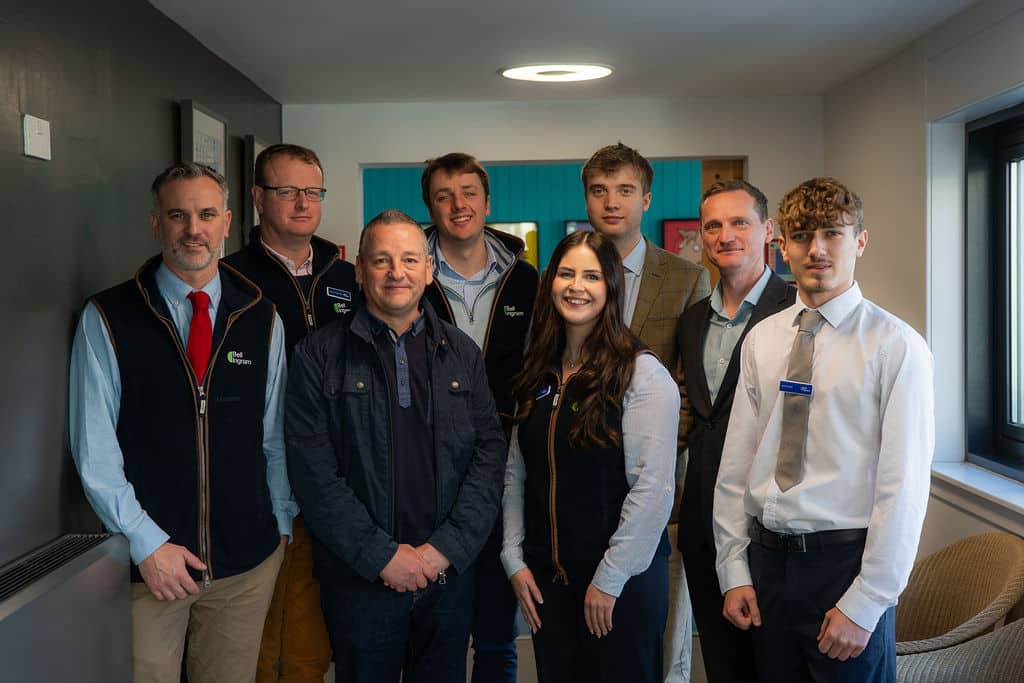
Following Board approval last week, Bell Ingram is pleased to announce a number of promotions across the business, effective from June 1, 2026.

Promoted to Senior Associate

  • Alastair Skinner
  • Kirsty Watson

Promoted to Associate

  • Sam Guthrie
  • Henry Jamieson
  • Will Griffiths
  • Simon Harland

These promotions reflect the hard work, professionalism, commitment and loyalty each individual has consistently demonstrated in their roles. Their contributions continue to play an important part in the continued success and growth of Bell Ingram.

Managing Partner Mark Mitchell said:

“Recognising and rewarding talent from within the business is extremely important to Bell Ingram. These promotions are thoroughly deserved and reflect the dedication, expertise and positive contribution each individual has made to both their colleagues and clients.

“I would like to congratulate them all on this significant career milestone and wish them every success in their new roles.”

Everyone at Bell Ingram extends their congratulations and best wishes to all those promoted as they continue to develop their careers with the firm.

A Fresh Start – and Real Opportunity – for the Property Sector

By Carl Warden, Head of Estate Agency

Following an unusually late Autumn Budget, a demanding festive period, and months of persistent rainfall, the arrival of Spring signals more than just a seasonal shift – it marks a renewed sense of momentum across the property market.

With longer days and improving consumer confidence, we are already seeing increased activity from both buyers and sellers. After a prolonged period of hesitation, many are now ready to act – creating a window of genuine opportunity for those looking to make their next move.

While factors such as rising oil prices and the upcoming Scottish elections in May may introduce some uncertainty, they are not dampening the overall direction of the market. In fact, sentiment has strengthened noticeably, with motivated buyers returning and sellers benefiting from renewed demand.

Current projections indicate steady house price growth of 2%-4%, supported by easing mortgage rates. For buyers, this offers greater confidence and improved affordability. For sellers, it presents an ideal moment to capitalise on strong demand before further shifts in the wider economic landscape.

However, success in this market is not just about timing – it’s about execution. Property chains remain one of the biggest hurdles, and without the right guidance, they can quickly become complex and costly. This is where our expertise makes a measurable difference.

Our experienced team works proactively at every stage, ensuring your move progresses smoothly, efficiently, and with minimal stress. We don’t just list properties – we manage the entire journey to deliver the best possible outcome for you.

In a market – and a world – that continues to evolve, having the right team behind you is more important than ever.

If you’re thinking of buying or selling this Spring, now is the time to act. Call our team today on 01738 621 121 for your no-obligation market appraisal.


James Petty Helps Drive Salamander’s Offshore Wind Vision Forward

There’s nothing like a good site visit to bring a project to life – and that was very much the case when Aberdeen Partner James Petty recently joined the team behind the Salamander offshore wind project for a packed day on the ground. James even found himself in the spotlight, featuring in Salamander’s latest project newsletter following his involvement in a key site and supplier visit.

In his role as Land Agent, James met with the Salamander team at Lunderton to talk through plans for the onshore substation and its associated infrastructure. With his deep local knowledge, James brought valuable insight to the table – exactly the kind of collaboration needed to keep a complex renewable energy project moving smoothly forward.

The Lunderton visit formed part of a wider tour that took in Scotstown Beach, Peterhead and Aberdeen’s South Harbour. Along the way, the team explored local supply chain opportunities and the latest innovations shaping the offshore wind sector. These conversations highlight Salamander’s strong commitment to working with communities and partners as the project transitions from the consenting phase into technical delivery.

For those less familiar with the project, Salamander is a pioneering floating offshore wind development located off the northeast coast of Scotland. Its ambition? To accelerate Scotland’s renewable energy future, support local businesses and play a meaningful role in cutting carbon emissions.

This year alone has seen some major milestones, including securing seabed lease agreements and welcoming Odfjell Oceanwind as a new joint venture partner alongside Simply Blue Group and Subsea7. The adoption of Odfjell’s Deepsea Star™ foundation technology is expected to set new benchmarks for efficiency and sustainability in challenging marine environments.

James’ involvement reflects our ongoing commitment to supporting projects that are shaping the next generation of clean energy infrastructure. With Salamander targeting construction from 2026 onwards, it’s an exciting time for everyone involved – and we’ll be watching its progress with great interest.

How will the ‘Mansion Tax’ affect Scotland?

By Carl Warden, Head of Estate Agency

The recent UK Autumn Budget, delivered by Chancellor Rachel Reeves, introduced several notable changes, though their direct impact on Scotland remains unclear.

Despite weeks of speculation, the Chancellor’s statement confirmed that Stamp Duty and local housing allowance rates in England will remain frozen. However, the Budget did advance plans for a ‘Mansion Tax’ on properties valued above £2,000,000, alongside increases in property income tax and the national minimum wage.

Attention now turns to the Scottish Budget, due on 13 January 2026, which should provide greater clarity. While it may seem that the Mansion Tax will not apply north of the border, history suggests the Scottish Government could introduce its own version with different thresholds, reflecting Scotland’s distinct property market. For instance, property values vary significantly between jurisdictions, making the choice of threshold critical.

Current research indicates fewer than 1,000 properties in Scotland exceed £2,000,000 in value. However, if the threshold were lowered to £1,000,000, approximately 11,500 properties would fall within scope. With a minimum surcharge of £2,500 per annum, this could generate an estimated £28.3 million in additional revenue.

In summary, while the UK Autumn Budget sets the tone for fiscal policy, Scotland’s property market faces its own uncertainties.

The forthcoming Scottish Budget will be pivotal in shaping the landscape for homeowners and investors alike. Whether through a Mansion Tax or other measures, any changes could have far-reaching implications for property values, investment strategies, and overall market confidence.

For now, the sector remains in a holding pattern, awaiting decisions that could redefine the cost of owning high-value homes in Scotland.

For help with your next move in Scotland contact Carl Warden on carl.warden@bellingram.co.uk or 01738 621 121.

New Recruits Strengthen Utilities Teams in Kendal & Northwich

Bell Ingram has strengthened its Utilities division with the appointment of six new staff members across its Kendal and Northwich offices. The expanded teams will ensure the firm continues to meet client commitments while driving new opportunities in the utilities and renewables sectors.

The new recruits bring a wealth of academic knowledge, practical experience, and fresh perspectives to the business:

  • Stephen McNally, Land Agent (Northwich): Stephen is an experienced Land Agent with over 13 years’ expertise in consenting overhead electricity distribution networks, FTTP broadband, and IoT telecommunications infrastructure. His career has seen him work extensively across the utilities and renewables sectors, delivering complex land access agreements, overseeing title deed verification, and managing stakeholder engagement from initial route planning through to reinstatement.
  • Malachi Fisher, Graduate Surveyor (Northwich): Malachi supports clients across Cumbria, with a particular focus on utilities and renewables. A First-Class Honours graduate in Agriculture from the Royal Agricultural University, he is now completing an MSc in Real Estate at the University of the Built Environment, working towards RICS accreditation.
  • Edward Ecroyd, Graduate Surveyor (Kendal): Edward joins the Kendal office, supporting clients across Cumbria. A graduate in Rural Land Management from the Royal Agricultural University, he brings both theoretical knowledge and hands-on experience from working on agricultural and sporting estates in the Lake District. He is progressing through the RICS APC process via the Land & Resources pathway.
  • Jack Smith, Apprentice Surveyor (Northwich): Based in Northwich, Jack is studying Real Estate at the University of the Built Environment through their RICS-accredited apprenticeship programme. With a focus on utilities and renewables, Jack is committed to building his surveying career and will achieve MRICS status on completion of his apprenticeship.
  • Grace Cameron, Graduate Surveyor (Kendal): Grace has recently graduated with a BSc in Real Estate from Northumbria University. Now working towards becoming a chartered surveyor, she has a particular interest in the reuse of historic buildings, bringing both energy and a fresh perspective to the Kendal team.
  • Alan Smyth, Land Agent (Kendal): Alan brings significant experience in forestry, infrastructure, and agriculture to his new role. A graduate of the University of Central Lancashire with a BSc (Hons) in Forestry and Land Management, his career has included project management for national estates, senior leadership in vegetation contracts, and running a pedigree sheep enterprise in Cumbria. His breadth of expertise enhances the firm’s ability to deliver complex utilities projects.

Already, both Alan Smyth and Grace Cameron have delivered on challenging client deadlines and received excellent feedback, highlighting the immediate impact of the new cohort.

Commenting on the appointments, Neal Salomon, Partner in charge of Utilities and based in Northwich, said: “The utilities and renewables sectors are growing rapidly, and it’s vital we have the right people in place to support our clients’ evolving needs. These appointments strengthen our teams in Kendal and Northwich, ensuring we can deliver on our commitments while also exploring new opportunities across the North of England.”

Andrew Thompson, Senior Associate and head of the Kendal office, added: “It’s fantastic to welcome Edward, Grace, and Alan to Kendal. Each of them brings a unique mix of skills, energy, and local knowledge which will be invaluable to our clients. Their appointments demonstrate Bell Ingram’s ongoing investment in both experienced professionals and the next generation of surveyors.”

Operating across the north of England and Scotland, Bell Ingram’s Utilities teams act for all major utility companies in the UK. Their services span acquisitions and disposals, compulsory purchase, land referencing, wayleave agreements, compensation and claims, and expert witness work. The teams also provide GIS mapping, stakeholder engagement, and property advice – ensuring utility and infrastructure projects are delivered smoothly from planning to completion.

Simon Hetherington MRICS Appointed Partner In Charge of Bell Ingram’s Morpeth Office

Bell Ingram is pleased to announce the appointment of Simon Hetherington MRICS as Partner in charge of the firm’s Morpeth office, taking over from long-standing Partner Steve Parlett.

Simon brings more than 25 years of experience as a Rural Practice Chartered Surveyor and joins the firm with a strong track record in the infrastructure and utilities sectors – a key focus for Bell Ingram’s Morpeth office. His career includes senior roles with National Highways and private consultancy, delivering infrastructure projects, land acquisition strategies, estate rationalisation, and stakeholder engagement across the UK.

His background aligns closely with the Morpeth team’s ongoing work in the Pipelines and Utilities sector, where Bell Ingram provides specialist land and property services to infrastructure providers, utility companies, and landowners throughout the North East and beyond.

Simon says: “I’m pleased to be joining Bell Ingram and to take on the role of leading the Morpeth office. The firm has a long-standing reputation for excellence in rural and infrastructure property services, and I’m particularly excited to support and grow our utilities and pipelines offering across the region.”

Mark Mitchell, Managing Partner at Bell Ingram, adds: “We are delighted to welcome Simon to the partnership. His knowledge of infrastructure and utility-related property issues is an ideal fit for our Morpeth office’s continued growth in this area. We also want to thank Steve Parlett for his years of exceptional service as Partner. While he has retired from the Partnership, we’re very pleased that Steve will continue his association with the firm in a consultancy role.”

Simon will be based at Bell Ingram’s Morpeth office, leading the team as they continue to deliver high-quality consultancy services across the pipelines, utilities, and rural sectors.

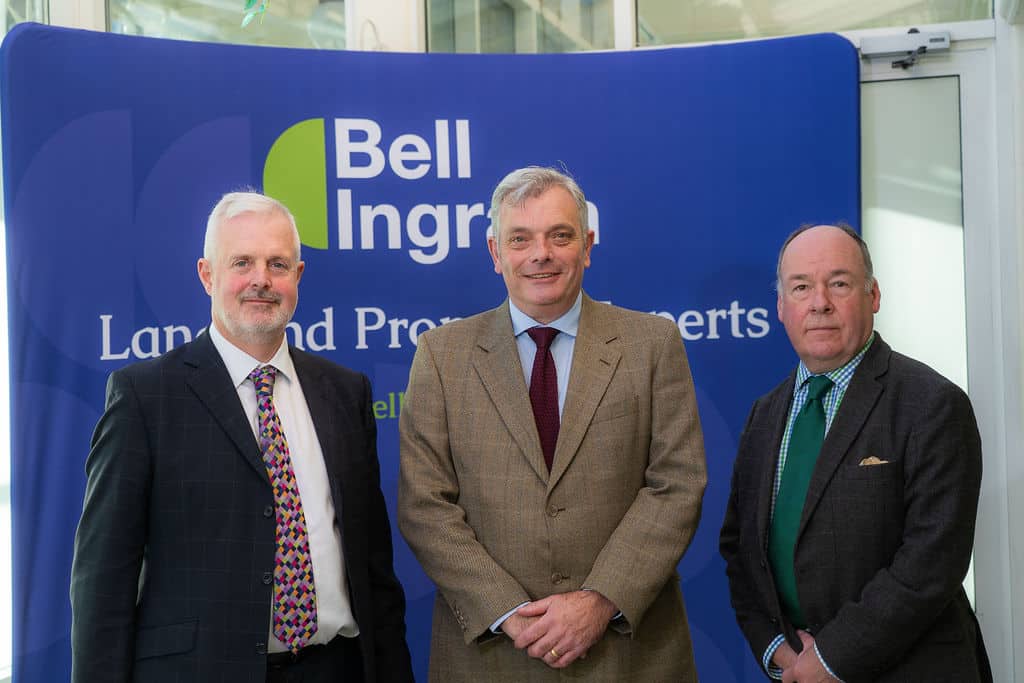
  • Simon (centre) is pictured with Managing Partner Mark Mitchell (left) and Senior Partner Malcolm Taylor (right).

Bell Ingram Appoints Richard Scrivener as Farm Management Consultant

Bell Ingram is delighted to announce the appointment of Richard Scrivener as Farm Management Consultant, based at the firm’s Perth headquarters.

Richard works across the organisation to provide farmers and landowners with strategic support and expert advice. His role is focused on helping clients to maximise efficiency, improve profitability, and achieve their long-term business objectives.

With academic credentials in both Sustainable Land Management (University of Cumbria) and Business Management (University of the Highlands and Islands), Richard combines a strong understanding of rural enterprise with a passion for sustainability and conservation. Alongside his professional work, he also runs his own conservation farm, specialising in rare and native goat breeds that are at risk of extinction.

Richard says: “I’m thrilled to be joining Bell Ingram and to have the opportunity to support farmers and landowners across Scotland. My focus is on delivering practical, sustainable solutions that help clients to grow their businesses while protecting and enhancing the land for future generations.”

Mark Mitchell, Managing Partner at Bell Ingram, adds: “Richard’s technical ability, business acumen and passion for conservation make him ideally placed to bolster our farm management offering. We’re confident that his addition will bring tangible benefit to our clients in delivering commercially successful and sustainable farming enterprises.”

As part of his consultancy role, Richard will:

  • Undertake farm business reviews and health checks, benchmarking performance and identifying opportunities for improvement.
  • Prepare investment appraisals, feasibility studies and risk analyses.
  • Advise on grant funding, subsidy applications, and environmental compliance.
  • Support farm diversification projects and new enterprise development.
  • Provide input on agronomy, livestock systems, crop rotations and nutrient management.
  • Oversee operational management and liaise with contractors where required.
  • Deliver regular reporting and performance monitoring to ensure businesses remain resilient and responsive to market conditions.
  • SAF advice and submission / help with rural payments.

For more information about Bell Ingram’s farm management services, please visit www.bellingram.co.uk

  • Richard is pictured above with Managing Partner Mark Mitchell.

Exceptional Country Home with Development Potential Hits the Market

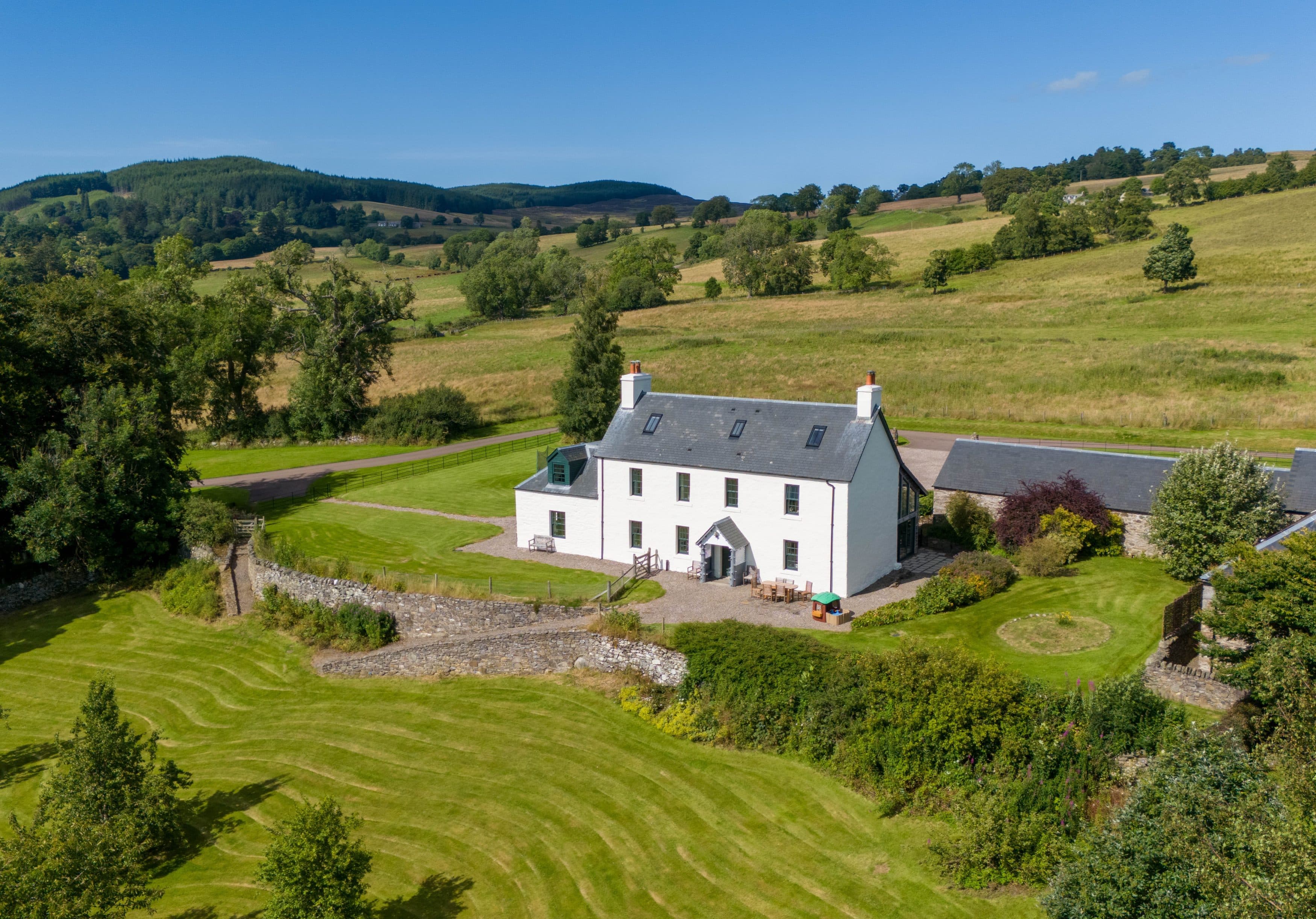
Bell Ingram is delighted to present The Old Sawmill, a distinctive country house set in over two acres of gardens and grounds in the peaceful hamlet of Moneydie, just north of Perth. This exceptional property is available for offers over £880,000, with an additional 3.5 acres of woodland available by separate negotiation.

Nestled in a tranquil rural setting west of Luncarty village, The Old Sawmill enjoys the best of both worlds – peaceful countryside living with swift access to the A9 and all the amenities of nearby Perth.

Completed in 2015, the property boasts a striking and thoughtfully designed layout, centred around a private internal courtyard accessible from multiple points within the home. Externally, it showcases Denfind natural stone, Siberian larch cladding, a pitched slate roof, and Nordan timber double-glazed windows and doors – combining quality craftsmanship with natural materials that blend beautifully into the surrounding landscape.

Inside, the home features expansive oak flooring and impressive 2.7-metre ceiling heights throughout. The standout main public room benefits from a dramatic vaulted ceiling, while high-quality fixtures and fittings are used throughout, including American white oak doors and facings.

The landscaped grounds extend to just over two acres, primarily laid to lawn with mature flower and shrub borders. Outbuildings include stables, kennels, and a large polytunnel with power and water supply. Full, in-perpetuity planning consent has been granted for the construction of two additional dwellinghouses – offering exciting development potential.

In addition, 3.5 acres of mature woodland are available via separate negotiation. Two paddocks with a field shelter, under separate ownership, are located adjacent to the property and may be available for lease from the neighbouring farmer.

The property benefits from mains electricity and water, supplemented by free-standing solar panels. Heating is provided via a ground source heat pump, and drainage is managed by a septic tank.

Estate Agent Carl Warden commented: “This is a truly unique home that blends beautifully into its rural surroundings. Its thoughtful design, additional development opportunities, and peaceful setting with easy access to Perth make it a standout property in the market.”

For further information or to arrange a viewing, contact Carl Warden on 01738 621 121.

[staff_member id=’3397′]