Protect your land and estate with voluntary registration

By Marcus Humphrey, GIS Manager

The 2024 deadline for voluntary land registration is fast approaching and those with property remaining on the older General Sasine Register may risk losing out.

The General Register of Sasines is the oldest national public land register in the world, dating back to 1617 and is a record of land deeds based on written description of properties. It is currently being replaced by the Land Register of Scotland, a digital map-based service which provides superior accuracy on land ownership.

There are three avenues that land and property can take to move from the Sasine Register to its modern-day successor. The most common is when land is transacted upon, including a change of Lender for example, which would immediately trigger a digital land registration. Property can also be voluntarily registered by the owner, but the final, less favoured avenue, is when the Keeper registers the land.

It is common for large swaths of land and estates, which don’t often, if ever, change hands, to be lingering on the Sasine Register. In a push to make sure all land and property is digitised in Scotland, the Keeper has set a target of 90% of Scotland’s land mass to be transferred to the Land Register by December 2024.

Titles in the Sasine Register are notoriously difficult to decipher in a modern-day context and boundary descriptions are often the best interpretation, meaning the margin for error is high as plans are often not 100% accurate.

For landowners with complex boundaries, this can prove problematic when the Keeper comes to register the land on the digital system. To avoid errors in title, it is preferable to voluntarily register land to retain full control over what appears in the Land Register.

The GIS Mapping team at Bell Ingram has expertise in preparing Title Plans for landowners and dealing with complex title deeds to facilitate the transfer to the Land Register. With access to a large collection of historical maps, coupled with the most up-to-date mapping software, our team can accurately interpret titles to confirm the extent of ownership. For more complex titles where boundaries are unclear our team will conduct a site survey to help produce maps and digital data to evidence your land ownership.

If you have still to register your land for the digital system, please contact our GIS Manager Marcus Humphrey on marcus.humphrey@bellingram.co.uk or 01738 621121 to discuss your mapping needs. For more information on our GIS Mapping service visit bellingram.co.uk

[staff_member id=’3317′]

Article posted on 13/06/2022

Five of the best ways to add value to your home

Now is the time many of us start planning a house move and getting our homes in order ready to put on the market. Senior Associate Andrew Fuller, based in our Oban office, outlines some quick wins to add value to your home before selling up.

Preparation

Check your documentation with your solicitor and notify them of your intention to sell. Don’t let boundary disputes and lack of information hold things up as this can prove very costly, and also causes some sales to fall through. If you are conducting viewings yourself, run through the process in your mind first and anticipate questions about the property and local area, and have the answers prepared.

Professional Photography

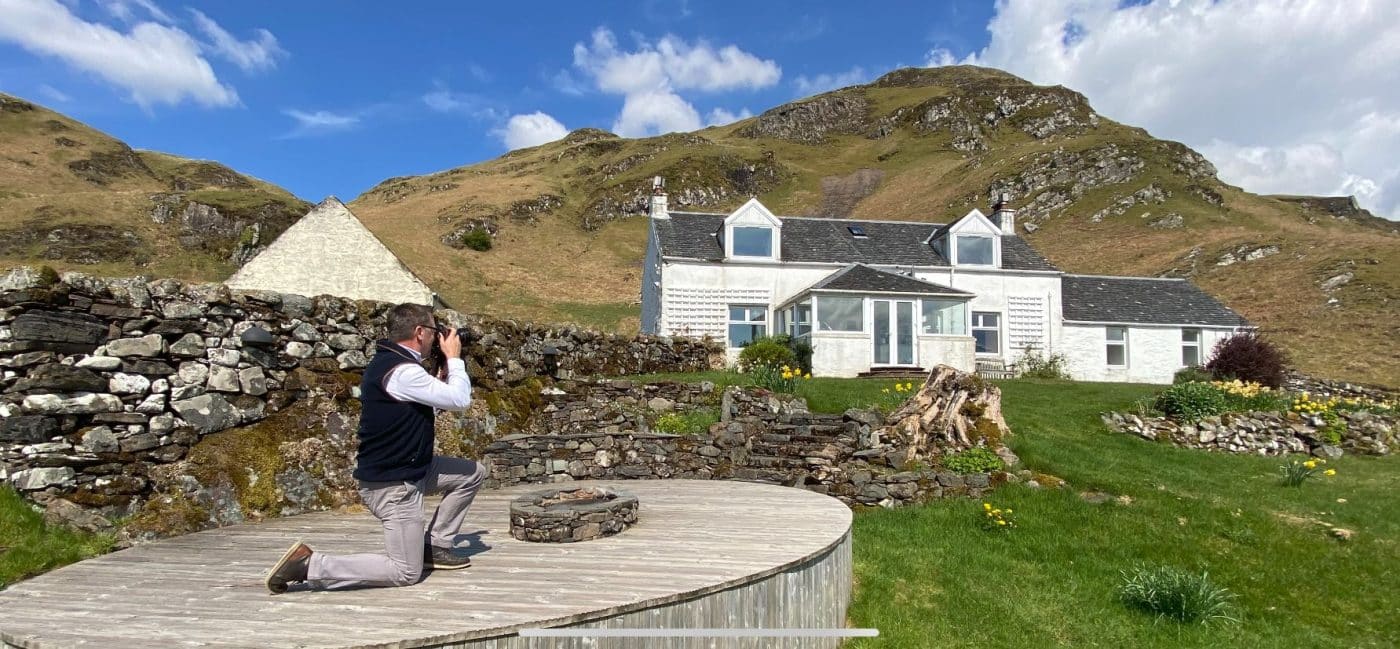
Follow the advice of your estate agent when it comes to professional photography; they know what will work best for your sale. Online marketing is very competitive, and you need to make your property stand out among the other local listings. Anticipate what the pictures should look like and dress the room prior to the photography day, trying to declutter where possible. You can also prepare for the photography by cutting lawns, cleaning and organising your house.

Have documentation in order

Create a file for your property and make sure that any items still under warranty are detailed, for example replacement windows, stove, boiler, etc. It gives comfort to a buyer to know that the property is in good order. If you have a fireplace, get the chimney swept and certified. Make sure that septic tanks are registered with the necessary authority, we have had many sales delayed because of this. It also helps to have a printed copy of the sales particulars to hand.

Up-sell the potential

Guide viewers to areas which have potential, for example garden areas that have a significant view, attic space for conversion, or outdoor space for an external studio or chalet, even if you haven’t made the alterations yourself at the time of sale. Most agents will have covered this in their sales part

If you are considering selling your home, farm or estate, our dedicated team is on hand to provide the expert advice you need. Find your nearest Bell Ingram office here.

[staff_member id=’3266′]

Article posted on 13/06/2022

RSABI – supporting people in Scottish agriculture for 125 years

By Carol McLaren, RSABI Chief Executive

RSABI’s new Chief Executive Carol McLaren took up the position at the start of the year. Carol grew up on a family farm in Perthshire and is well-known in the farming community, having previously worked as an agri-journalist, for whisky companies Edrington and Diageo, and for Quality Meat Scotland.

After four months in my new role, I am already incredibly proud of the dedicated team of staff, trustees and volunteers at RSABI, and the excellent work being delivered for the agricultural industry.

The service RSABI delivers for people in Scottish agriculture ranges from financial and emotional support to practical help and is always given with respect, understanding and confidentiality.  

Something which I had not realised before joining the team is the breadth of the range of the support offered by RSABI – from providing grants to help with heating costs to opening up channels of communication with statutory agencies, utility providers and creditors. 

One less well-known service which has seen demand treble since the start of the pandemic is our outgoing call service. Stress and loneliness are the main reasons for people receiving regular phone calls from our team of staff and volunteers.

When you contact RSABI you will find the response is always compassionate, understanding, and friendly and, for those in need of help, our team of case officers will find a way to make life feel less overwhelming. 

We’re incredibly grateful to have such fantastic support from the Scottish agricultural community and associated businesses. Whether it is taking part in a fundraising challenge, becoming a member of our supporters’ schemes – as Bell Ingram are – or a trustee on our board, the goodwill from those in the industry is greatly appreciated. 

During the coming year, RSABI will be celebrating its 125th anniversary and we have an exciting programme of events and activities lined up for this milestone year.

We’ll also be asking for the agricultural community’s continued support to raise awareness of the work we do and encourage people who need support to get in touch without hesitation. 

We know there are people who could benefit from our support, including younger people, who for some reason are hesitating to reach out to us. We are looking at steps to address this and in the coming weeks we will be launching an enhanced helpline service which will extend the ways people can get in touch with us to seek support.

Our Helpline service has this spring moved to being open 24/7, 365 days a year, to ensure we are ready and waiting for calls at any time of day or night.

There is no doubt that the pandemic and the resulting enforced isolation has had a substantial impact on many people of all ages in agriculture and this is now compounded by the worry we all share about the situation in Ukraine and the effects of the crisis on fuel and input costs.

With the industry facing many challenges and times of change ahead, it is vital that people know, whatever is around the corner, that RSABI is there for them as we have been for 125 years.

Our service is always confidential, always friendly, and always understanding so if you are struggling, or worried about a friend, family member or neighbour, please share our number or contact us on 0808 1234 555 or email helpline@rsabi.org.uk. Don’t hesitate.

Article posted on 09/06/2022

Award-winning 5-star boutique guest house for sale on the stunning Kintyre Peninsula

Carradales, the multi award-winning boutique guest house on the Kintyre Peninsula, is being presented for sale by Bell Ingram at offers over £625,000.

Built in 1892 for the minister of the new Free Church of Scotland by renowned architect H.E. Clifford of Glasgow, Carradales had been under the stewardship of Maurice Whelan and Steve Reed during which time it has received numerous awards, including the prestigious five-star award from the Scottish Tourist Board.

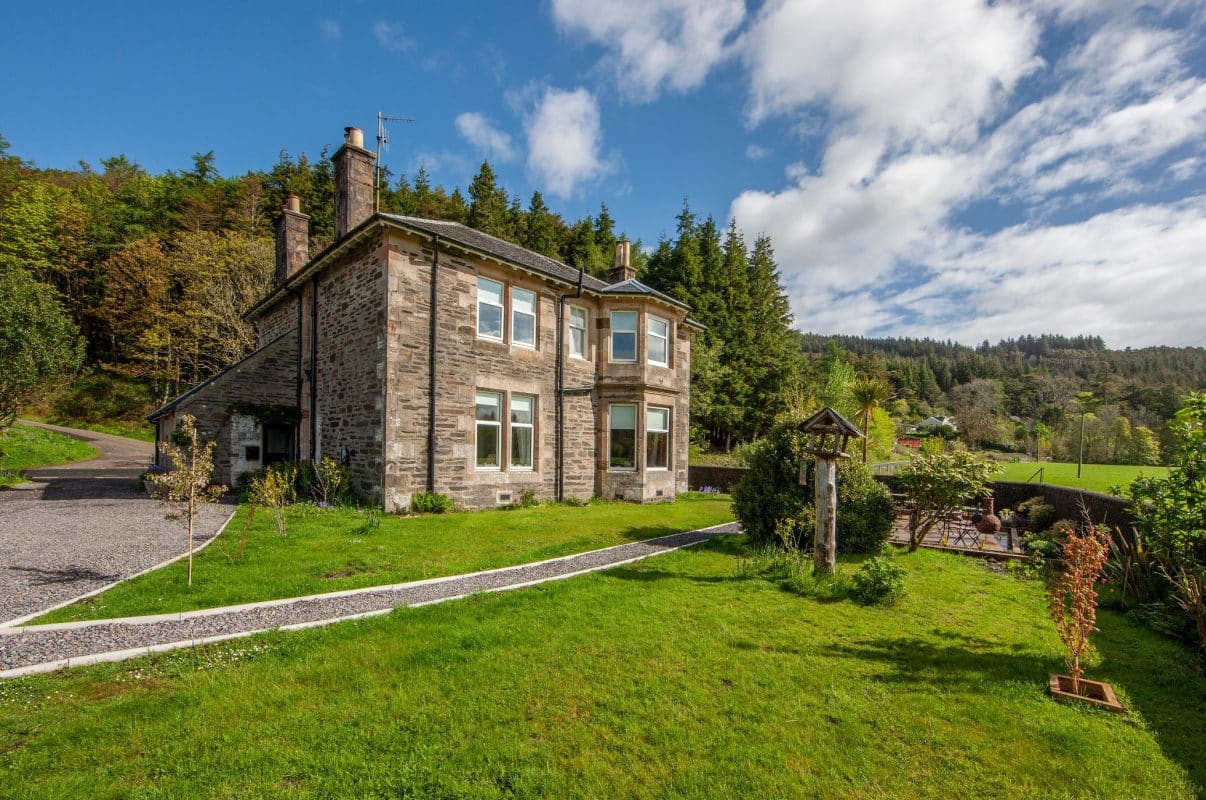
Situated within the picturesque Argyll village of Carradale, the Victorian property has been recently refurbished to an impeccably high standard and offers luxurious accommodation over two levels.

Commenting on the sale, Andrew Fuller from Bell Ingram’s Oban office, says: “It is a very special property and certainly not one we would see come onto the market very often.

“It is currently operated as a successful guest house, however given its popular location, would equally be suited to a family home or holiday let property. Interest is likely to be high, and early viewing is highly recommended.”

The property is entered from the front, with a welcoming porch leading through to the central hall. To the left, the sitting room offers a comfortable place to relax, with a feature bay window perfectly framing the wonderful open views over the surrounding countryside. The room is warmed through by an open grate fire which is set within a heavy cast fire surround.

Adjacent to the sitting room, the formal dining room also enjoys views across the rear gardens to the countryside beyond. A combination of high ceilings, well specified finishes and original features such as the intricate decorative cornice gives the room a feeling of opulence, the perfect place for guests to experience the delicious selection of locally sourced food. A feature multifuel stove offers warmth and comfort in equal measure.

The kitchen is positioned to the end of the hallway and consists of a range of stylish grey wall and floor units, complimented by a contrasting wooden worktop. The design encompasses a range of integrated appliances including a high specification Rangemaster stove and offers plenty of preparation area. The room is warmed by fan-assisted heating. To the rear of the kitchen, a functional utility room and porch also give access to the side garden of the property.

A double guest bedroom is located on the ground floor, complete with a stylish en-suite bathroom featuring a standalone bath, inbuilt shower and two-piece bathroom suite. A separate WC is also located on the ground floor, accessed from the hallway.

The upper floor is accessed by a feature wooden staircase, leading up from the hallway. A half-landing provides an unusual seating area, popular with guests looking to relax and take in the countryside views.

The three upper floor guest bedrooms are all accessed from a central landing and each benefit from a stylish en-suite bathroom. Two of the bedrooms are overlooking the rear gardens and enjoy views across the fields. A fifth bedroom is used as an owner’s residence, also benefitting from an en-suite shower room. All en-suites have electric underfloor heating, along with the ground floor cloakroom. A service staircase leads to the lower floor, exiting close to the utility room. A sizable storage cupboard is accessed from the stairs, with additional storage available under the main staircase.

For more information about Carradales Guest House or to request a viewing, please contact Andrew Fuller on 01631 567 791 or email andrew.fuller@bellingram.co.uk

[staff_member id=’3266′]

Article posted on 07/06/2022

To bee or not to bee? How beekeeping is putting bumble bees at risk

By Paula Carnell

Large and fluffy with yellow and black stripes, the great yellow bumble bee is the iconic image we imagine when we think of a bee. Once common across the British Isles, sadly it’s now only found buzzing around remote patches of machair and wild areas in the Highlands and islands of Scotland.

While it’s vital that we work together to protect this environment for their continued survival, it is also essential that there is understanding of exactly which bees need saving and why … particularly as more and more people are becoming interested in supporting bees, as well as producing their own honey.

Every time a landowner decides to add a colony of bees, they risk the survival of our native and solitary bumble bees. If the introduction is not done in an informed way, with full understanding of the balance of nature, the bumble bees are forced to compete with another 50,000 hungry mouths to feed and that is not congruent with their natural way of bee-ing.

Professor Dr. Peter Neumann from the Institute of Bee Health at the University of Bern has even gone as far as to suggest that beekeepers themselves are the biggest threat to bees and that the wisdom of many conventional beekeeping practices should be addressed.

We can learn so much from the wellbeing of our favourite pollinators, after all if it’s our environment that is killing them, it must also be inadvertently impacting us! It is vital that we audit our native bees, especially before introducing or moving honey bees onto our land to support them to survive and thrive.

I am passionate about protecting the balance of nature, especially the areas that have stayed in harmony to date.

Let 2022 be the year when bees thrive, they are giving us so many messages and it’s about time we took heed from these wise bee-ings, and along with them, have healthier thriving humans too.

  • Paula Carnell is a Bee Consultant and honey sommelier who works with landowners and businesses who wish to incorporate bees and sustainable honey production into their projects. Working from Somerset UK, Paula’s clients include The Newt in SomersetLake District Honey Company, Wellbeing and business retreats in Wales and England, as well as projects in Madagascar, Mexico and Lebanon. For more information visit Paula’s website: paulacarnell.com

Fun facts

  • Spring is when many bees emerge to breed and pollinate. 

  • There are 22,000 species of bees in the world, 11 of which are honey bees

  • Here in the UK, there are 270 species, 50 less than 100 years ago, and only one honey bee, Apis mellifera.

Article posted on 06/06/2022

Trust your farm sale to Bell Ingram

By Rob Whitson, Highland Partner and Head of Farm & Estate Sales at Bell Ingram.

With over 100 years of experience working in the countryside, Bell Ingram has the expertise to help you navigate the complex process of selling your farm.

Our farm and estates sales team can ensure you have the right advice from the outset with many of our agents coming from rural backgrounds and operating their own farming businesses.

If you are considering selling your farm there’s no time like the present, and our agents are here to help you maximise your assets and take advantage of robust rural land values.

Farmland prices rose sharply in 2021 and Bell Ingram expects this period of growth to continue throughout 2022 with strong demand coupled with a shortage of properties for sale resulting in excellent outcomes for those sellers taking the plunge.

While farmers continue to be the main investors in farmland in Scotland and the North of England, I predict that newer players emerging in the sector such as Forestry, Environmental, Social, and Governance (ESG) investors, and lifestyle buyers will spark competition in a market where demand already outstrips supply.

Volumes remain tight both north and south of the border, although we are expecting more land to come to market this year than in 2021. This means that what does come on the market moves quickly to a closing date and we are seeing some properties sell for well over their guide price.

If you are thinking of selling, the following steps will help you get the best price:

  1. Get the timing right

The current demand for farms is such that you could sell at any time. However, farms are best marketed during spring and early summer, when they are in the best condition and look most productive. Make sure you plan far enough in advance to allow time to consider crop rotations, sale of livestock and also preparation of marketing materials.

  1. Make a good first impression

It might sound obvious but it’s important to keep your property looking as appealing as possible to potential purchasers. This means keeping on top of repairs to farm buildings fencing and gates, cleaning out guttering, and filling potholes.

  1. Divide and conquer?

Whether to sell your property as a whole or divide into lots depends on the size and type of farm and what will be included the sale. If there is a mix of agricultural land and residential properties, dividing a farm into lots increases the range of potential purchasers, therefore creating an opportunity for increased competition. This can help to maximise sale price. Hill ground can also be lotted separately if it has planting potential for trees.

  1. Marketing your property

 Quality marketing material is vital when your property is being prepared for sale. As well as producing farm plans, farm building plans and floor plans, Bell Ingram will arrange for one of our professional photographers, using drone images, to showcase your farm at its best. As well as producing a high-quality brochure we offer the latest digital and print platforms to allow your property to be viewed by the right buyers.

  1. Find the best team

Selling farms is a highly specialised area of the land and property market which requires first-hand experience of the rural sector. Bell Ingram’s farm sales team has a trusted reputation in this sphere and our close contact with buyers and sellers across the UK enables us to complete many deals both on the market and privately.

To request a free valuation of your farm or estate call Rob Whitson on 01463 717799.

[staff_member id=’3405′]

Article posted on 06/06/2022

Your crofting questions answered

By Ian Blois, Senior Land Agent, Bell Ingram Highland

The unique land ownership system involved in buying and selling crofts in Scotland’s Highlands and Islands can be complex and difficult to navigate.

If the idea of Crofting and Crofting Legislation sounds arcane and old-worldly, it should be remembered that what began as a result of the 1883 Royal Commission on land tenure in the Crofting Counties, continues today with the slightly different purpose of retaining working-age communities in isolated areas of the North of Scotland.

In recent months, interest in moving to the Highlands has remained strong with many enquiries coming from people hoping to find a permanent home, often with some land or a plot to build their dream home.

With many small-holdings being subject to crofting tenure, our in-house crofting expert, Ian Blois, answers some of the frequently asked questions to help you understand crofting regulations in Scotland.

Q. I am looking at buying a croft with a house that requires a lot of work to be done to it before it is fully habitable. Given that crofting regulations require residence, how would that work? And how much time between purchase and residency would be allowed before you were in breach?

A. I am not sure that there is any specific time period before you would breach the regulations and the Crofting Commission do recognise the practicalities involved in building a house before moving to the croft, so it shouldn’t be a problem.

If your offer is successful, it will be subject to getting approval to the transfer from the Crofting Commission so you must have a genuine intention to live within 32km and actively farm the croftland. They will not approve your application if they think you are going to build a holiday cottage and continue to live permanently in Glasgow, for example.

Once your tenancy has been approved you should be fine, as long as you are making a genuine effort to build the house and to manage the land e.g. making a planning application, fixing fences etc. The Crofting Commission also allow tenants to be “absent”, if there is a genuine reason and you let them know, so there is a bit of wriggle room.

Always bear in mind that the Crofting Commission have the power to terminate the tenancy and to allocate it to someone else, if you don’t fulfil your obligations, even if you are the owner of the land. The new tenant would then have the right to buy the croft.

Q. Can you clarify what is meant by ‘owner occupied croft’?

A. Historically croftland has been part of a large estate, with many crofts being in the ownership of one landowner and the crofting tenants having the right to farm the land. This is similar in effect to the Freehold and Leasehold of a block of flats. Nowadays many crofts have become owner-occupied crofts, where the crofting tenant has bought the land, whilst retaining the tenancy.

As the tenancy is still subject to crofting regulations and overseen by the Crofting Commission, owner-occupiers remain obligated by the Crofting Commission to live within 32 km of the croft and to actively manage the land.

When an owner/occupied croft is sold on the open market, the buyer will be purchasing both the land and the tenancy or assignation. However, because the Crofting Commission has to approve the transfer of every assignation, offers to buy should be made subject to obtaining the Commission’s approval of the new owner as tenant.

Q. I am looking to sell my house which is currently part of a croft. What is the best way to do this?

A. If the land which the crofthouse occupies is still part of the croft, it would be best to apply to the Crofting Commission to decroft an area around the house and garden prior to putting it on the market. Banks and building societies will not offer a mortgage on a house which is still subject to crofting tenure, so many potential buyers would be unable to complete the purchase.

If you are looking to decroft your house and garden certain rules apply:

1.The tenant should not have made a decrofting application within the last five years.

2.The area to be decrofted should be no more than 0.2ha (or a good case must be made for a larger area).

3.The area must be for the house and garden only and should not normally include agricultural sheds.

4.The landlord’s consent in writing must have been received, with evidence provided as part of the application.

5.The decrofted land must be purchased from the landowner within five years of the Decrofting Order.

In the case of an owner/occupied croft where the crofting tenant already owns the land, purchase from the landowner and landowner’s consent obviously do not apply.

Q. We wish to de-croft our property. Can you advise on the costs involved and timescales?

A. First of all we would need to know if the croft has been registered on the map-based Crofting Register. This is a requirement prior to any application to the Crofting Commission to change details of a croft on the Register of Crofts. Whether the tenancy is being passed down a generation, being sold on the open market or a site is being decrofted, the crofting tenant must arrange for the croft to be registered. This process involves a fee and the cost of an advertisement in local newspaper, along with the cost of preparing a plan and completing the forms. A nine-month period must be factored in, to allow neighbours to make an objection to the boundaries if they think there are incorrect.

The application to decroft a house site can be submitted at the same time or on its own if the croft is already registered. Again, this will require a plan showing the area to be decrofted, giving areas and any access rights required if the site is not adjacent to a public road.

Once the application has been accepted (after any amendments), the Crofting Commission aim to make a decision within six weeks, with a further 42 days allowed for members of the public to make an objection. If all goes well the whole process is likely to take up to four months. Finally, there is a fee to pay to amend the information held on the Crofting Register.

As far as costs are concerned, each application is different, and your agent or lawyer will be able to advise.

Q. Can a company own a croft?

A. A company can own croftland, i.e. land that is subject to crofting tenure, but under crofting legislation a company cannot be registered as crofting tenant. So, if a company bought a croft, the existing crofting tenant would remain as the registered tenant and be able to exercise his/her right to buy the croft outright at 15 times the annual rent.

Q. Can you build a house on croft land?

A. In the case where there is no house on the croft, there is a presumption in favour of obtaining planning consent from the local authority for a house, either as a new build or to renovate a dilapidated cottage. This does not usually apply to non-crofted land, it allows the crofter the opportunity to satisfy their obligation to live on their croft and to manage the land and livestock on a daily basis.

In the case of a new build, the crofter will need to apply to the Crofting Commission to decroft a house site, to take it out of agricultural use, but this is generally given where planning consent is already in place.

For further information, I would recommend consulting the Crofting Commission website which holds all the relevant forms and guidance notes and has as a very helpful FAQs page. For more legal questions, most solicitors with an office in the Highlands and Islands are well versed in crofting law.

In conclusion, if the idea of Crofting and Crofting Legislation sounds arcane and old-worldly, it should be remembered that what began as a result of the 1883 Royal Commission on land tenure in the Crofting Counties, continues today with the slightly different purpose of retaining working-age communities in isolated areas of the North of Scotland.

For more information on crofts please contact Senior Associate, Ian Blois on 01463 717799 or email ian.blois@bellingram.co.uk

[staff_member id=’2666′]

Article posted on 06/06/2022

Bell Ingram boosts team with six new Associate appointments

Rural professional services firm Bell Ingram is delighted to announce the promotion of three Senior Associates and the appointment of three new Associates.

Rhona Booth (Perth), Andrew Fuller (Oban) and Charlotte Gilfillan (Highland) are promoted to Senior Associate, while Jamie Cowie (Highland), Alison Lowson (Perth) and Alastair Skinner (Perth) are appointed to Associate.

Mark Michell, Managing Partner of Bell Ingram, said: “At Bell Ingram, we firmly believe in actively promoting from within to encourage our employees to advance professionally. These promotions demonstrate our continuing commitment to grow and expand our business and to reward talented, hard-working professional people.

“We are currently recruiting for a number of positions, including qualified chartered surveyors and a head of forestry. If you would like to join our workforce, feel free to drop your CV for our consideration.”

  • Chartered surveyor and RICS Registered Valuer, Rhona Booth joined the Perth office in March 2020 and since then has brought in new clients and taken on the lead role on a major management contract. Rhona has also assumed the role of APC training co-ordinator.

  • Andrew Fuller joined Bell Ingram in 2018 after 14 years managing high-level development projects in the U.A.E. Under his guidance Bell Ingram’s Estate Agency business is becoming the go-to Agent for rural and higher value properties in Argyll and Bute.

  • Charlotte Gillfillan joined Bell Ingram in 2009, moving from Forfar to Beauly in 2019 where she has been a driving force in helping to develop the Bell Ingram brand in the Highlands. A qualified chartered surveyor and RICS Registered Valuer, she specialises in Rural Estate Management.

  • Dual qualified Jamie Cowie joined Bell Ingram in 2003 as a forest manager before going on to become a MRICS qualified chartered surveyor. Working out of the Highland office he undertakes the full range of professional work – forestry management, valuation, boundary disputes, crofting work and his skills are specifically sought after by larger utilities clients.

  • Alastair Skinner joined Bell Ingram in April 2011 as an IT assistant before taking over the role of IT Manager in 2019. He has been instrumental in developing our agile IT infrastructure which has enabled staff to work from remote locations to provide an ongoing service to our clients across all areas of our business.

  • Marketing Manager Alison Lowson supports the business with day-to-day marketing and communications with an emphasis on digital marketing, content writing and social media. Alison previously worked as a newspaper editor before joining Bell Ingram in 2019 after an 18-month stint with a marketing agency.

Full details of all our current vacancies at www.bellingram.co.uk

[staff_member id=’3301′]

Article posted on 26/05/2021

Rare opportunity to own slice of Highland History

An opportunity to purchase two properties steeped in Highland history has arisen with premium rural estate agents, Bell Ingram.

On the market for offers over £150,000, 1 & 2 Review Park are situated on the outskirts of Golspie and a stone’s throw from the magnificent Dunrobin Castle, the ancestral home of the Sutherland Clan.

The cottages were built circa 1800 in the Countess of Sutherland’s Review Park, where the famous 93rd Highlander Regiment of Foot were raised in 1799.

From their base in Golspie, the 93rd Highlander regiment went on to fight all over the world with the British Army, but their name was cemented into the history books during the Crimean War at the Battle of Balaclava.

As the Russians approached the site occupied by the Brits, the 93rd formed a line across the cavalry’s line of advance. William Russell, the Times correspondent, described the sight of the regiment as a ‘thin red line tipped with steel’. Despite being vastly outnumbered by their counterparts, the regiment’s unyielding presence caused the Russians to abandon their intention of taking Balaclava and the phrase ‘thin red line’ went on to symbolise any thinly spread military unit holding firm against attack.

As well as a popular stop on the North Coast 500, the Golspie area is a favourite for military historians and recently became home to the Battle of Littleferry Trail which takes history buffs on the journey of a Jacobean battle that took place on the eve of the famous Culloden clash.

The properties, which are on the market as a single lot, are category B Listed and offer the right buyer an exciting renovation and refurbishment opportunity.

Estate Agent, Joanne Stennett, comments on the sale: “1 & 2 Review Park are the perfect projects for a property lover with a keen interest in history.

“It is rare to see properties come to the market that are so rich in local, national and international history and we are excited to be part of the next step in their journey.”

For more information on 1 & 2 Review Park please contact Joanne Stennett on 01463 717799 or email joanne.stennett@bellingram.co.uk

[staff_member id=’3364′]

Article posted on 12/05/2022