

Bell Ingram estate agent’s fundraiser for wife’s typhoon hit village in the Philippines
A long-awaited trip to the Philippines to see his wife’s family has turned into a nightmare for Bell Ingram’s Andrew Fuller.
The senior associate, who heads up our estate agency team in Oban, and his wife Gerlie began their mammoth journey at the beginning of last week, flying via Hong Kong, before landing in Manila on Sunday.
Andrew takes up the story: “My wife Gerlie and I finally made it to the Philippines, only to find the last leg of our travel to her small island is prevented due to the huge typhoon that stuck on 16th December.
“Gerlie’s small, coastal village was directly in the firing line, and we have had reports that just a couple of houses remain from a total of around 200. This destruction has been replicated over a massive area, wrecking the homes of hundreds of thousands of people and knocking out all communications. Even now we are unable to make contact. Food, water, and shelter are the key priorities.
“We take the short flight tomorrow from Manila into Butuan City where we will stock up with essentials. It’s then a three or four hour drive into Surigao City. From there we have to find a boat to the island, a one-hour trip on calm seas.
“We had two small boats prior to the typhoon, but have no idea if they even exist anymore. I’ve bought a small pocket wifi so fingers crossed I can get some news out when we get there.”
Andrew has set up a Just Giving page to try and raise funds to help the most vulnerable in Gurlie’s village.
He adds: “All being well, we will be heading into the affected zone on 21st December to try and find Gerlie’s family.”
Here’s the link to Andrew and Gerlie’s JustGiving page if you’d like to contribute:
https://www.justgiving.com/crowdfunding/help-dinagat?utm_term=wNrPeq3pV
Article posted on 20/12/2021
Best of both worlds on offer at Berryknowe
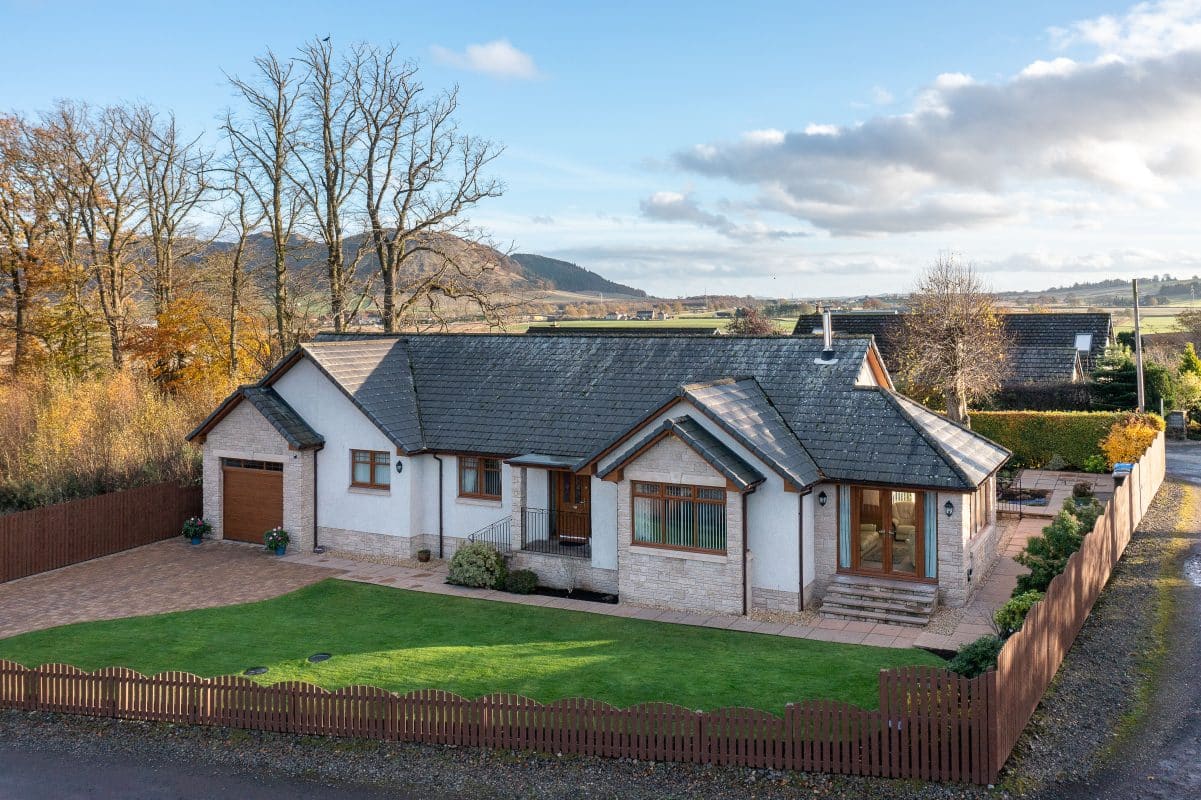
Buyers looking for rural living with close access to amenities need look no further than Berryknowe, on the market with premium rural estate agents, Bell Ingram, for offers over £470,000.
The four bedroom, detached bungalow is located at Hatchbank near Kinross and offers semi-rural living with far reaching countryside views, yet only five minutes drive from the charming town of Kinross with its ample amenities.
A substantial property, perfect for family living, Berryknowe boasts a modern dining kitchen, garden room with stunning views across the fields, family bathroom, large vestibule and reception hall and a tandem double garage.
The well laid out accommodation has quality fixtures and fittings including hardwood panel and part glazed doors, a German kitchen, ceiling cornicing and hardwood flooring in the vestibule and reception hall.
Meanwhile, the bungalow’s thoughtful lay out means a countryside outlook can be viewed throughout the home.
Surrounding the property is a spacious landscaped garden offering lots of outdoor space to enjoy the views beyond.
The surrounding countryside provides ample opportunities for the outdoor enthusiast, including nearby Loch Leven, renowned for its excellent trout fishing and excellent walking, cycling and riding opportunities.
For families, some of the most prestigious private schools can be found nearby at Strathallan, Kilgraston school for girls, Glenalmond, Craigclowan and St Leonard’s.
For more information, or to arrange a viewing contact Carl Warden on 01738 621121 or email carl.warden@bellingram.co.uk
Article posted on 01/12/2021

Estate Agents draw on forestry, mapping and planning expertise to achieve a record price for farming client
The sale of Bandominie Farm was one of the most memorable property transactions of 2021 for Carl Warden, Partner and Head of Estate Agency.
Bell Ingram’s Agency team drew on the expertise of colleagues from the company’s Forestry, Mapping and Planning departments to achieve a record result for their client, all the time navigating the challenges of ever-changing Covid restrictions as the market eased out of lockdown.
Located on the edge of the very buoyant Glasgow market, the 380-acre Bandominie Farm consisted of a farmhouse with outbuildings, a modern bungalow and a large area of forestry land.
The owner, who had lived there all his life, occupied the modern bungalow with his own family, while his elderly parents remained in the original farmhouse, which was in need of considerable modernisation and renovation.
To achieve the best possible price for our client, we advised that breaking the farm into separate parts would be the most lucrative way forward.
The first step in this process was to map the property thoroughly and our in-house GIS Mapping Department was tasked with providing three mapped areas of land – 275 acres for forestry planting, 19 acres to go with the old farmhouse and its considerable outbuildings, and a further 2.5 acres of paddock to be sold with the modern bungalow.
Bell Ingram’s Planning Department then made an application to have the Section 75 removed from the farm which allowed us to sell the residential properties separately.
The two residential properties were listed at £200k for the farmhouse, outbuildings and 19 acres, while the modern bungalow was put to the market at £250k with the paddocks and two small stables.
The attractive sales price, coupled with the lack of available stock in the Glasgow area, generated just short of 200 enquiries which resulted in 121 viewings being arranged in only six working days. A closing date saw both properties sold to the same buyer, achieving almost 25% above their asking price.
However, it was the Forestry element of the sale which ultimately generated the best outcome. Bell Ingram’s Forestry Department approached their private clients offering the 275 acres for an asking price in the region of £450,000 to £650,000, and our client was rather overwhelmed when a closing date achieved significantly above the asking price!
Carl Warden said: “Bandominie is a great example of why it can make sense to break complex properties down into separate components if you want to achieve the best possible price. It also underlines why it’s important to employ an agent with rural land and business experience who can draw on a range of expertise to add value to the sale.”
If you are considering selling your farm, our dedicated team is on hand to provide the expert advice you need to help achieve the best possible result. Contact Carl Warden on 01738 621 121 or email carl.warden@bellingram.co.uk
Article posted on 21/12/2021

Turf roofed Victorian ice house ‘unlike anything currently on the market’

Just behind the shores of a secluded beach on the remote Crinan Ferry Peninsula lies a turf roofed Victorian ice house, on the market with premium rural estate agents, Bell Ingram.
The Ice House dates back to the early 19th century and has previously enjoyed fame on the television series George Clarke’s Restoration Man.
Once used to store ice throughout and refrigerate fish throughout the year, the historical significance of the property is immediately apparent through its entrance door which leads to a large chamber that is thought to have served as a food packing area during the 19th Century. The property also includes the original loading hatch through which the ice was fed.
In recent years the Ice House has been updated to include a stunning frameless ice like ‘light loft’ fitted with bespoke, reinforced and heated glass walls, door and glass floor, ironically keeping it warm throughout the year, instead of cold.
Its iconic barrel-vaulted glazed extension comes with a turf roof, which from above gives the impression of the house blending seamlessly into its stunning surroundings at Crinan Ferry.
The sheltered sandy bay at the mouth of the River Add, seven miles from Lochgilphead offers gorgeous views to Duntrune Castle. The one acre plot benefits from a coastal outlook across the bay, often enjoyed by the current owner from a hot tub on one of the site’s elevated terraces.
Estate Agent, Andrew Fuller comments: “We are excited to bring this unique and historical property to the market. With its prime waterfront location and one of a kind building, the Crinan Ferry Ice House is unlike anything currently on the market.
“Perfect for history lovers and nature lovers alike, the Ice House at Crinan offers buyers the opportunity to truly ‘escape it all’. Originally, planning permission and listed building consents were granted to upgrade the property into a quirky residential dwelling, however the sizable land area also offers potential for development of a separate, detached residential dwelling subject to the necessary planning consent.”
For more information, or to arrange a viewing contact Andrew Fuller on 01631 567791 or email andrew.fuller@bellingram.co.uk
Article posted on 29/11/2021
Beautifully renovated equestrian property with glorious views

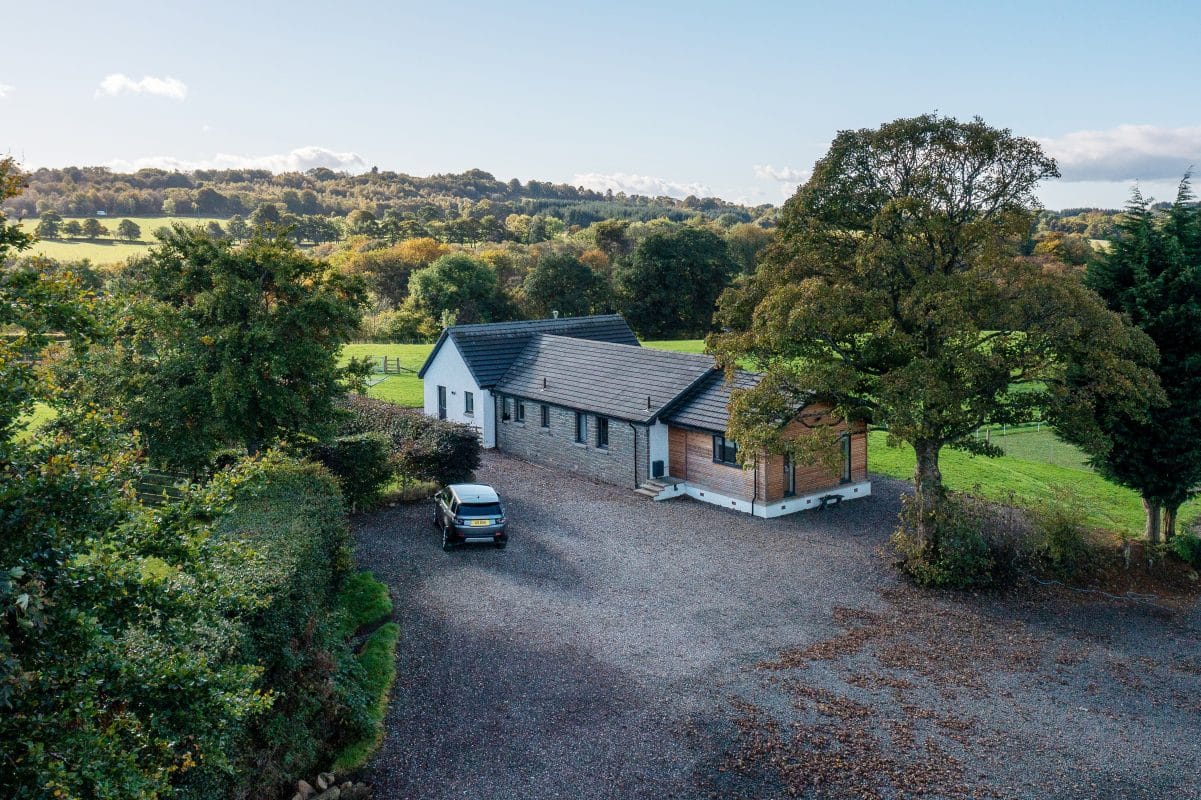
An opportunity to acquire a compact equestrian property with modern farmhouse set in idyllic surroundings has arisen near Kinross.
Perfect for horse lovers, Craigton is on the market with premium rural estate agents, Bell Ingram for offers over £600,000.
Extending to 13.88 acres, the property includes four grass paddocks with stabling, field shelters and agricultural outbuildings.
The jewel in the crown of this property is its modern and beautifully appointed family farmhouse. The bungalow is a detached family home which has been extensively extended and modernised.
The striking exterior has been finished with a mix of Denfind stone, dry dash and Siberian larch, with concrete tiles on the roof completing the high-quality finishes that can be found within the interior of the property.
Inside, the three-bedroom home is spacious and ideal for a growing family. An impressive living room showcases a vaulted ceiling, real oak floor and log burning stove. Patio doors open out to a timber decking and glorious views over the nearby hills.
Moreover, there is planning permission granted to extent the living spaces by adding an upper floor to provide a large master suite with sitting area, dressing room and bathroom with a shower. These works could be undertaken by the purchaser if desired.
Impressive views can be found surrounding this property as its location at Rumbling Bridge near Kinross, takes in some of Perthshire’s most peaceful open scenery. On the border of Kinross-shire and Clackmannashire, Craigton Bungalow is located just above the Gairney Glen meaning most of the rooms have outstanding, far reaching views.
Meanwhile, the property’s benefits from a central location with the M90 giving quick access to both Perth and Edinburgh and the nearby Clackmannanshire Bridge which connects to the Central Belt and Glasgow.
For families there are an excellent choice of private schools in the area including Dollar Academy, Strathallan, Kilgraston, Glenalmond College, Craigclowan Preparatory School and St Leonard’s School.
For more information, or to arrange a viewing contact Carl Warden on 01738 621121 or email carl.warden@bellingram.co.uk
Article posted on 23/11/2021

Is now the time to join the EV revolution asks renewables expert Joe Fergusson?
Bell Ingram has joined the electric vehicle revolution by installing workplace charge points at company HQ in Perth.
Our Head of Estate Agency Carl Warden is leading the charge in his Tesla 3 which has so far chalked up over 4,000 miles on company business.
If you too are thinking of replacing a petrol or diesel car with an electric model there are a number of pros and cons to consider before making the leap.
On the plus side, electric cars can greatly reduce your carbon footprint and save you hundreds of pounds each year in tax and fuel costs. The choice and abilities in the range of EVs on the market is expanding quickly, and the charging infrastructure is definitely improving. In fact, there are over 1,800 Chargepoint Scotland public points (out of over 2,500 installed across Scotland and 24,600 across the UK) offering free charging at up to 50kW, which gives around 100 miles of travel for a 30 minute plug-in.
Additionally, there is still ‘hay to be made’ by taking advantage of grants from both the UK’s Office for Low Emissions Vehicles (OLEV) and from Transport Scotland towards the installation of new charge points at workplaces and at homes. And the tax system remains generous towards businesses making the switch, allowing year 1 100% capital write down of new vehicles and 1% of value benefit-in-kind for users.
On the flip side however, EVs still have a shorter range than petrol/diesel vehicles and recharging the battery takes time and planning. Added to this, the upfront cost of buying these vehicles is still much higher than their traditional equivalents, although that gap is steadily narrowing.
To become ubiquitous the EV must be as convenient as its petrol/diesel equivalent, with costs on a par, both new and second hand, and the charging infrastructure must catch up, enabling urban street-dwellers to charge from lamp posts and bollards, etc.
What is for certain is that the writing has been on the wall for the internal combustion engine (ICE) ever since SONY commercialised the Lithium-Ion battery for its mobile telephone in 1991. In the 1910s, Thomas Edison spent much more time eeking out more miles from his lead-acid powered EV than he did on his electric lightbulb; what held him back was energy density – or kilowatt hours per tonne.
Even without the Kyoto Protocol, all the subsequent COPs and the focus on air quality in our vehicle-clogged cities, the EV – sometimes described as ‘a mobile phone with wheels’ – was only ever waiting for the battery with sufficient energy density to get its driver from A to B without having to stop to re-charge before it suited them to do so – now achievable with today’s Lithium-Ion chemistry and continuously-improving variations on it.
The beautiful simplicity of the EV – body, battery, computer, motor, wheels – compared to the fantastically complex supply chains for the hundreds of additional whizzing, rubbing, grinding and exploding elements of an ICE vehicle, means that EVs are the future of personal transport, like it or not. Their electricity may come from a fuel cell fuelled by green hydrogen, catalysed from water by renewable energy, but with ranges and charging times improving quickly, in a decade or so the ICE will become a rare and specialised thing.
Want to know more? Our Microgeneration and Renewables Consultant Joe Fergusson provides a feasibility appraisal service to any organisation pondering the viability of joining in the EV revolution, and can be contacted at joe.fergusson@bellingram.co.uk or 07711 552693.
[staff_member id=’3258′]
Article posted on 01/11/2021
Weighing up the pros and cons of Solar PV
Renewable energy technical consultant, Joe Fergusson, gives his thoughts on the current state-of-play in the solar PV and battery storage markets, and on the feasibility of these technologies in light commercial situations.
Anticipating the UK economy emerging from pandemic induced ‘intensive care’, there are loud calls from a range of pressure groups for the ‘rebuilding’ policies that will lay the foundations for our route to a Carbon-neutral Britain to be legally enforced.
As these policies very slowly take shape it is hoped that the waning direct support schemes for low-carbon heat and power technologies might be ‘re-loaded’, giving a much-needed boost to the heat pump, hydro, solar, biomass and small wind industries. However, the only support so far under consultation is a £4,000-perinstallation Clean Heat Grant to replace the Renewable Heat Incentive when that finally dwindles to nothing in March 2022.
Solar PV is evidently considered a mature technology, sustainable without further state subsidy. The installation cost of the panels, inverters and mountings is not changing much over time but the price of those components has now fallen to a point where, even without the feed-in tariffs that drove the market between 2011 and 2018, it is now cost-effective to install a system of an appropriate size, ie. Such that the majority of the power generated is consumed on site, displacing power that would otherwise be purchased. With the electricity price now risen to 15-17p per kilowatt hour (kWh), the payback can be attractive, especially when carbon savings are a consideration.
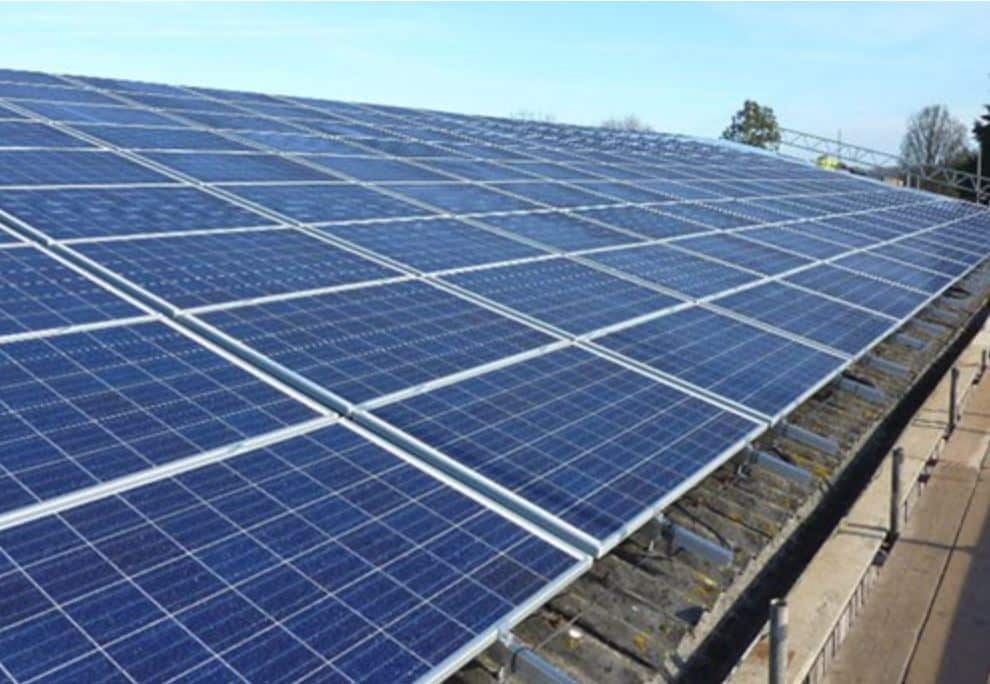
Output from solar PV systems is highly variable on a daily and seasonal basis. For an example, on a cloudless May day with a cooling breeze in central Scotland, a 90 module (panel) PV array covering 150m2 of roof, or ground-mounted, might generate 200 kWh over the day. Some of the output, up to 25 kW, could be used by machinery or by heat pumps heating a building, and some stored in a battery bank. The surplus would be exported, earning a guaranteed minimum export tariff. On a dull day in November or February this same system might generate just 20 kWh in the day or less. The annual total should be around 21,000 kWh.
Depending on many factors the value of this system’s generated power, in savings and exports, could be in the region of £3,000. The installation of such a system (not including battery) may cost in the region of £30,000, giving a payback period of about a decade, before allowing for any future electricity price increases. The system should last at least 25 years, the output diminishing only very slowly over the long term.
Where there is significant onsite consumption during the hours of darkness it is worth considering the feasibility of storing surplus power in batteries sized to suit normal overnight consumption. This is likely to rise with the fast-growing uptake of electric vehicles. A commercial battery system appropriate for the PV installation described above, storing 30-40kWh, might cost £15-25,000 at the moment.
The efficiency of panels and batteries may rise slowly and Government support could possibly return, but whether these factors will overcome the savings lost to delay is the moot question.
Exciting developments in ‘smart tariffs’ that reward those making battery capacity momentarily available to the National Grid for frequency and voltage balancing purposes could accelerate investment paybacks considerably. As these systems continue to fall in price our advice is to at least ‘future-proof’ any new building development or PV system by ensuring that battery banks and the associated control hardware – and also EV charging equipment, benefitting from 3-phase power supply – can be easily retrofitted in years to come.
Independent advice on the ideal system sizing and configuration will ensure the best outcome.
[staff_member id=’3258′]
Article posted on 01/11/2021
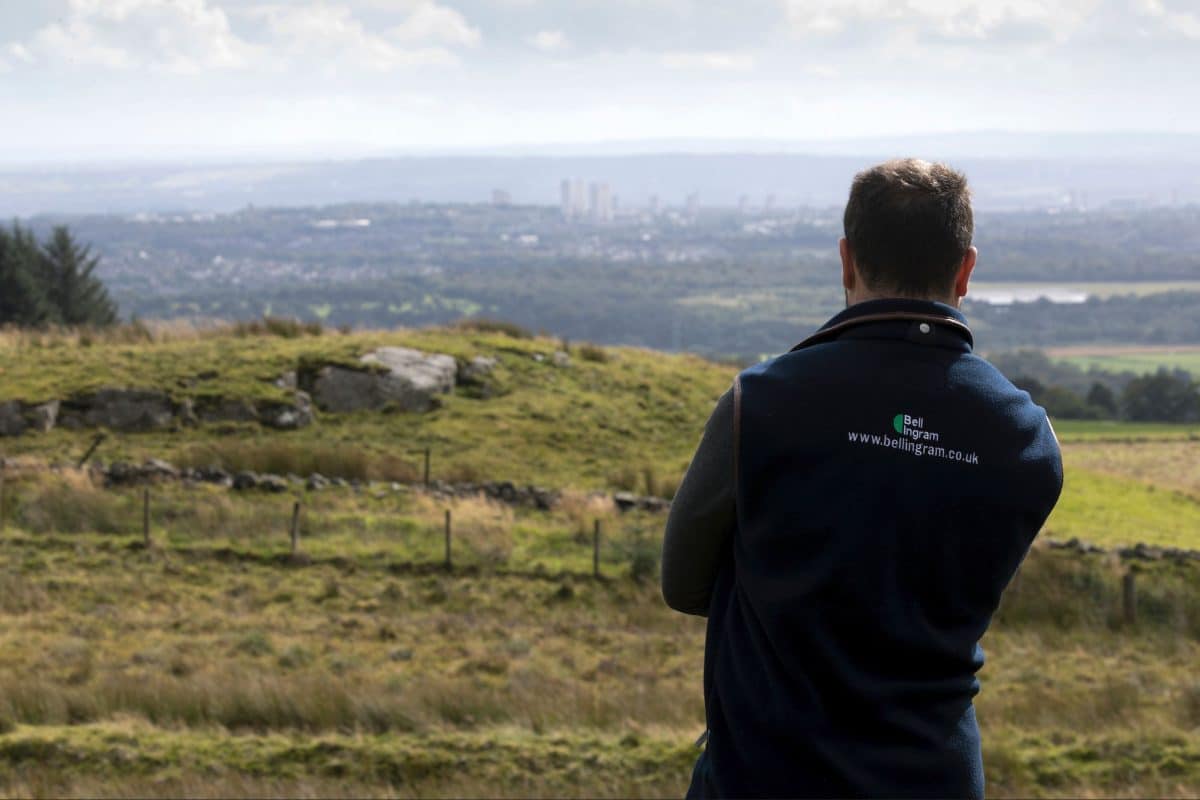
Can money grow on trees? Expert advice is key to getting a small scale woodland scheme off the ground – by Matthew Imrie and Gregor Dalziell
-
Project: Small scale woodland creation
-
Where: Blairskaith Muir on Hillhead Farm near Glasgow
-
When: February 2019 – Present
-
Why: Maximise an unproductive farm asset
-
Services required: Forestry, Land Management, Planning
Forestry has a key role to play in helping the rural economy recover from the impact of the Covid-19 pandemic.
That was the assertion from Scotland’s rural economy secretary Fergus Ewing when he announced a £1 million grant in July to encourage farmers and crofters to diversify into forestry production.
The grant is the first to be made available under the £40m Agriculture Transformation Programme which was launched in February to support farming and help reduce greenhouse gas emissions.
The money can be used to cover 90% of the cost of creating small-scale woodlands that will capture carbon and provide a source of income for farming businesses.
This focus on carbon capture could be a game changer, with a fledgling trade in carbon credits potentially offering much quicker returns in a sector that has traditionally appealed to more longer-term investors.
But just how easy is it to tap into the available grants and get a small-scale woodland scheme off the ground? Bell Ingram’s Matthew Imrie (pictured above) has first-hand experience of developing such a project on his family’s farm near Glasgow.
He says: “The Scottish Government’s push to encourage farmers to plant more trees ticks a lot of boxes – socially, environmentally and economically. However, it’s not as simple as identifying a piece of land, planting some trees and watching the money roll in. It can be a complex process that requires expert advice at every stage to ensure success.”
Matthew’s woodland journey began last year when the idea of developing a forestry scheme on unproductive land was first discussed with his farmer father John Imrie.
Those plans moved one step closer when Forestry Land Scotland (FLS) approved the Hillhead Forest planting application earlier this summer.
This green light was the culmination of 18 months of work by Matthew and his colleague Gregor Dalziell, who overcame a number of hurdles to successfully progress the first phase of the project … not least the surprise discovery of a colony of protected Great Crested Newts in a pond on the site!
Matthew explains the background: “While Dad was able to cultivate the majority of this new acreage and bring it into silage ground, the hill ground was moorland, and barely fenced. Rather than just leave it sitting we wanted to maximise our least productive asset in order to safeguard the future of the business.”
However, convincing any farmer to consider ‘alternative’ uses for their land is always a challenge.
Matthew continues: “I think it’s fair to say that most farmers and landowners take a great deal of persuading to use their land for anything other than traditional farming purposes. There has to be a very good reason to diversify and that reason is almost always financial. First and foremost, they want to know it’s a solid investment and what level of outlay is required to bring in a good income.
“From my experience of working as an assistant land agent at Bell Ingram, I knew that forestry offered good investment potential thanks to ongoing policy backing to meet Scottish Government targets of planting 36 million trees by 2030, and that a woodland creation scheme could provide the solution we needed at Blairskaith.”
Phase one of the project kicked off in 2019 when the Imrie family asked Central Scotland Green Network (CSGN) to conduct an initial feasibility study on the targeted area which produced a potential planting plan with three blocked areas.
Matthew takes up the story: “CSGN’s planting plan proved to be incredibly optimistic in the long run (eventually being narrowed down from 100 to 60 acres) but at that point it provided enough promise to kick off the project
“Next I enlisted the help of my colleague Gregor Dalziell to start the woodland application process. As well as collecting the required background information, including soil types, Forestry and Land Scotland (FLS) grant areas, forest suitability maps, haulage routes and regional forest strategies, photos were also taken of different viewpoints on and around the land to gauge the landscape impact.
“We also commissioned additional information in the form of Deep Peat, Breeding Bird, Phase 1 Habitat and Archaeological surveys which allowed us to make an educated assessment of the project’s feasibility early on and we were able to quickly adjust the budget and present this to the client for reassessment.
“It’s important to be proactive at this stage as it allows you to design your woodland around any potential barriers to planting.
“The Archaeological survey was good and didn’t present many issues, likewise the Breeding Bird survey highlighted some factors but nothing too major aside from some contradictory statements about bird displacement between our survey and the one next door.
“The Phase 1 Habitat survey threw up the most hurdles. This showed the proposed planting area to have a vast array of different habitats and highlighted some protected species in the form of a Butterfly Orchid and potentially a Great Crested Newt breeding ground as well as some Annex 1 habitats. These were all to influence the design of the woodland and the tree species that would be selected for planting.
The plan remained fluid, allowing us to factor in the findings of each survey as we received them, then further consultation was sought from the various stakeholders (FLS, SEPA, SNH, the local community council and East Dunbartonshire Council) together with some site visits to discuss our plans and issues highlighted.
Inevitably, the different perspectives from each of these stakeholders raised more issues along with suggestions on how to address them.
“However, the time we spent gathering detailed information was well worth the effort as it has resulted in a woodland that has managed to balance the environmental, social and economic elements required to deliver a more sustainable project ensuring the benefits are experienced not just by our family business but the local and wider community as well.
“The application was finally approved in June 2020 with the process having started in earnest in February 2019. While this site is admittedly more complex than some, it clearly demonstrates why it’s vital to have expert advice when embarking on any planting scheme.”
Bell Ingram’s Gregor Dalziell has been closely involved in the Blairskaith project from the beginning and believes that clear and speedy communication with all stakeholders is key to delivering woodland projects.
He adds: “A good example of this is that we were able to map the site using QGIS technology which meant that any amendments could quickly be added to the digital plan then fired back to all interested parties immediately. It’s a huge advantage to be able to map the area to the modern standards required by FLS. That makes a massive difference to the success of the project.
“Employing a rural professional services firm like Bell Ingram to deliver your woodland project means that you don’t just have access to our expert forestry team but to wide range of specialists whose land management experience and expertise spans everything from QGIS mapping to grant applications, planning to AMC funding.
So what’s next for the Hillhead Forest project?
Matthew Imrie says: “Community engagement is a big part of our vision for the Forest. There is already a bridle path through the farm which links Milngavie to Lennoxtown, and we plan to add gates and access points at certain locations to allow the public to walk through the forest and up to the trig point to enjoy the stunning views north to Ben Lomond and south over the city of Glasgow.
“We want to develop the social/environmental aspects of the scheme by involving the community at the planting stage. Our aim is to encourage people to connect with their environment, while empowering them to research, experiment and engage with their local landscape and flora.
“We are also keen to develop partnerships with our local schools using the Forest as an educational resource to bridge the gap between how young people in our urban areas see our countryside compared with those that live and work in it.”
However, the long-term success of projects like Hillhead Forest is ultimately down to its potential to generate an income.
Matthew concludes: “For many farmers forestry is becoming an increasingly important part of their income stream. The sector is exceptionally buoyant at present with investors taking advantage of current tax and grant regimes, as well as the opportunities offered by carbon credits. We’ll certainly be exploring carbon credits at Hillhead, not just to make our Forest economically viable, but as an important part of efforts to tackle climate change.”
Find out more about small scale woodland schemes at
www.bellingram.co.uk
[staff_member id=’3253′]