
Awaab’s Law in Scotland: What Scottish Landlords Need to Know

Preparing for the New Damp and Mould Regulations from 6 October 2026

By Johanna Wiseman, Associate

Awaab’s Law introduces mandatory timescales for investigating reports of damp and mould and carrying out any necessary remedial works. These changes will apply to private landlords in Scotland and are designed to ensure tenants live in safe, healthy homes.

What is Awaab’s Law?

Awaab’s Law is named after two-year-old Awaab Ishak, who tragically died in 2020 following prolonged exposure to mould in his family’s housing association home in Rochdale.

The legislation has been introduced to ensure landlords respond promptly to reports of damp and mould and take appropriate action to address any issues identified.

For tenants, the new regulations provide greater clarity regarding how quickly reports should be investigated and the action that should follow.

For landlords, the legislation introduces specific response times and places greater emphasis on accurate record-keeping, effective communication, and access to reliable contractors.

Private landlords in Scotland are already required to ensure their properties meet the Repairing Standard. However, Awaab’s Law goes further by introducing fixed and enforceable timescales, removing any uncertainty around what constitutes a “reasonable period” to investigate and address damp and mould concerns.

Key Timescales

Investigate within 10 Working Days

Any report of damp or mould must be investigated within 10 working days of the landlord becoming aware of the issue.

Investigations should be undertaken by a competent person, which may be a specialist contractor or the landlord/letting agent themselves where they possess the necessary knowledge, experience, and expertise.

Provide Written Findings within Three Working Days

Following completion of the investigation, the tenant must receive a written summary of the findings within three working days.

This communication should clearly outline:

  • The cause of the issue (where identified)
  • Any repairs or remedial action required
  • Proposed next steps and timescales.

Commence Repairs within Five Working Days

Where substantial damp or mould is identified and remedial works are required, repairs must commence within five working days of the investigation concluding.

Where there are legitimate reasons why works cannot begin within this timeframe, landlords should:

  • Inform the tenant in writing of the reason for the delay
  • Provide a revised timetable for the works
  • Take any reasonable interim measures to reduce the impact of the issue while permanent repairs are arranged.

Why It Matters

Failure to address damp and mould can have serious consequences for both tenants and landlords.

Damp and mould can significantly affect a tenant’s health and wellbeing, particularly for children, the elderly, and those with respiratory conditions. In addition, delays in responding to reports may expose landlords to legal and regulatory risks, even where repairs are eventually completed.

Increasingly, compliance will not simply be measured by whether an issue is resolved, but by how quickly and effectively a landlord responds.

Key Risks for Landlords

Failure to comply with Awaab’s Law may result in:

  • Legal action or tribunal claims from tenants
  • Increased scrutiny from regulators and enforcement bodies
  • Compensation claims, particularly where a tenant’s health has been affected
  • Reputational damage for landlords and letting agents
  • Increased costs where minor issues develop into major repair projects.

Robust record-keeping will be critical. If a landlord cannot demonstrate that appropriate action was taken within the required timescales, they may be considered non-compliant, regardless of whether repairs were ultimately completed.

Damp and Mould Reporting: Everyone’s Responsibility

It is important to remember that responsibility for identifying damp and mould issues extends beyond the tenant.

Landlords should ensure that anyone attending a property on their behalf remains vigilant for signs of damp, mould, condensation, water ingress, leaks, or inadequate ventilation.

This includes:

  • Letting agents
  • Property managers
  • Gas engineers
  • Electricians
  • Plumbers
  • General contractors
  • Surveyors and inspectors

If any of these individuals identify signs of damp or mould during a visit, they should report their findings immediately to the landlord or managing agent so that the matter can be investigated without delay.

Likewise, any observations made during routine landlord or managing agent inspections should trigger appropriate follow-up action.

Encouraging contractors and property professionals to report concerns, even where they fall outside the scope of their original instructions, can help landlords identify issues at an early stage and demonstrate a proactive approach to compliance.

Trusted Financial Management from Bell Ingram’s Client Accounting Team

Bell Ingram’s Client Accounting team has long been regarded as one of the quiet success stories within the business – a trusted partner delivering meticulous financial management to estates, farms and rural enterprises across Scotland and the North of England. Now, Head of Client Accounting, Johan McKenzie, is keen to spread the word further.

With demand growing for reliable, specialist bookkeeping and accounting support, Johan believes Bell Ingram is uniquely placed to help businesses looking for more than just a standard accountancy service.

Johan says: “We are passionate about helping rural businesses of all sizes who want the reassurance of top-quality bookkeeping, financial reporting and client accounting support from people who genuinely understand the rural sector.”

Bell Ingram’s Client Accounting department already works closely with a broad mix of private and commercial clients, managing finances efficiently and proactively while supporting colleagues involved in the day-to-day management of farms and estates.

What sets the team apart is its specialist understanding of rural businesses. Unlike generalist firms, Bell Ingram’s accountants work alongside land managers, estate agents, forestry specialists and utilities experts under one roof, giving clients access to joined-up advice and sector knowledge. The company itself has more than 100 professional staff across 10 offices throughout the UK.

Johan, a qualified accountant with extensive experience managing the financial affairs of diverse clients, leads a dedicated team based in Perth that includes accounts assistants and support staff focused on delivering a responsive and highly personal service.

The department’s services range from day-to-day bookkeeping and payroll support to VAT returns, management accounts and financial reporting. Bell Ingram also prepares and submits tax returns for individuals, partnerships, trusts and limited companies, while offering tailored advice on financial management plans designed specifically for rural enterprises.

“The demand for outsourced financial services has grown significantly in recent years as businesses look for expert support without the overheads of maintaining large in-house finance teams,” continues Johan. “Many clients are looking for a trusted finance partner who can provide everything from bookkeeping and VAT compliance to management accounting and financial reporting, while also understanding the commercial realities of rural and property businesses.”

However, Bell Ingram’s strength lies in combining those technical skills with an intimate understanding of land-based businesses and the challenges they face.

For clients, that means practical advice from professionals who understand seasonal cashflow pressures, estate administration, diversified income streams and the complexities of modern rural enterprises.

It also means peace of mind.

Bell Ingram operates robust client money handling procedures designed to safeguard and transparently manage client funds in line with professional standards and best practice.

For Johan and her team, the goal is simple: to become the trusted finance partner for businesses that value accuracy, reliability and personal service.

“In many cases, we become an extension of the client’s own business,” she adds. “We want people to know that whether they run a large estate, a farming enterprise or a growing rural business, we can provide the same high standard of financial support and attention to detail.”

For businesses looking to free up time, improve financial oversight and work with advisers who truly understand the rural economy, Bell Ingram’s Client Accounting team is ready to help.

Client Accounting Services at Bell Ingram

  • Day-to-day bookkeeping
  • Payroll services
  • VAT returns and compliance
  • Management accounts
  • Financial reporting
  • Preparation and submission of tax returns
  • Accounts support for individuals, partnerships, trusts and limited companies
  • Client account management
  • Cashflow monitoring and financial administration
  • Estate and farm financial management support
  • Budgeting and financial planning
  • Tailored financial management advice for rural businesses
  • Management of client funds in line with professional standards
  • Administrative support for estates and diversified rural enterprises
  • Bespoke accounting support for farms, estates and property businesses

For more information onour Client Accounting Services click here. 

Contact Johan McKenzie on 01738 621 121, or email johan.mckenzie@bellingram.co.uk

Could Climate Change Drive More People North?

By Joanne Stennett, Senior Associate

For generations, warmer weather has been one of the attractions of living in the south of England. However, as summers become hotter and periods of extreme heat more frequent, the UK’s traditional north–south property divide may begin to shift.

The Met Office projects that UK summers will continue to become warmer, with the most severe increases in temperature expected across southern areas. Hotter summers bring practical concerns, including uncomfortable homes, pressure on water supplies and increased risks to health. Many properties in the south were designed to retain heat rather than remain cool during prolonged periods of high temperatures.

Against this background, Scotland’s cooler climate could become increasingly attractive. The Highlands and Islands offer lower average summer temperatures, more space and access to coast, woodland and open countryside. These qualities may carry greater weight as people consider not only where they want to live now, but where they will feel comfortable in 10, 20 or 30 years.

Changing working practices could support this movement. Remote and hybrid working have already reduced the need for some buyers to live close to large southern cities. Better digital connectivity in many rural communities means that relocating north is now a practical option for a wider range of people.

Affordability is another consideration. Although property values vary considerably across Scotland, buyers moving from London and the south-east can often acquire a larger house with more land for substantially less than they would pay in their existing area. Energy-efficient homes, private water supplies, productive land and scope for renewable energy may become increasingly desirable.

This does not mean that Scotland is protected from climate change. Wetter winters, flooding, coastal erosion, storms and pressure on infrastructure must all be considered carefully. Buyers should examine flood maps, water supplies, access, energy efficiency and the condition of rural roads and services before purchasing. An area’s long-term resilience is more important than temperature alone.

Nor is a sudden mass relocation north inevitable. Employment, family connections, schools, healthcare and transport will continue to influence where people settle. However, climate is likely to become a more prominent part of the decision-making process.

Even a gradual increase in demand could affect the Highland property market, particularly for well-connected rural homes, properties with land and houses designed for low-energy living. This could support values, but it may also place additional pressure on housing availability for established communities.

Climate resilience is becoming part of how people assess property. As southern England faces more frequent periods of extreme heat, Scotland’s relatively moderate summers may become a stronger selling point, and one more reason why some buyers choose to look north.

For more information on living and buying in the Scottish Highlands, click here. 

Thinking of selling? Contact Joanne Stennett on 01463 717799, or email enquiries@bellingram.co.uk

Rights and Restrictions Over Land: Unlocking and Protecting Value

By Will Griffiths, Associate

Rights and restrictions over land, such as restrictive covenants, easements, and access rights, are a common feature of property ownership. Created to regulate the use and enjoyment of land, they can have a significant impact on how land is used, developed, and ultimately valued. While many continue to serve their original purpose, others may reflect circumstances that have since changed, meaning they are no longer required or no longer provide the intended benefit.

These constraints can either limit development or create opportunities for landowners who control them. Understanding their role and their value is key to making informed decisions.

Why They Matter

Whether benefiting from a right or being subject to one, these constraints often become critical where land has development potential. They can:

  • Prevent or delay development, even where planning permission exists
  • Restrict layout, density, or access
  • Reduce land value by constraining its optimal use
  • Create “ransom” situations where value is unlocked only through agreement

Equally, for those who control access or benefit from a restriction, these rights can represent an opportunity, particularly where their release or grant enables development.

Valuing Rights and Restrictions

Assuming the right or restriction is no longer required, a key question in these situations is:

What value is created by granting, modifying, or removing the constraint?

This is typically assessed by comparing:

  • The value of the land in its current constrained position, and
  • The value once the right is granted or the restriction is lifted

The difference represents the uplift in value.

In practice, agreements are often based on a share of this uplift, reflecting:

  • The importance of the right or restriction to the development
  • The availability (or absence) of alternatives
  • The dependency of the development on its release or grant
  • Market precedent and established valuation principles

Case Study: Removal of a Restrictive Covenant

We were instructed by a client who had been approached by a neighbouring landowner seeking the removal of a restrictive covenant affecting a 0.3-acre parcel of agricultural land in Cheshire.

The covenant prevented development on the site. Although planning permission had been granted, the restriction limited delivery of the scheme and reduced the site’s value.

Our Approach

We assessed:

  • The site’s value in its current constrained position
  • Its value assuming the covenant was removed

This allowed us to isolate the uplift directly attributable to its release.

Outcome

We identified a clear increase in value and advised that a proportion of the uplift should form the basis of any payment. Applying the principles established in Stokes v Cambridge Corporation [1961], a 33% share of the uplift in value was adopted as a benchmark, providing a robust and defensible basis for negotiations.

A settlement was ultimately reached on this basis, reflecting a 33% share of the uplift between the land’s agricultural value and its development value unlocked by the release of the restriction. This resulted in a settlement worth several hundred thousand pounds and brought the matter to a successful conclusion.

Key Insight

The value of rights and restrictions often lies not in the land they affect, but in the development potential they control or unlock.

Get in Touch

Whether you are:

  • Looking to unlock land affected by a restriction, or
  • Being asked to grant or release rights over your land

It is essential to understand the value implications before entering negotiations.

We would be happy to discuss your situation and help you achieve the best possible outcome.

Contact us on 01606 523 030 or email northwich@bellingram.co.uk

Article posted on 30/03/2026

How Bell Ingram Is Enabling the UK’s Hydrogen Network

Delivering the UK’s transition to Net Zero will depend not only on new technologies, but on reimagining the infrastructure already in place. At the forefront of this transformation is the LTS Futures project – an ambitious, £30 million initiative led by SGN to prove that the UK’s Local Transmission System (LTS) can be safely repurposed to carry 100% hydrogen.

While the headlines focus on engineering breakthroughs, it is the work behind the scenes – securing land, managing stakeholders, and enabling access – that has been critical to turning this concept into a real-world success. That is where Bell Ingram has played a defining role.

Repurposing the UK’s Gas Infrastructure

The LTS is a vast network of more than 1,000 kilometres of high-pressure pipelines, forming a vital link between the national gas system and the homes, businesses and industries it serves.

Repurposing this network for hydrogen has the potential to significantly reduce carbon emissions while maintaining the reliability of existing infrastructure. However, proving that capability required more than theory – it required a live, operational trial.

A UK-First Hydrogen Trial

In a UK-first demonstration, SGN successfully repurposed a 30km section of pipeline between Granton and Grangemouth in Scotland to carry hydrogen.

The trial included groundbreaking engineering feats, such as live welding and hot tapping on an in-service hydrogen pipeline -achievements never before completed anywhere in the world. Hydrogen supplied by INEOS was transported through the system and safely flared at the end of the test, confirming both the integrity of the infrastructure and the readiness of the workforce.

Making Innovation Deliverable on the Ground

For Bell Ingram, the challenge lay in ensuring that this complex and highly technical project could be delivered on the ground – efficiently, compliantly, and with the full support of those affected. From the earliest stages, the team provided comprehensive land consultancy services, securing access rights and managing relationships with landowners along the pipeline route and at key intervention points.

As Rhona Sharp, one of Bell Ingram’s lead surveyors on the project, explains:
“Projects like LTS Futures demonstrate that land is often the critical path in infrastructure delivery. Securing access and building trust with landowners is what enables innovation to happen on the ground.”

Making Innovation Deliverable on the Ground

Establishing early, transparent communication helped build trust and ensured that landowners understood both the purpose of the project and how works would be managed. Acting as a trusted intermediary, Bell Ingram balanced the operational requirements of SGN with the interests of rural stakeholders – ensuring that progress could be maintained without compromising relationships.

“From the outset, our focus was on early, transparent engagement,” Rhona adds. “By working closely with landowners and stakeholders, we were able to remove uncertainty and keep the project moving at pace.”

Making Innovation Deliverable on the Ground

This role required not only technical expertise but also a deep understanding of the rural environment. The pipeline route passed through a variety of landscapes, each with its own sensitivities and land use considerations. Bell Ingram’s long-standing relationships and local knowledge enabled the team to navigate these complexities, negotiating access agreements and ensuring that works were carried out responsibly and sustainably.

“We’re often operating at the intersection between complex engineering and rural communities,” says Rhona. “Our role is to translate those technical requirements into something that works practically for the people and land affected.”

Drawing on Wider Utilities Expertise

The project also drew on Bell Ingram’s wider utilities expertise, including GIS mapping, land referencing, and property advisory services. These capabilities helped translate a highly innovative concept into a deliverable project – ensuring that every parcel of land, every access point, and every stakeholder requirement was accounted for.

“This was a highly innovative project, but innovation only succeeds when it’s deliverable,” Rhona notes. “Our job was to make sure the land, access, and stakeholder elements were aligned to support that ambition.”

Identifying Risk and Keeping the Project Moving

Importantly, Bell Ingram’s involvement did not simply support delivery – it helped de-risk it. By identifying potential issues early, coordinating access, and maintaining clear lines of communication, the team ensured that the project could proceed at pace while meeting all regulatory and operational requirements.

“Our rural expertise really came to the fore,” Rhona adds. “Understanding land use, existing relationships, and local sensitivities allowed us to navigate challenges quickly and responsibly.”

Creating a Blueprint for the UK’s Hydrogen Future

The success of the LTS Futures trial marks a significant milestone for the UK’s energy sector. It demonstrates that existing gas infrastructure can be repurposed to support a hydrogen future, providing a practical pathway to decarbonisation. The findings will now inform a national blueprint for converting the wider LTS network – supporting government policy and shaping the future of energy distribution.

“There’s a real sense of pride in being part of a project that contributes to the UK’s energy transition,” Rhona reflects. “We’re helping to lay the groundwork- quite literally – for a hydrogen future.”

Collaboration at the Heart of Innovation

Yet behind this achievement lies a powerful example of collaboration. Engineers, energy specialists, and land consultants worked together to deliver something genuinely pioneering. Bell Ingram’s role within that partnership highlights the importance of land expertise in enabling innovation – ensuring that ambitious ideas can be realised safely, efficiently, and with the support of the communities they affect.

“Acting as a trusted intermediary is central to what we do,” Rhona concludes. “We ensure that both client objectives and landowner interests are respected, which ultimately leads to better outcomes for everyone involved.”

Supporting the Transition to Net Zero

As the UK accelerates towards Net Zero, projects like LTS Futures show what is possible when existing infrastructure is combined with forward-thinking expertise. For Bell Ingram, it is a clear demonstration of how its utilities and land consultancy teams are helping to unlock the next generation of energy solutions – playing a vital role in shaping a cleaner, more sustainable future.

Contact Us Today

Biodiversity Net Gain in Scotland

By Garry Dimeck, Planning Consultant

Biodiversity net gain (BNG) has become a defining feature of the planning landscape across the UK… but in Scotland, the approach is deliberately different. Rather than adopting a rigid, percentage-based system, Scotland is embedding biodiversity enhancement into the core of its planning framework.

For rural landowners, estates and developers, the implication is clear: this is no longer simply an environmental consideration. It is a material commercial factor that will increasingly influence land value, development strategy and long-term asset management.

A policy-led system with real teeth

At the heart of Scotland’s approach is National Planning Framework 4 (NPF4), which requires development to deliver “positive effects for biodiversity” through all development proposals (Policy 1). That expectation is advanced through Policy 3 which requires it to be demonstrated that biodiversity and nature networks can be conserved, restored & enhanced. While this stops short of mandating a fixed uplift, it would be a mistake to view it as a softer alternative to England’s 10% BNG requirement.

In practice, planning authorities are beginning to apply this policy robustly with Policy 3 now being accorded significant weight in decision-making, and proposals that fail to demonstrate meaningful biodiversity enhancement at risk of refusal.

From mitigation to measurable enhancement

Historically, biodiversity in the planning process has centred on mitigation, minimising harm rather than delivering improvement. That position has shifted decisively. Developments are now expected to leave habitats in a demonstrably better state, and increasingly this must be evidenced, not simply asserted. While Scotland does not yet have a mandated metric, the direction of travel is clear. Tools being developed by NatureScot will introduce greater consistency, but many planning authorities already expect quantified biodiversity outcomes as part of an application.

For applicants, this means:

  • Engaging ecological expertise at the earliest stage of site design
  • Quantifying baseline conditions and proposed enhancements
  • Demonstrating how gains will be secured and managed over the long term.

This is a step change in both scope and scrutiny.

There is an expectation that gains are delivered on-site and this is likely to inhibit the capacity of some sites to accommodate built development. Where on-site gains cannot be delivered, off-site delivery is possible but will come at a cost.

A new opportunity for rural land

For rural businesses and landowners, the commercial implications are significant and, in many cases, positive.

As biodiversity requirements become embedded in development, there is growing demand for:

  • Habitat creation and enhancement
  • Land capable of delivering off-site biodiversity benefits
  • Long-term environmental management agreements.

While Scotland has not established a formal biodiversity credits market, the underlying drivers are beginning to mirror those seen elsewhere in the UK. Land is no longer valued solely for its agricultural or development potential, but increasingly for its natural capital capacity.

Strategically managed estates may be able to:

  • Diversify income through habitat delivery
  • Support development by providing biodiversity enhancements
  • Strengthen long-term asset resilience through environmental stewardship.

In short, biodiversity is emerging as a tradable and investable component of land use.

Risk, cost and long-term liability

With opportunity, however, comes complexity.

Biodiversity enhancement is not a one-off exercise. It is typically secured through planning conditions or legal agreements, requiring:

  • Long-term habitat management
  • Monitoring and reporting
  • Financial commitments extending well beyond construction.

This introduces a new layer of operational and financial risk that must be understood at the outset. Poorly scoped biodiversity strategies can affect viability, delay applications or constrain future land use.

Early, integrated planning is therefore essential, not only to secure consent, but to ensure that biodiversity requirements align with the wider commercial objectives of the landholding.

A shifting baseline for development

What is becoming clear is that biodiversity enhancement is no longer a differentiator, it is a baseline expectation.

Scotland’s flexible, policy-led approach places greater emphasis on professional judgment, site-specific solutions and collaborative working with planning authorities. For well-prepared applicants, this creates scope to deliver innovative, landscape-scale outcomes.

For those who treat biodiversity as an afterthought, it presents a growing risk to both programme and profitability.

Looking ahead

As guidance evolves and a national metric is introduced, greater clarity will follow. However, the underlying trajectory is already established.

Biodiversity will play an increasingly central role in shaping:

  • How land is valued
  • How development is designed
  • How rural assets are managed over the long term.

For landowners and developers alike, the priority now is to move beyond compliance and recognise biodiversity for what it has become: a core component of strategic land use and commercial decision-making.

Garry Dimeck is a Planning Consultant at Bell Ingram, advising on rural development, land use strategy and planning across Scotland.

From Policy to Practice: The Defining Challenge for Rural Scotland

By Mark Mitchell, Managing Partner

As we move through 2026, the role of Scotland’s rural economy has never been more firmly in focus.

Across political debate, legislative reform and economic strategy, there is clear and welcome recognition that rural Scotland is central to the nation’s future. From food production and energy to housing, tourism and natural capital, the contribution of land and rural businesses is both significant and far-reaching.

Yet while the ambition is evident, the defining challenge now lies in translating that ambition into practical, deliverable outcomes.

Clarity, Confidence and the Investment Environment

Recent political engagement has reinforced both consensus and uncertainty. There is broad agreement on the importance of rural Scotland, but less clarity on how best to unlock its full potential.

For landowners and rural businesses, this creates a familiar challenge. Investment decisions – whether in agriculture, housing, forestry or environmental projects – are long-term by nature. They rely on a stable and predictable policy environment, underpinned by clear communication and consistent direction.

Encouragingly, developments such as the Rural Support Plan offer a more structured framework for future agricultural support. Commitments to multi-year planning and avoiding abrupt change provide a degree of stability that has been lacking in recent years.

However, questions remain around pace, delivery and resource. With meaningful reform unlikely to take full effect until the end of the decade, and funding effectively reducing in real terms, there is a growing gap between policy ambition and the practical means to achieve it.

That gap is further reflected in the wider fiscal landscape. Recent budget decisions, while containing some positive measures, fall short of providing the long-term certainty needed to support investment. Incremental adjustments and short-term reliefs risk being seen as temporary fixes, rather than part of a coherent, long-term strategy.

Partnership as the Foundation for Progress

If there is a consistent lesson emerging from recent policy development, it is that progress is most effective where genuine collaboration exists.

The evolution of crofting legislation demonstrates what can be achieved through a collegiate approach, bringing together landowners, crofters and policymakers to create more balanced and workable outcomes. Similarly, constructive engagement on environmental legislation has led to meaningful refinements, improving both fairness and deliverability in areas such as deer management and moorland regulation.

However, these examples also highlight a delicate balance.

Scotland has long benefited from a largely voluntary and collaborative model of land management. While there is a clear role for regulation, there is a risk that an overreliance on intervention could undermine the partnerships that have delivered real progress over many years.

Achieving environmental outcomes at scale will depend not only on setting targets, but on maintaining trust, supporting land managers, and ensuring that incentives are aligned with ambition.

Policy in Practice: Understanding Real-World Impact

Alongside strategic reform, the cumulative impact of individual policy decisions is becoming increasingly apparent.

Changes to business rates, particularly around sporting activities, illustrate how policy can diverge from practical reality. Measures intended to address specific concerns risk placing disproportionate pressure on smaller farms and diversified landholdings – many of which undertake little or no commercial sporting activity but play an essential role in land management, biodiversity and food production.

More concerningly, such changes have often been introduced with limited consultation and without a full understanding of how rural businesses function. The result is a growing disconnect between policy intent and real-world impact.

There is also a clear contradiction. At a time when government is setting ambitious targets for climate action, biodiversity and sustainable land use, there is a risk of penalising those who are actively delivering these outcomes on the ground.

For many, this raises uncomfortable parallels with previous policy missteps, where well-intentioned measures, developed in isolation, have had unintended and far-reaching consequences for family-run businesses and rural communities.

Delivering for Rural Communities

At the same time, there are clear opportunities – particularly in addressing one of rural Scotland’s most pressing challenges: housing.

The proposed creation of a new national housing agency, with a dedicated focus on rural and island delivery, represents a positive step. With the right leadership, coordination and practical focus, it has the potential to unlock new development, overcome long-standing barriers and support sustainable communities.

There is no shortage of willingness among landowners to play a role in delivering rural housing. The challenge lies in aligning planning, infrastructure and policy frameworks in a way that enables delivery at pace and scale.

Done well, this presents an opportunity not only to increase housing supply, but to tackle rural depopulation and strengthen local economies.

A Defining Moment

Taken together, these issues point to a defining moment for rural Scotland.

There is no shortage of opportunity. The importance of land in delivering national priorities, from climate and nature to housing and economic growth, has never been clearer. Demand for well-managed land and sustainable rural investment is strong.

But realising that opportunity will depend on how effectively policy is translated into practice.

That means providing clarity where there is uncertainty. It means aligning ambition with the tools, investment and timescales required to deliver it. And above all, it means working in genuine partnership with those who live and work in rural Scotland.

Confidence is the thread that runs through all of this. Without it, investment stalls. Without investment, progress slows. And without progress, even the most ambitious policy risks falling short.

The opportunity for Scotland is clear. The task now is to match that ambition with delivery, creating the conditions for rural businesses to invest, adapt and thrive, and in doing so, secure lasting benefit for communities, the environment and the wider economy.

Ready-Built Homes vs Self-Build on Scotland’s West Coast

By Andrew Fuller, Senior Associate

For many buyers considering a move to Argyll and the Inner Hebrides, the decision often comes down to a simple question: build or buy? While purchasing a plot offers flexibility and the chance to create a bespoke home, the reality of construction costs on Scotland’s west coast increasingly makes ready-built homes an attractive and often more cost-effective option.

Across the UK, build costs typically range from around £1,800 to £3,500+ per m², depending on specification. On the west coast of Scotland, however, the figure frequently sits at the upper end of this bracket and, in some cases, beyond. In remote areas such as Mull, additional factors such as ferry transport, limited local labour, and complex ground conditions can increase costs further.

Using the recently quoted figure of £3,500 per m², the build cost only for a modest 150 m² home would be circa £525,000. This excludes the initial cost of the plot, planning fees, professional services, utilities, access works and contingency, costs that can easily add to the overall budget.

In contrast, purchasing an existing property offers certainty, speed, and often better value. A ready-built home allows immediate occupation or income generation, eliminating the 12–24-month build timeline and the associated risks of cost overruns and delays.

The current market on Mull highlights this clearly. Through Bell Ingram’s Oban office, a variety of properties are available at price points that compare favourably with build costs:

  • Iona Cottage, a traditional three-bedroom cottage in Ardtun is available at around £275,000.
  • A four-bedroom detached home with partial coastal views can be secured for approximately £380,000
  • Larger family homes with panoramic coastal views, such as Kinelvadon View, are marketed at around £540,000
  • Even substantial lifestyle opportunities, including crofts with multiple letting cottages, are available from around £695,000.

When compared directly to the cost of building a new 150 m² home, these examples demonstrate that buyers can often acquire a finished property, sometimes with land, outbuildings, or income potential, for a similar or lower price.

Buying a plot undoubtedly offers creative freedom, allowing purchasers to design a home tailored to their lifestyle. However, this comes with significant responsibilities: sourcing contractors, managing timelines, navigating planning, and absorbing unforeseen costs.

By contrast, a completed home provided price certainty, immediate occupation and established infrastructure and access.

There is no one-size-fits-all answer. For those with a clear vision, time, and appetite for risk, self-build remains an appealing route. However, in today’s market, particularly on Scotland’s west coast, the economics are increasingly compelling in favour of shortlisting existing properties.

With a wide range of homes currently available through Bell Ingram’s Oban office, many buyers are finding that their dream home offers not only financial value, but the opportunity to start enjoying the west coast lifestyle immediately.

For more information on our property services on the West Coast, click here.

Growing Economic Value from Forestry in the Scottish Borders

By Sam Guthrie, Forest Manager, Bell Ingram

One of the biggest barriers to economic growth in rural Scotland is not a lack of ambition, but the practical challenge of how to unlock value from land that is difficult to access, manage or develop using conventional methods.

At Talla Reservoir in the Scottish Borders, we are seeing how innovation can fundamentally change that equation.

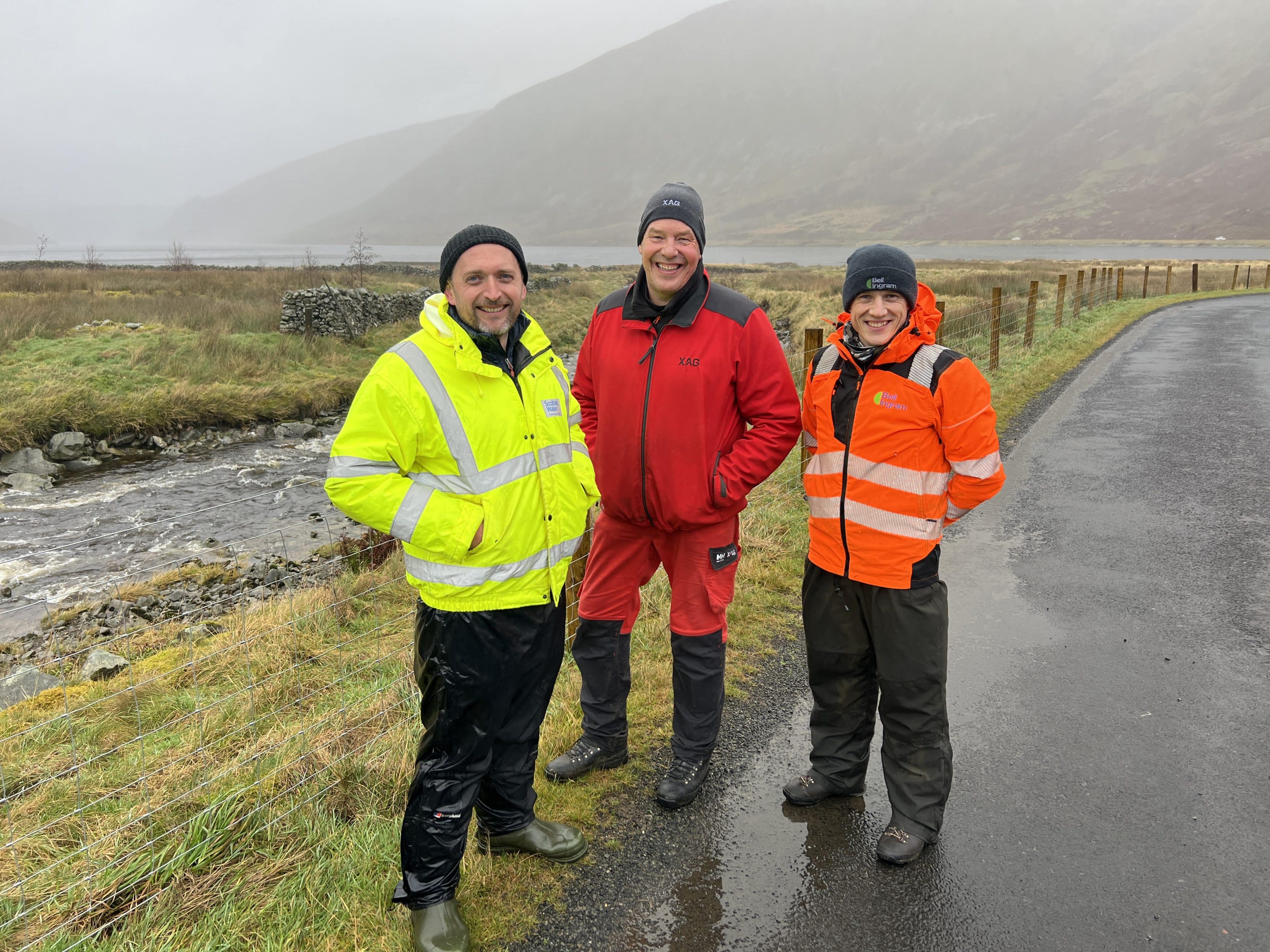
Working with Scottish Water and delivery partners, our Forestry team at Bell Ingram has helped increase the stocking of an existing native woodland created using heavy-lift drones, with permission to operate beyond visual line of sight. Using drone and seed pelletisation technology, 2.1 million native tree seeds have been dispersed across steep, inaccessible ground – land that would otherwise have taken centuries to colonise with trees.

From an economic perspective, the significance of this approach cannot be overstated. Traditional planting methods on terrain like this are slow, labour-intensive and expensive. By contrast, drone seeding allows large areas to be treated efficiently, safely and at scale, reducing costs while accelerating delivery. It opens up a viable route to productive land use where previously there were few realistic options.

The wider Talla Water Woods project is expected to cover over 80 hectares, combining upland and montane scrub planting, with the ecotones blended between. Beyond the clear environmental benefits, the project is designed to deliver long-term economic value by improving land resilience, protecting critical water infrastructure and reducing the energy and cost associated with water treatment during extreme rainfall events.

In practical terms, stabilising soils within the catchment helps reduce the volume of organic material entering the reservoir, making treatment simpler and more efficient. That represents a direct operational saving – and a strong example of how well-planned woodland establishment can support core business objectives.

What is particularly exciting about projects like this is their wider potential. As land and forest managers and advisors, we are increasingly being asked to help clients balance commercial performance with climate, biodiversity and community expectations. Innovative solutions such as drone-enabled woodland establishment offer a way to do exactly that – turning challenging landscapes into assets that deliver multiple, long-term returns.

At Bell Ingram, our role is to help landowners and organisations navigate that complexity: aligning new technologies with sound forestry practice, robust governance and a clear understanding of long-term land value. Talla demonstrates that economic growth in rural Scotland does not have to come at the expense of environmental stewardship – in many cases, the two go hand in hand.

As pressures on land continue to evolve, the ability to think differently about how land is used, managed and invested in will be critical. For me, projects like Talla Water Woods show that innovation is not just about new technology – it’s about creating smarter, more resilient rural economies that are fit for the future.

Article posted on 30/03/2026