Bell Ingram Strengthens AMC Finance Team with Appointment of New Valuer

Bell Ingram announces Catherine Lawson has been appointed as an Agricultural Mortgage Corporation (AMC) valuer, recognising her experience and expertise in valuing rural property.

AMC specialise in long-term mortgages and loans for farms and rural businesses for a wide range of business needs including: buying land, new buildings and fixed equipment, restructuring borrowing, paying out a retiring partner, diversification, renewable energy projects or sustainability improvements.

As agents, Bell Ingram’s valuers support clients through all stages of the process, from helping to complete the application form, to collating supporting documents and valuing the property used as security.

Catherine joins Bell Ingram’s James Petty, Malcolm Taylor and Sarah Tyson who are also AMC valuers alongside Isla Shaw who is an AMC introducer completing application forms and dealing with enquiries.

Sarah Tyson comments on the appointment: “It is great that our AMC team has been strengthened with Catherine’s approval as a full AMC valuer. This confirms Bell Ingram’s position as a leading AMC agent in Scotland. Across our team, we all deal with clients investigating AMC finance and the valuers take the job through to the final stage by valuing the security property.

“AMC continues to be a reliable long term source of finance for rural businesses. It is also able to consider transfers of loans to the next generation  – particularly important just now when considering forward planning and succession alongside IHT implications.

“For anyone needing finance including for land purchase, building improvements or diversification, it is always worth giving our team a call.”

For more information on our AMC service contact Sarah Tyson on 01738 621 121 or email sarah.tyson@bellingram.co.uk

Bell Ingram’s Surveyors Supporting United Utilities’ Better River Project

Brief

United Utilities’ Better River Project forms part of its ‘Big North West upgrade’ – a £3 billion investment to reduce storm overflow spills by 60% by 2030 and improve more than 300 miles of river across the North West. With major works planned from the River Kent in Cumbria to the Irwell in Lancashire and Greater Manchester, and a £200 million programme to protect Windermere, the scale and pace of delivery requires robust land and property support.

Bell Ingram’s Surveyors were appointed to provide comprehensive land referencing, statutory and valuation services to enable timely access to land and secure the rights necessary to deliver this nationally significant environmental programme.


Process

Bell Ingram’s role began with detailed land referencing, establishing land ownership and identifying all affected interests along proposed pipeline routes and at storm overflow intervention sites. Working closely with United Utilities’ engineers, the team assisted with route planning and site selection, advising on land constraints and highlighting sensitive or complex stakeholders, including Schedule 13 undertakers such as Network Rail, whose operational requirements could restrict access.

Surveyors managed landowner liaison throughout, holding site meetings, serving statutory notices under the Water Industry Act 1991, and negotiating access agreements. This included temporary site compound licence agreements where compounds were remote from pipe-laying works, as well as negotiating easements, leases and, where required, land purchases.

The team agreed accommodation works covering soil management, reinstatement and land drainage, and compiled photographic Records of Condition to protect all parties. They arranged structural surveys where works were near buildings and advised on valuations, compensation budgets and programme risk.

In addition, Bell Ingram liaised with landowners and Distribution Network Operators to secure wayleaves for power supplies to upgraded assets, ensuring that infrastructure improvements could be energised without delay.

Outcome

Bell Ingram’s proactive, solution-focused approach enabled United Utilities to maintain momentum across hundreds of intervention sites. By securing access, mitigating land risk and fostering constructive relationships with landowners, the surveyors played a critical role in facilitating works that contributed to a forecast 20% reduction in spills in 2025 alone and an overall 45% reduction since 2020.

Their expertise has helped underpin progress towards the 60% reduction target by 2030, supporting meaningful improvements to water quality and river health across the North West.

Article posted on 05/03/2026

From Farm to Profession: Why Rural Surveying Is a Natural Fit for Young People in Agriculture

By Rhona Booth, Partner

For many young people growing up on farms, choosing a career can feel like a choice between staying in agriculture or leaving it behind. But rural surveying offers a path that keeps one foot firmly in the countryside while opening the door to a rewarding professional future.

Bell Ingram’s Graduate Surveyor programme is designed to help young people turn their understanding of rural business into a long-term career that helps shape the rural economy and landscape around them.

From utilities, infrastructure and renewable energy developments to farm succession planning and diversification schemes, surveying covers a variety of exciting projects and graduates quickly discover that no two days are the same.

At Bell Ingram, our graduate surveyors play an active role within their teams from the outset. Their work includes overseeing agricultural and residential property and estate management for a wide range of clients, delivering land and property advice on major utilities, infrastructure and renewable energy schemes, and assisting with projects from initial planning through to completion.

The role requires initiative, organisation and a proactive approach to meeting client deadlines and objectives – qualities that many people from farming backgrounds already possess.

That agricultural experience can be a significant advantage. Understanding how farms operate day to day, the financial pressures facing agricultural businesses, and the realities of managing land provides valuable context when advising rural clients. Being able to combine professional knowledge with first-hand experience allows surveyors to see challenges from the client’s or landowners perspective and provide practical, grounded advice.

This connection between farming and professional services is reflected in the work graduates undertake during their first year. Typically, they gain hands-on experience across several areas, working alongside experienced surveyors on valuations, mapping, access rights, land sales and general estate management. This breadth of exposure helps graduates develop both technical knowledge and confidence in dealing with clients and rural businesses.

There are several routes into the Bell Ingram Graduate Surveyor programme. Ideally, applicants will have a degree accredited by the Royal Institution of Chartered Surveyors (RICS). However, the firm also supports candidates who are willing to complete relevant postgraduate study to gain the necessary qualifications. Bell Ingram has supported graduates through further education to enable them to sit their Assessment of Professional Competence (APC), ensuring that those with the right attitude and rural understanding are not excluded by their academic pathway.

Professional accreditation is a central part of the graduate journey. Graduates work towards becoming Chartered Surveyors through the RICS APC, supported by a structured training programme. This includes internal and external continued professional development events, graduate training days, commercial and professional skills training, and guidance from a dedicated RICS supervisor and counsellor.

For those coming directly from hands-on farming, the transition into a professional services role can seem daunting. The graduate programme is designed to make that transition easier. By shadowing experienced professionals – many of whom continue to balance their own rural businesses alongside their surveying careers – graduates gain insight into how agricultural life and professional work can complement one another. This exposure helps build confidence and demonstrates that a career in surveying does not mean leaving farming behind.

The long-term career prospects within the profession are significant. Bell Ingram places strong emphasis on internal development and progression, with many former graduates moving into senior roles within the firm. Mark Mitchell, Managing Partner at Bell Ingram, is one such example. He began his career with the company as a Graduate Land Agent and has progressed to lead the business today, a journey that highlights the opportunities available to those entering the profession.

Other graduates from farming backgrounds have advanced to Associate and Senior Associate positions and now play an active role in mentoring and training new recruits. Their progression reflects both the value of agricultural experience and the strength of the graduate programme in developing future rural professionals.

For young people considering their future, rural surveying offers a way to stay connected to the land while building a professional career with variety, responsibility and purpose. If you love rural life but want to broaden your horizons, becoming a rural surveyor may be less of a departure from farming than it first appears, and more of a natural next step.

For more information on Bell Ingram’s Graduate Programme visit bellingram.co.uk/early-careers

Why Getting Land Referencing Right Matters

Land referencing is the process of identifying all interests that are affected by a utilities and infrastructure scheme and who may have a potential claim arising from the impact of the scheme going ahead. This information on the ownership and rights to land will be the key items of data to stakeholders throughout the life cycle of a project.

It is the essential first stage of any utility or infrastructure scheme and the initial approach to a landowner or occupier often sets the tone for future negotiations. We understand how crucial this first contact can be to successful project delivery as establishing accurate information from the outset helps build trust, supports clear communication, and reduces the risk of delays later in the process.

Supporting project timelines and statutory processes

Accurate records of land ownership and occupation are required throughout the development of a project. They are fundamental to securing land access for surveys, managing stakeholder engagement, serving legal notices, and submitting applications for Compulsory Purchase Orders (CPO) and land acquisition. If this information is incomplete or incorrect, the entire project timeline can be placed at risk, potentially leading to delays, additional costs, and legal complications.

Land referencing is not limited to the footprint of permanent infrastructure. For example, on wind farm developments, access requirements often extend well beyond the turbine locations themselves. The delivery of large turbine components frequently requires temporary access across private land to accommodate abnormal loads, crane pads, widening of tracks, or temporary compounds.

Accurate land referencing ensures that all landowners and occupiers affected by these access routes are identified early, allowing the necessary access rights to be secured in advance of construction. Without this work, delivery programmes can be delayed at a critical stage of the project, particularly where transport routes cross multiple ownership boundaries.

Starting early

Land referencing should begin at the earliest stage of any project. Starting early allows sufficient time to verify ownership, confirm occupation, resolve discrepancies in land records, and maintain accurate datasets as the scheme evolves.

The role of technology in modern land referencing

Technology now plays a central role in modern land referencing. At Bell Ingram, bespoke GIS systems are used to record, analyse, and display landownership and occupier information, including the preparation of landownership maps and plans. These systems help ensure accuracy, improve efficiency, and provide clients with clear, reliable ownership information.

For more information on our Land Referencing services visit: bellingram.co.uk/utilities/land-referencing/

Building a Career from the Ground Up: From Bell Ingram’s First Apprentice to Chartered Surveyor

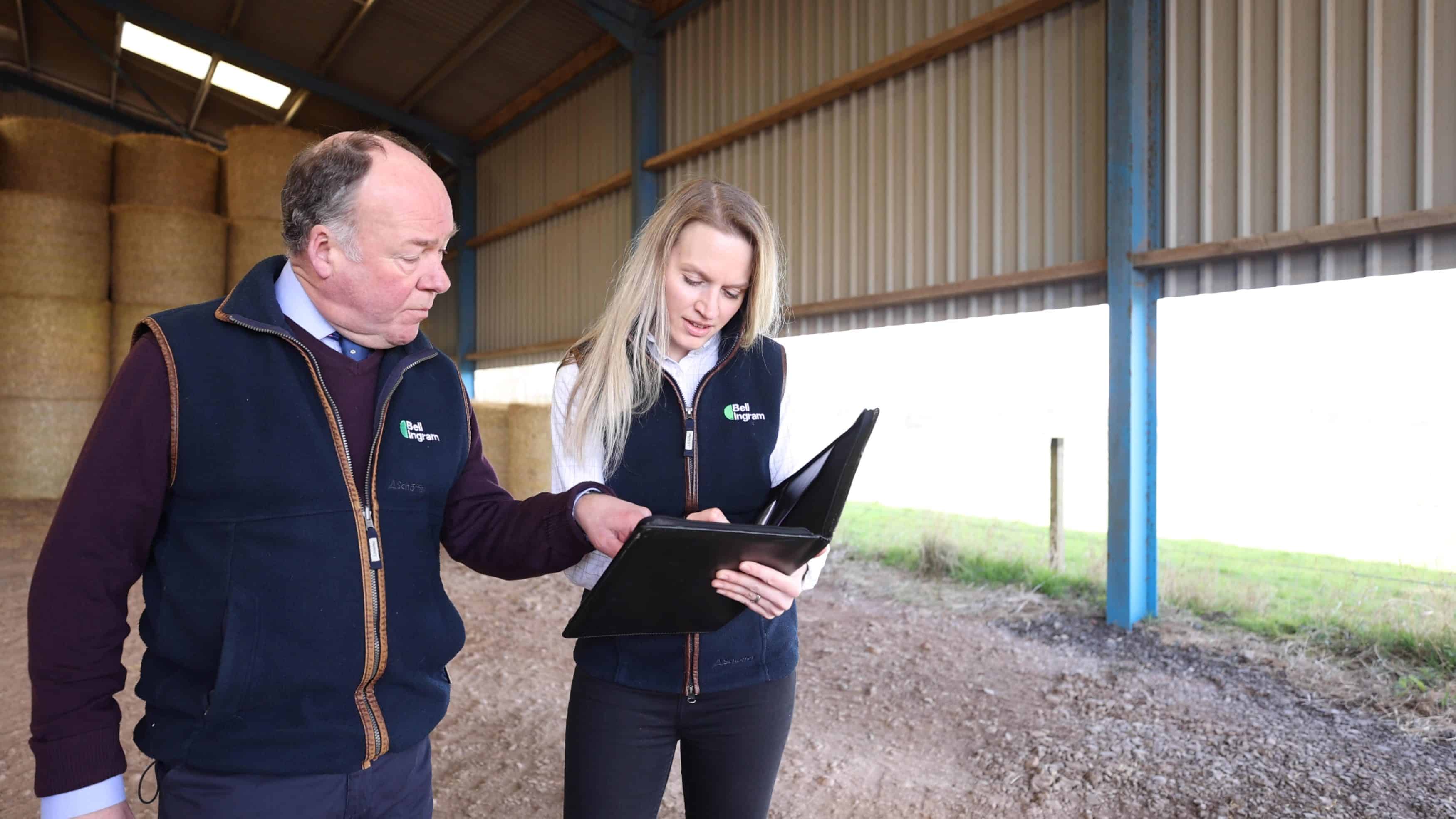
This National Apprenticeship Week, we caught up with our Thirsk based Rural Surveyor, Pippa Reynolds MRICS about her experience as Bell Ingram’s first ever apprentice. Since joining the firm in 2018, Pippa has completed her apprenticeship and passed her APC to become a fully qualified chartered surveyor.

Find out more about her career journey in our Q&A below.

You joined us right at the start of the UK apprenticeship scheme – what made you choose an apprenticeship route, and what were your expectations when you first began?

I chose the apprenticeship route as I felt it would give me more practical experience alongside studying and would be especially beneficial when it came to sitting my APC. My main expectation was to gain hands-on experience, develop practical skills, and learn from people around me while completing my degree.

Looking back, what were the biggest challenges you faced during your apprenticeship, and how did you overcome them?

There were times where it was difficult to balance both working and studying, particularly in my final year where I had more responsibilities at work as well as doing my dissertation and preparing for my APC. I tried to be effective in managing my time by blocking out periods to focus on each task individually and reminding myself this wasn’t forever!

How did the combination of on-the-job experience and formal study help you develop as a surveyor, compared to a more traditional route?

I found the combination of study and on the job experience really helpful when it came to relating what I was being taught in lectures to how it would play out in real life. I think this helped provide context and by the time I sat my APC I already had 5 years of work experience compared to the traditional 2 which definitely helped with my confidence.

Becoming a fully qualified Chartered Surveyor and now an Associate is a huge milestone – what moments or achievements along the way stand out most to you?

Passing my APC was a huge achievement and Is something I am very proud of, I will always remember the day I received that result! I knew from the start of enrolling on the apprenticeship scheme that my aim was to become qualified so to see it through was very satisfying.

What advice would you give to someone considering an apprenticeship today, and how would you describe the long-term career opportunities it can offer?

I would highly recommend considering the apprenticeship route, for me it’s a no brainer. You come away with a degree, 5 years’ experience and ready to sit your APC which I think makes a candidate stand out to employers in comparison to a standard graduate. There is also the added benefit of no student debt and earning whilst studying!

Meet the Farm Sales Team: Malcolm Taylor FRICS

At the helm of Bell Ingram’s farm sales team is Malcolm Taylor FRICS, Head of Farm Sales. With decades of experience in the Scottish property market, Malcolm has built a reputation as a trusted adviser for landowners, farmers, and families looking to make the most of their farm sale.

A highly experienced Chartered Surveyor, Malcolm combines deep-rooted knowledge of land values across Scotland with a sharp understanding of the factors that influence the market today. His up-to-the-minute insight means clients can move forward with confidence, knowing their decisions are backed by solid expertise.

A skilled negotiator, Malcolm is able to steer complex sales, manage expectations, and secure the best possible results has made him a go-to advisor not only within Bell Ingram, but across the wider farming and rural property community.

Malcom knows that selling a farm is rarely just a business transaction – it’s a life-changing decision. His clients value his ability to listen, understand their priorities, and guide them through the process with clarity and reassurance.

Whether advising on market timing, providing accurate valuations, or negotiating sales, Malcolm’s wealth of experience and steady hand ensure clients achieve their property goals. As Head of Farm Sales, he leads the team with the same commitment he brings to every client – delivering results built on trust, knowledge, and decades of expertise.

Contact Malcolm Taylor on 01307 462 516 or email malcolm.taylor@bellingram.co.uk to discuss your farm sale.

A groundbreaking woodland creation project in the Scottish Borders has seen advanced drone technology deployed to seed over two million native trees across inaccessible upland areas. 
 
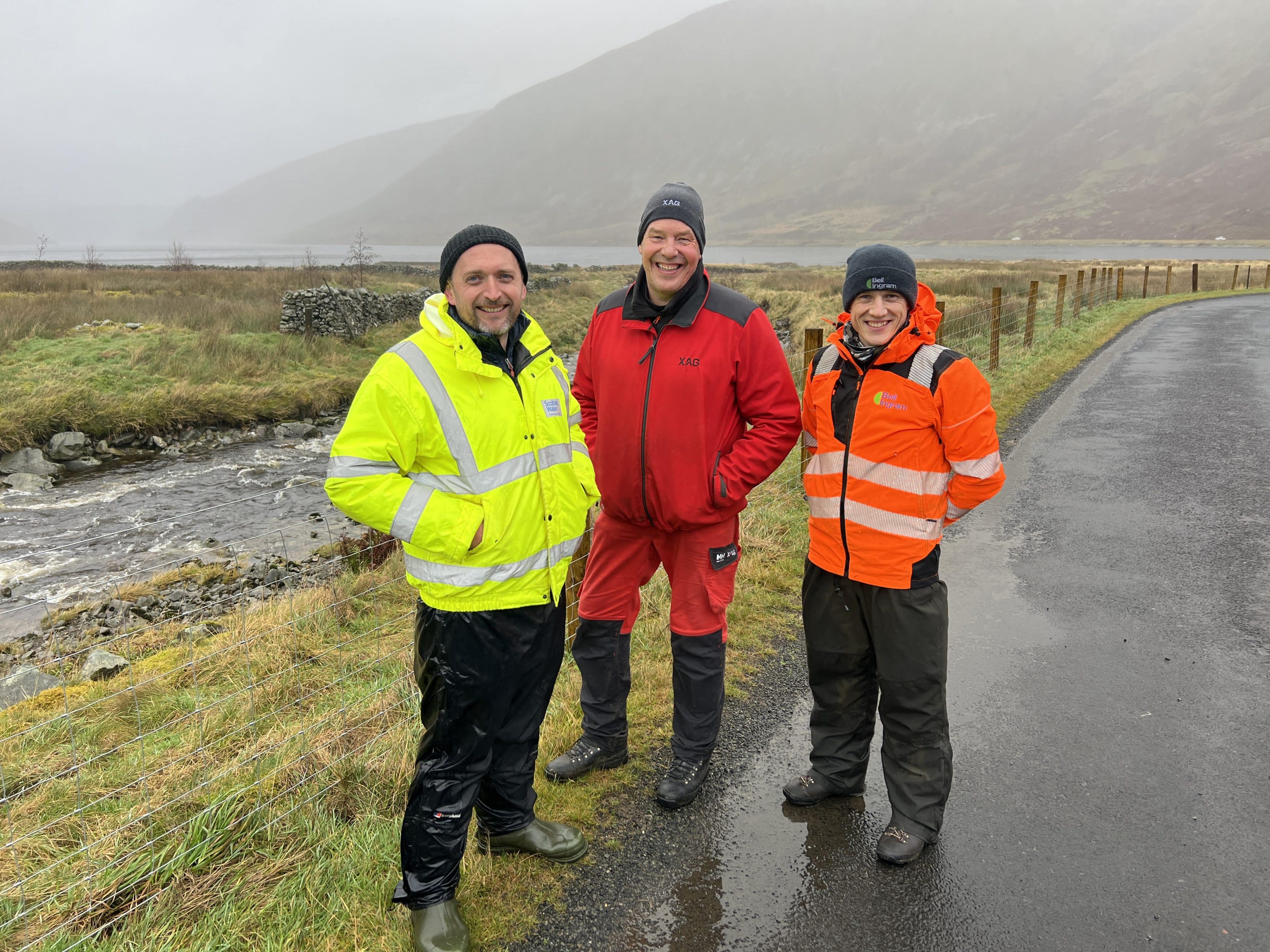
For the first time in the UK, heavy lift drones have been licensed to operate to beyond the line of sight while dispersing pelleted tree seeds in remote areas in the hills surrounding Talla Reservoir as part of a Scottish Water project to help protect water quality at the site. 
 
Forming part of an envisaged 80-hectare woodland creation scheme on land surrounding the reservoir, the first drone seeding phase focused on a 20-hectare area where the publicly-owned utility company hopes to enrich existing woodland across the upper slopes of the catchment. 
 
Working with delivery partner Bell Ingram and stakeholders, proposals for the Talla Water Woods project could additionally see thousands of native broadleaves such as aspen, rowan, oak, alder and downy birch planted at the site towards the south eastern end of the reservoir, as well as establishing montane woodland in the higher altitude areas of the site. 
 
The aim is to help stabilise the soil surrounding the reservoir so that less organic matter is washed into the water during periods of extreme rainfall which are increasing in frequency due to climate change. This will make the treatment process simpler and less energy intensive.  
 
Woodland creation programme manager at Scottish Water, Stephen Garbett, said: “This is a completely innovative approach to woodland creation and we are really excited to be working with Bell Ingram and AutoSpray Systems to make use of this cutting edge technology at Talla Reservoir. 
 
“The nature of the landscape here means that traditional methods of tree planting would be extremely difficult and time consuming to carry out so to be able to harness this drone technology to effectively open up areas of the site like this is great. We are looking forward to seeing the results now that the first phase of drone seeding has been completed.” 
 
Climate Action Secretary Gillian Martin said: “Our forests and woodlands are a natural powerhouse, and one of the most important resources we have to tackle the climate and nature emergencies. I welcome this initiative from Scottish Water which will help to create new woodland – helping to increase local biodiversity, whilst creating a natural way to reduce flooding in the area.” 
 
Sam Guthrie, Forest Manager at Bell Ingram said: “This pioneering project involves planting 2.1 million native tree seeds using novel drone and seed pelletisation technology, supporting Scottish Water’s net zero ambitions and woodland creation goals.  
 
“We are proud to deliver Scotland’s first drone-sown upland native woodland with approval to operate a drone ‘Beyond Visual Line of Sight’, combining cutting-edge innovation with best-practice forestry and strong environmental stewardship.  
 
“Through projects like Talla Water Woods, the team is setting new standards for sustainable woodland creation, maximising outcomes for both climate and client.” 
 
Industry leading drone company AutoSpray Systems carried out the work. CEO Rob Pearson said: “We at AutoSpray Systems are excited and proud to be delivering this project with Scottish Water. It’s a pioneering operation, harnessing drone technology to sow 2.1 million native seeds on challenging terrain, a significant step forward for the UK forestry sector.  
 
“We hope the woodland will be a powerful demonstration of how innovation and technology can be harnessed to support conservation and environmental projects.” 
 
The Talla project builds on the back of other local initiatives such as Talla and Gameshope to the south of the reservoir owned  by the Borders Forest Trust, helping to link up habitats and create wildlife corridors as part of the Wild Heart Expansion Project, which has significant benefits for biodiversity. 
 
A total of 55 hectares of the scheme could be made up of montane woodland, making it one of the largest montane schemes in the Southern Uplands. The important habitat has almost vanished in Scotland due to grazing by red deer and sheep and will have a positive impact on biodiversity and flood mitigation in the area. 

How will the ‘Mansion Tax’ affect Scotland?

By Carl Warden, Head of Estate Agency

The recent UK Autumn Budget, delivered by Chancellor Rachel Reeves, introduced several notable changes, though their direct impact on Scotland remains unclear.

Despite weeks of speculation, the Chancellor’s statement confirmed that Stamp Duty and local housing allowance rates in England will remain frozen. However, the Budget did advance plans for a ‘Mansion Tax’ on properties valued above £2,000,000, alongside increases in property income tax and the national minimum wage.

Attention now turns to the Scottish Budget, due on 13 January 2026, which should provide greater clarity. While it may seem that the Mansion Tax will not apply north of the border, history suggests the Scottish Government could introduce its own version with different thresholds, reflecting Scotland’s distinct property market. For instance, property values vary significantly between jurisdictions, making the choice of threshold critical.

Current research indicates fewer than 1,000 properties in Scotland exceed £2,000,000 in value. However, if the threshold were lowered to £1,000,000, approximately 11,500 properties would fall within scope. With a minimum surcharge of £2,500 per annum, this could generate an estimated £28.3 million in additional revenue.

In summary, while the UK Autumn Budget sets the tone for fiscal policy, Scotland’s property market faces its own uncertainties.

The forthcoming Scottish Budget will be pivotal in shaping the landscape for homeowners and investors alike. Whether through a Mansion Tax or other measures, any changes could have far-reaching implications for property values, investment strategies, and overall market confidence.

For now, the sector remains in a holding pattern, awaiting decisions that could redefine the cost of owning high-value homes in Scotland.

For help with your next move in Scotland contact Carl Warden on carl.warden@bellingram.co.uk or 01738 621 121.

A Peaceful Highland Retreat Set Amid 1.92 Acres of Mature Gardens

Tandara at Wester Phoineas offers a rare opportunity to enjoy true peace and quiet in the heart of the Highlands.

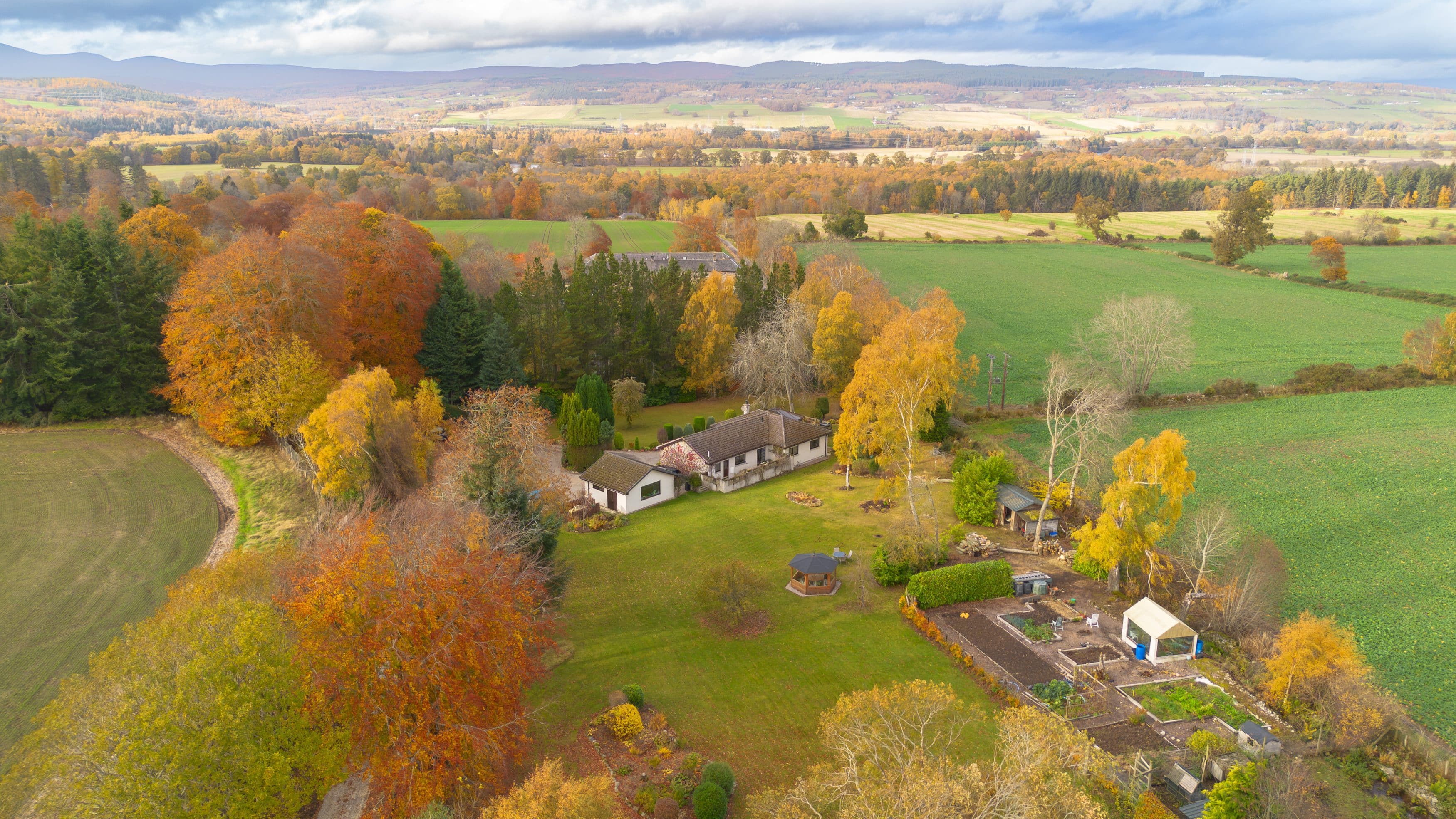
This charming detached bungalow, now on the market with Bell Ingram for offers over £500,000, sits within beautifully maintained, mature garden grounds extending to about 1.92 acres – the perfect setting for a private rural retreat.

Nestled in the small hamlet of Wester Phoineas, Tandara enjoys a tranquil, traditional Highland atmosphere, surrounded by working farms, family homes, and open countryside. Although wonderfully secluded, the property is only a few miles southwest of Beauly, where you’ll find shops, cafés, and everyday amenities. Beauly itself is around 12 miles west of Inverness and benefits from a train station, providing convenient connections while preserving its peaceful village feel.

Designed for comfort and relaxation, Tandara offers approximately 214 sqm of well-laid-out accommodation. The spacious lounge flows into a large conservatory, creating a bright and calming space to sit and enjoy the garden and countryside views in all seasons. A formal dining room, well-appointed kitchen, and utility room offer practical everyday living, while four bedrooms, an integral single garage, and a detached double garage provide flexibility for family, guests, or hobbies.

The setting is rich in natural beauty and quiet charm. The wider area is steeped in history, with Beauly Priory, Beaufort Castle, and Moniack Castle all nearby, offering peaceful walks and days out amid some of the Highlands’ most evocative scenery. This is an ideal location for those seeking a slower pace of life, surrounded by landscape, heritage, and fresh air.

The gardens at Tandara are a particular highlight and truly enhance its retreat-like feel. Thoughtfully tended over the years, they feature native trees, colourful flower beds, shrubs, a productive vegetable garden, a feature pond, and a timber summer house – a lovely spot for reading, relaxing, or quiet entertaining. The grounds are private and serene, with far-reaching views over the surrounding fields to the hills beyond, creating a sense of space and escape.

Estate Agent Joanne Stennett comments:

“Tandara sits within beautiful, mature grounds and provides a serene and private retreat. It’s the perfect location for anyone seeking a comfortable home surrounded by natural beauty.”

For more information, or to arrange a viewing, please contact Joanne Stennett on 01463 717799.