
The business of carbon net zero
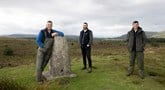
Scottish Forestry continues to forge stronger working relationships with farmers through Integrating Trees Network
The Integrating Trees Network is up and running and going from strength to strength.
This farmer and crofter-led initiative is supported by Scottish Forestry and the Scottish Government. Its aim is to build up a strong network of farm woodland demonstration sites across Scotland, with the hosts showcasing how growing trees has helped their business.
Sharing experiences and hearing from those who are actually doing it – including Bell Ingram’s Matthew Imrie – is all part of the ever-growing Integrating Trees Network. The initiative has now run ten virtual events, attracting farmers and crofters from all over Scotland.
Farming Networks
The network has built up a strong network of farm woodland demonstration sites across Scotland.
There are six farm woodland demonstration sites across Scotland, hosted by:
-
Andrew Adamson of Messrs W Laird & Son, Netherurd Home Farm, Peeblesshire.
-
Matthew Imrie (Bell Ingram), Hillhead Farm, Torrance.
-
Andrew and Debbie Duffus, Mains of Auchriachan, Tomintoul.
-
Andrew Whiteford, Burnfoot and Ulzieside Farm, Sanquhar.
-
The Barbour family, Mains of Fincastle, Pitlochry.
-
The Lockett family, Knockbain Farm, Dingwall.
These fantastic farming hosts have shared their experiences along with a number of key practical messages for others thinking of planting trees. These are:
-
Use well known contractors – not always the cheapest but being recommended by others shows they know their job.
-
Environment – you have to work with what’s on the ground, don’t try and change it too much or work against it.
-
You can do the work yourself and you don’t need to rely on contractors. It can be a steep learning curve and there are challenges. It just takes time and planning, but there is support out there.
-
Understand your reasons for wanting to plant trees on your land and your business priorities.
-
Do your research: evaluate your land and monitor your farm to find out what areas are under performing for livestock but could still be suitable for planting trees.
-
Make sure you consider whether planting trees will complement your existing farm enterprises.
-
Treat your woodland as another crop, making sure you are managing it properly.
-
Involve the local community as much as possible in planning – that helps to defuse any potential issues.
-
Ask whether having trees on the farm will help diversify the nature of the business to become more adaptable, and in the future will it provide much needed shelter.
-
Create a habitat for wildlife: life’s pretty boring without wildlife!
Resources
As the network has developed, more resources have been created to help land managers take that next step to planting trees on their land. Simplified woodland creation guidance, small farm loan scheme, FAS funding to name but a few and most of all, having access to other farmers and crofters who can share their practical knowledge to those considering woodland creation on whatever scale. This information is available online at www.forestry.gov.scot and www.fas.scot
A video featuring Bell Ingram’s Matthew Imrie, Hillhead Farm, Torrance, one of the host farmers, discussing the decision to plant trees on his family farm and key considerations others farmers should be aware of. Watch it at www.farmingforabetterclimate.org/integrating-trees-on-your-land
Everyone is welcome to book onto these free virtual online events. This is a farmer and crofter-led network so please get in touch and let the organisers know what topics you want to discuss. Drop lyn.white@forestry.gov.scot or Hilary.Grant@gov.scot an email. Events coming up:
Tea and Trees with Crofters: Thursday 17th February, 6 – 7pm
A chance to chat about planting trees on your croft – come and share your experiences and ask your questions. This discussion group will bring crofters together to chat about woodland creation projects along with specialists from Scottish Forestry and The Woodland Trust, Croft Woodland Project. This will be an informal networking event and a chance to make connections and chat with other crofters to share your experiences and knowledge. Join with a cup of tea to discuss the objectives, challenges and potential for integrating trees on crofts. Look out for booking details on the Integrating Trees Network website www.farmingforabetterclimate.org
Woodland Creation for Biodiversity: What needs to be considered? Discussing the ground examples, Thursday, 24th February 7 – 8pm
Come along and hear from Colin Edwards, Environment Policy Advisor, Scottish Forestry, on how to create woodland to meet your biodiversity objectives. Looking at basic principles of site selection, key species to plant, integration of open habitat and creation of future habitat to maximise your biodiversity benefits. Hear and discuss with our land managers their practical experiences of creating, woodland for biodiversity. Hosts for the night are Andrew Barbour, Mains of Fincastle, Pitlochry and Richard Lockett, Knockbain, Dingwall. There will also be a representative from, Woodland Trust. Booking details on the Integrating Trees Network website www.farmingforabetterclimat
Article posted on 10/02/2022

Biodiversity Net Gain and its impact on future infrastructure and housing projects
Biodiversity Net Gain is an approach to development which aims to leave the natural environment in a measurably better state than beforehand. Implemented correctly, it should have a positive ecological impact, delivering improvements through habitat creation or enhancement.
It’s by no means a new concept, in fact Biodiversity Net Gain has been best practice among responsible infrastructure companies, developers and landowners for some time now. Bell Ingram, for example, has been working for a major utilities client on a project to provide biodiversity enhancement for a major pipeline development in the North-West of England. Our land agents have been tasked with identifying and acquiring nearby land with the potential for habitat creation and enhancement. The project started in 2020 with completion scheduled for 2030.
It’s worth noting that Biodiversity Net Gain has been a part of planning policy in England through the National Planning Policy Framework for a couple of years, although it has not been widely adopted.
However, the principle has now become enshrined in law as one of the more ambitious provisions of the new Environment Act 2021. This legal requirement, which applies only to England*, requires new developments to provide a 10% Biodiversity Net Gain to be maintained for a period of at least 30 years in order to secure planning permission.
While this condition has no legal effect yet (and will be brought into force through secondary legislation at a date not yet known), the provisions are far reaching and complex.
In essence, Biodiversity Net Gain means developers in England must ensure their projects deliver biodiversity improvements to meet the required 10% increase. To do this, they must evidence a project’s final Biodiversity Net Gain value using the specified Defra biodiversity metric if they want their plans to get a green light.
To achieve Biodiversity Net Gain, proposals must follow the ‘mitigation hierarchy’ which compels planning applicants to avoid harm in the first instance, then mitigate or finally compensate for losses on-site, off-site or through a combination of the two solutions. These measures will be implemented in planning conditions.
*The Biodiversity Net Gain principles set out in the Environment Act only applies to England, but the Scottish Government has committed to bring forward a new biodiversity strategy in October and its delivery plan six months later.
With a background in environmental management, Ben Hewlett is a Land Agent based in Bell Ingram’s Northwich office where he works on behalf of our utilities clients.
Article posted on 10/02/2022

Devil’s Advocate: Making the case for and against the reintroduction of beavers
Hunted to extinction around 400 years ago, beavers were once a native species in Scotland.
In 2009 the Scottish Wildlife Trust, in partnership with the Royal Zoological Society of Scotland and Forestry and Land Scotland, launched the first beaver re-introduction trial at Knapdale Forest in Argyll.
The trial had mixed results but through further re-introductions elsewhere, both legally and illegally, Scotland’s beaver population is now reaching record levels.
This increase in numbers has prompted much controversy and debate, especially with the announcement of a new beaver release site being approved at Argaty, near Doune, which is the first since Knapdale.
Against this backdrop, Senior Associate Charlotte Gilfillan and Assistant Land Agent Carrie McLennan from our Highland Office explore both sides of the argument and discuss the future of beavers in Scotland.
Carrie McLennan
There’s no doubt that beaver reintroduction has caused plenty of conflict between conservationists and land managers. Depending which side of the fence you’re on, you either love them or hate them … and in my line of work, it tends to be the latter.
However, it is important to look at re-introduction with an open mind, as beavers have the potential to bring a whole host of environmental, economic, and social benefits. Right now, this is more important than ever, and keystone species such as the beaver have the power to define entire ecosystems, so maybe it is time that we viewed them in a different light?
Indeed, this is about more than just re-introducing an extinct species, it’s about restoring lost ecosystems. Beavers are called ecosystem engineers for good reason as they have a profound impact on their surroundings and possess the ability to restructure their environment through the creation of new habitats, increasing biodiversity, and restoring ecosystem functionality.
I believe that improved communication between stakeholders and conservationists could be the key to helping both sides understand the species and its management options.
There are a number of effective measures which can mitigate the negative impacts of the species and allow for landowners and beavers to coexist. Flow devices, for example, alleviate the impacts of beaver-related flooding issues by allowing the flow of water to continue in a waterway where dams are present.
Recent developments regarding translocation also allow for beavers to be relocated, under a protected species licence through NatureScot to other parts of Scotland if they are causing a disturbance to land managers and prime agricultural land. Previously the only option was to relocate beavers to the established trial population in Knapdale, or to move them to England. This means beavers can now be moved to places where they will benefit nature and the environment, reduce the risk of damage to agricultural enterprises, and crucially, help resolve conflict between key stakeholders.
We should also bear in mind that beavers can and do coexist with people. This has been evident elsewhere in Europe, where the species reintroduction in Sweden has been commended as one of the most successful ever, as they have coexisted with society since 1922, offering one of the best examples of the benefits brought by reintroducing a lost species. There is no reason why this cannot be the case in Scotland, we just need to better understand the benefits that keystone species such as the beaver can bring, and utilise the management options available.
Charlotte Gilfillan
The reintroduction of the beaver in the UK has been hailed a huge success by conservationists and re-wilders, with numbers tripling in Scotland over the last three years.
While I recognise there are some important ecological benefits to the return of beavers, it has come at a huge cost. From destruction of arable crops through blocking drains and ditches, burrowing through flood defences, felling of trees, flooding of commercial forestry plantations, the list goes on. Even designated sites have been impacted in some areas, with beavers raising water levels sufficiently to threaten the site’s favourable status.
Infrastructure hasn’t escaped unscathed either, with roads and railways being damaged by burrowing, damming and flooding. Last year Network Rail announced they had successfully built ‘Scotland’s first beaver tunnel’ in a culvert under the Highland line in Perthshire, to much fanfare. What they didn’t highlight was that it took several teams from Network Rail plus outside contractors and specialists many months of work to resolve the problem of the dammed culvert and build the tunnel, all at significant cost to the taxpayer.
Although mitigation measures like flow devices, translocation and tree protection are available, there are still costs attached to these options. One of the most effective tools in managing beavers, particularly around arable crops, is a licence for lethal control. The future of NatureScot’s Beaver Management Framework and licensing system, which includes lethal control, was subject to judicial review last year, following a legal challenge by Trees for Life. The majority of the complaints were thankfully dismissed but it is vital that this licence remains available as numbers and impacts of beavers increase.
The re-introduction of any species will inevitably bring its own set of unique challenges, particularly those that have been extinct for hundreds of years and whose natural range and landscape is now completely managed. Trials are therefore imperative to determine the feasibility of any re-introduction and to consider the consequences, both intended and unintended.
Given the uncertain success of the initial trial at Knapdale, where the population failed to grow, there is a question of whether future legal re-introductions would have been supported by the Scottish Government. However, by the time the trial results were available many beavers had already been released illegally by private individuals in Perthshire, deliberately and without repercussion, leaving farmers and landowners to pick up the cost.
With the beaver then subsequently becoming a protected species in 2019, this undoubtedly fuelled the debate further and set a dangerous precedent for future re-introductions.
Driven by the Climate Emergency and Biodiversity Crisis, species re-introduction has never been more topical or more polarised. If the re-introduction of beavers in Scotland is to be used as a benchmark against which other proposed re-introductions are considered, then I have a gnawing feeling we could be in serious trouble. Ultimately the question remains, do the benefits really outweigh the costs – I remain unconvinced.
Article posted on 14/02/2022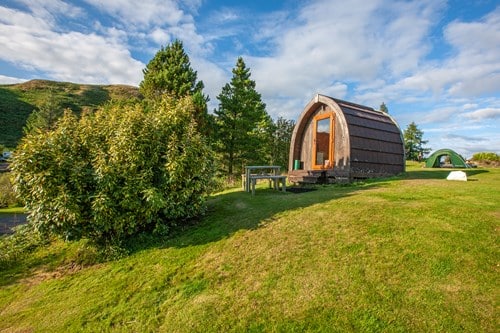
Five of the best lifestyle opportunities on the market
Repeated lockdowns have seen us all spend more time in our homes, which has really focussed the mind of buyers on what they truly want from their homes and living environments. For some, it has even thrown into question the type of lifestyle they wish to lead and has led to some downing tools and upping sticks entirely in the search for a more rural way of life.
At Bell Ingram we have seen the increase for demand of rural properties which offer a new business and lifestyle opportunity. Here we round up five of the best lifestyle opportunities on the market with Bell Ingram.
1. Barmore Farm, Tarbert

This well established and profitable holiday business offers buyers an opportunity to acquire a beautifully presented, listed Victorian Steading, sympathetically converted to a selection of unique holiday let cottages, each offering a blend of traditional and contemporary living.
Offers over £1,100,000.2. Roseview, Oban

Situated in a wonderful rural location on the fringe of the ever-popular coastal town of Oban, Roseview Caravan Park is set in approximately 4.89 acres of land and offers buyers an opportunity to acquire a well-established tourist destination, perfect for those looking for a lifestyle change or tourism investment.
Offers over £795,000.
3. Ornum House, Beauly

Ornum House is a very well presented property which is brought to the market alongside two popular self-catering cottages. The house is currently run as a successful Bed & Breakfast business and the overall package offers the purchaser the opportunity to live in a beautiful, quiet location and have a business on site.
Offers over £600,000.
4. Coullabus Farmhouse, Isle of Islay

With its rural setting on the picturesque island of Islay, Coullabus Farm offers a superb opportunity for those looking to adopt a lifestyle change and reap the benefits of a country island life.
Previously operated as an operational island dairy farm, the main farmhouse property now offers family accommodation over two levels, with an adjacent tastefully converted detached cottage giving opportunity for self-catering accommodation with scope for significant secondary income.
Offers over £595,000.
5. Ardnamurchan Natural History Centre, Acharacle

The Ardnamurchan Natural History Centre offers buyers an opportunity to acquire a thriving business with three identifiable income streams – retail, tearoom and exhibition. The property is set in an enviable rural location on the West Coast of Scotland, a wonderfully scenic location, popular with tourists visiting the region.
Offers over £525,000.
Article posted on 07/02/2022

Is now the time to join the EV revolution asks renewables expert Joe Fergusson?
Bell Ingram has joined the electric vehicle revolution by installing workplace charge points at company HQ in Perth.
Our Head of Estate Agency Carl Warden is leading the charge in his Tesla 3 which has so far chalked up over 4,000 miles on company business.
If you too are thinking of replacing a petrol or diesel car with an electric model there are a number of pros and cons to consider before making the leap.
On the plus side, electric cars can greatly reduce your carbon footprint and save you hundreds of pounds each year in tax and fuel costs. The choice and abilities in the range of EVs on the market is expanding quickly, and the charging infrastructure is definitely improving. In fact, there are over 1,800 Chargepoint Scotland public points (out of over 2,500 installed across Scotland and 24,600 across the UK) offering free charging at up to 50kW, which gives around 100 miles of travel for a 30 minute plug-in.
Additionally, there is still ‘hay to be made’ by taking advantage of grants from both the UK’s Office for Low Emissions Vehicles (OLEV) and from Transport Scotland towards the installation of new charge points at workplaces and at homes. And the tax system remains generous towards businesses making the switch, allowing year 1 100% capital write down of new vehicles and 1% of value benefit-in-kind for users.
On the flip side however, EVs still have a shorter range than petrol/diesel vehicles and recharging the battery takes time and planning. Added to this, the upfront cost of buying these vehicles is still much higher than their traditional equivalents, although that gap is steadily narrowing.
To become ubiquitous the EV must be as convenient as its petrol/diesel equivalent, with costs on a par, both new and second hand, and the charging infrastructure must catch up, enabling urban street-dwellers to charge from lamp posts and bollards, etc.
What is for certain is that the writing has been on the wall for the internal combustion engine (ICE) ever since SONY commercialised the Lithium-Ion battery for its mobile telephone in 1991. In the 1910s, Thomas Edison spent much more time eeking out more miles from his lead-acid powered EV than he did on his electric lightbulb; what held him back was energy density – or kilowatt hours per tonne.
Even without the Kyoto Protocol, all the subsequent COPs and the focus on air quality in our vehicle-clogged cities, the EV – sometimes described as ‘a mobile phone with wheels’ – was only ever waiting for the battery with sufficient energy density to get its driver from A to B without having to stop to re-charge before it suited them to do so – now achievable with today’s Lithium-Ion chemistry and continuously-improving variations on it.
The beautiful simplicity of the EV – body, battery, computer, motor, wheels – compared to the fantastically complex supply chains for the hundreds of additional whizzing, rubbing, grinding and exploding elements of an ICE vehicle, means that EVs are the future of personal transport, like it or not. Their electricity may come from a fuel cell fuelled by green hydrogen, catalysed from water by renewable energy, but with ranges and charging times improving quickly, in a decade or so the ICE will become a rare and specialised thing.
Want to know more? Our Microgeneration and Renewables Consultant Joe Fergusson provides a feasibility appraisal service to any organisation pondering the viability of joining in the EV revolution, and can be contacted at joe.fergusson@bellingram.co.uk or 07711 552693.
[staff_member id=’3258′]
Article posted on 01/11/2021
Weighing up the pros and cons of Solar PV
Renewable energy technical consultant, Joe Fergusson, gives his thoughts on the current state-of-play in the solar PV and battery storage markets, and on the feasibility of these technologies in light commercial situations.
Anticipating the UK economy emerging from pandemic induced ‘intensive care’, there are loud calls from a range of pressure groups for the ‘rebuilding’ policies that will lay the foundations for our route to a Carbon-neutral Britain to be legally enforced.
As these policies very slowly take shape it is hoped that the waning direct support schemes for low-carbon heat and power technologies might be ‘re-loaded’, giving a much-needed boost to the heat pump, hydro, solar, biomass and small wind industries. However, the only support so far under consultation is a £4,000-perinstallation Clean Heat Grant to replace the Renewable Heat Incentive when that finally dwindles to nothing in March 2022.
Solar PV is evidently considered a mature technology, sustainable without further state subsidy. The installation cost of the panels, inverters and mountings is not changing much over time but the price of those components has now fallen to a point where, even without the feed-in tariffs that drove the market between 2011 and 2018, it is now cost-effective to install a system of an appropriate size, ie. Such that the majority of the power generated is consumed on site, displacing power that would otherwise be purchased. With the electricity price now risen to 15-17p per kilowatt hour (kWh), the payback can be attractive, especially when carbon savings are a consideration.
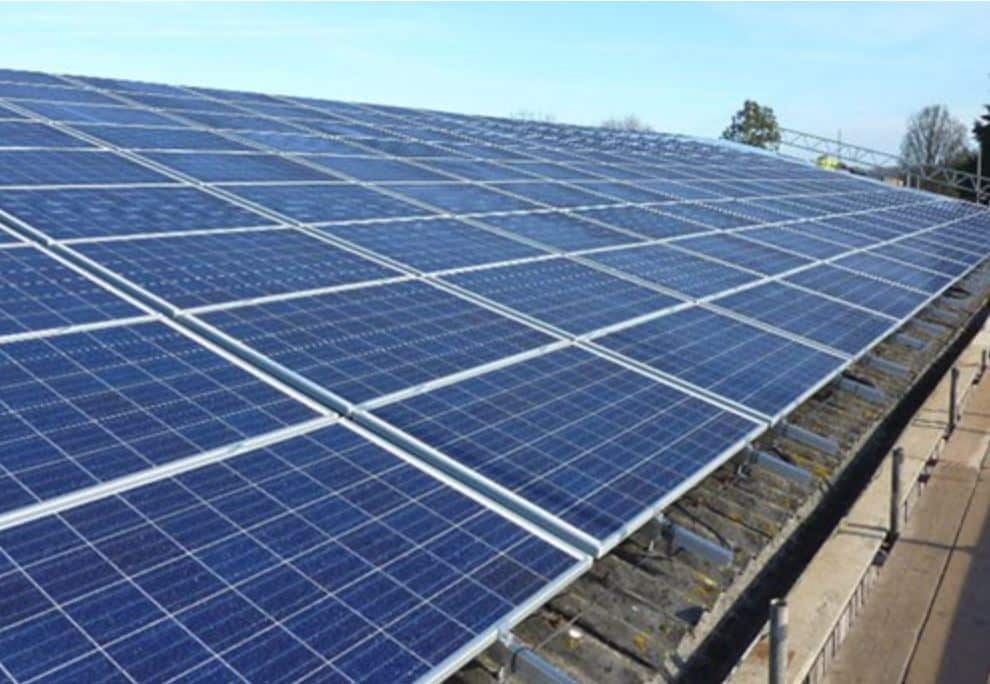
Output from solar PV systems is highly variable on a daily and seasonal basis. For an example, on a cloudless May day with a cooling breeze in central Scotland, a 90 module (panel) PV array covering 150m2 of roof, or ground-mounted, might generate 200 kWh over the day. Some of the output, up to 25 kW, could be used by machinery or by heat pumps heating a building, and some stored in a battery bank. The surplus would be exported, earning a guaranteed minimum export tariff. On a dull day in November or February this same system might generate just 20 kWh in the day or less. The annual total should be around 21,000 kWh.
Depending on many factors the value of this system’s generated power, in savings and exports, could be in the region of £3,000. The installation of such a system (not including battery) may cost in the region of £30,000, giving a payback period of about a decade, before allowing for any future electricity price increases. The system should last at least 25 years, the output diminishing only very slowly over the long term.
Where there is significant onsite consumption during the hours of darkness it is worth considering the feasibility of storing surplus power in batteries sized to suit normal overnight consumption. This is likely to rise with the fast-growing uptake of electric vehicles. A commercial battery system appropriate for the PV installation described above, storing 30-40kWh, might cost £15-25,000 at the moment.
The efficiency of panels and batteries may rise slowly and Government support could possibly return, but whether these factors will overcome the savings lost to delay is the moot question.
Exciting developments in ‘smart tariffs’ that reward those making battery capacity momentarily available to the National Grid for frequency and voltage balancing purposes could accelerate investment paybacks considerably. As these systems continue to fall in price our advice is to at least ‘future-proof’ any new building development or PV system by ensuring that battery banks and the associated control hardware – and also EV charging equipment, benefitting from 3-phase power supply – can be easily retrofitted in years to come.
Independent advice on the ideal system sizing and configuration will ensure the best outcome.
[staff_member id=’3258′]
Article posted on 01/11/2021
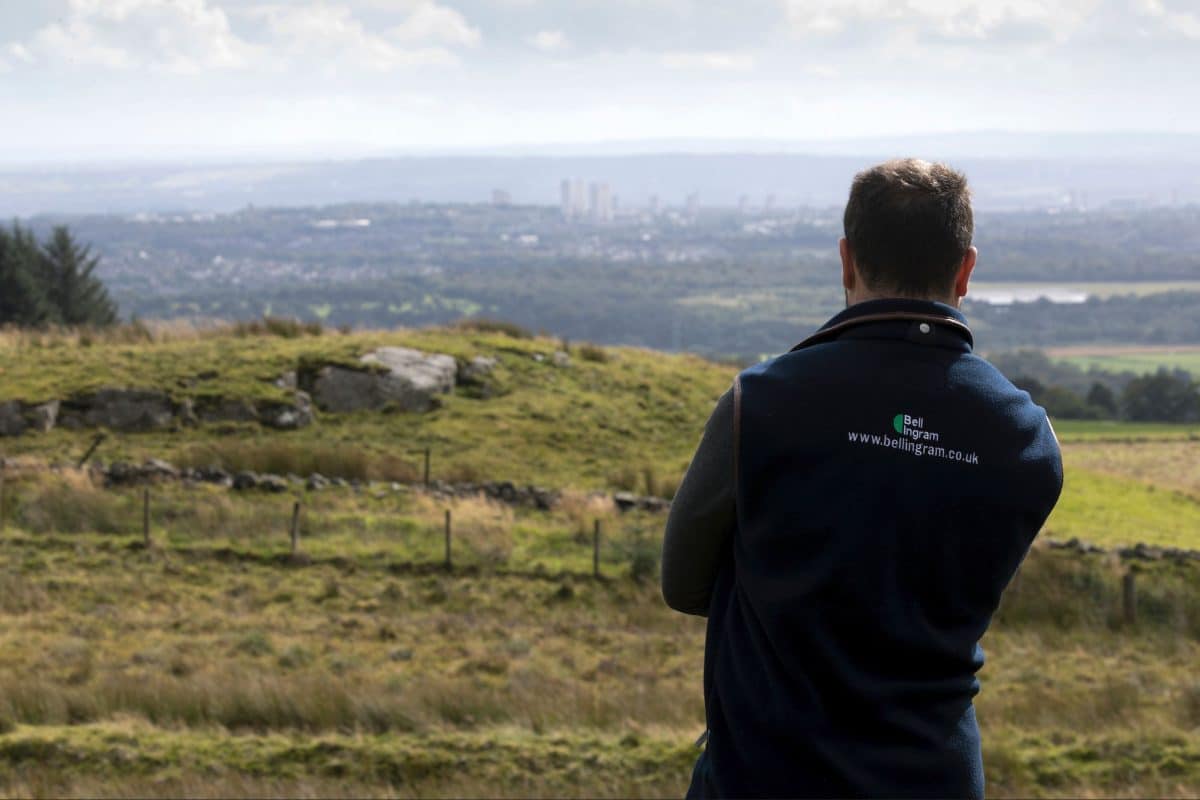
Can money grow on trees? Expert advice is key to getting a small scale woodland scheme off the ground – by Matthew Imrie and Gregor Dalziell
-
Project: Small scale woodland creation
-
Where: Blairskaith Muir on Hillhead Farm near Glasgow
-
When: February 2019 – Present
-
Why: Maximise an unproductive farm asset
-
Services required: Forestry, Land Management, Planning
Forestry has a key role to play in helping the rural economy recover from the impact of the Covid-19 pandemic.
That was the assertion from Scotland’s rural economy secretary Fergus Ewing when he announced a £1 million grant in July to encourage farmers and crofters to diversify into forestry production.
The grant is the first to be made available under the £40m Agriculture Transformation Programme which was launched in February to support farming and help reduce greenhouse gas emissions.
The money can be used to cover 90% of the cost of creating small-scale woodlands that will capture carbon and provide a source of income for farming businesses.
This focus on carbon capture could be a game changer, with a fledgling trade in carbon credits potentially offering much quicker returns in a sector that has traditionally appealed to more longer-term investors.
But just how easy is it to tap into the available grants and get a small-scale woodland scheme off the ground? Bell Ingram’s Matthew Imrie (pictured above) has first-hand experience of developing such a project on his family’s farm near Glasgow.
He says: “The Scottish Government’s push to encourage farmers to plant more trees ticks a lot of boxes – socially, environmentally and economically. However, it’s not as simple as identifying a piece of land, planting some trees and watching the money roll in. It can be a complex process that requires expert advice at every stage to ensure success.”
Matthew’s woodland journey began last year when the idea of developing a forestry scheme on unproductive land was first discussed with his farmer father John Imrie.
Those plans moved one step closer when Forestry Land Scotland (FLS) approved the Hillhead Forest planting application earlier this summer.
This green light was the culmination of 18 months of work by Matthew and his colleague Gregor Dalziell, who overcame a number of hurdles to successfully progress the first phase of the project … not least the surprise discovery of a colony of protected Great Crested Newts in a pond on the site!
Matthew explains the background: “While Dad was able to cultivate the majority of this new acreage and bring it into silage ground, the hill ground was moorland, and barely fenced. Rather than just leave it sitting we wanted to maximise our least productive asset in order to safeguard the future of the business.”
However, convincing any farmer to consider ‘alternative’ uses for their land is always a challenge.
Matthew continues: “I think it’s fair to say that most farmers and landowners take a great deal of persuading to use their land for anything other than traditional farming purposes. There has to be a very good reason to diversify and that reason is almost always financial. First and foremost, they want to know it’s a solid investment and what level of outlay is required to bring in a good income.
“From my experience of working as an assistant land agent at Bell Ingram, I knew that forestry offered good investment potential thanks to ongoing policy backing to meet Scottish Government targets of planting 36 million trees by 2030, and that a woodland creation scheme could provide the solution we needed at Blairskaith.”
Phase one of the project kicked off in 2019 when the Imrie family asked Central Scotland Green Network (CSGN) to conduct an initial feasibility study on the targeted area which produced a potential planting plan with three blocked areas.
Matthew takes up the story: “CSGN’s planting plan proved to be incredibly optimistic in the long run (eventually being narrowed down from 100 to 60 acres) but at that point it provided enough promise to kick off the project
“Next I enlisted the help of my colleague Gregor Dalziell to start the woodland application process. As well as collecting the required background information, including soil types, Forestry and Land Scotland (FLS) grant areas, forest suitability maps, haulage routes and regional forest strategies, photos were also taken of different viewpoints on and around the land to gauge the landscape impact.
“We also commissioned additional information in the form of Deep Peat, Breeding Bird, Phase 1 Habitat and Archaeological surveys which allowed us to make an educated assessment of the project’s feasibility early on and we were able to quickly adjust the budget and present this to the client for reassessment.
“It’s important to be proactive at this stage as it allows you to design your woodland around any potential barriers to planting.
“The Archaeological survey was good and didn’t present many issues, likewise the Breeding Bird survey highlighted some factors but nothing too major aside from some contradictory statements about bird displacement between our survey and the one next door.
“The Phase 1 Habitat survey threw up the most hurdles. This showed the proposed planting area to have a vast array of different habitats and highlighted some protected species in the form of a Butterfly Orchid and potentially a Great Crested Newt breeding ground as well as some Annex 1 habitats. These were all to influence the design of the woodland and the tree species that would be selected for planting.
The plan remained fluid, allowing us to factor in the findings of each survey as we received them, then further consultation was sought from the various stakeholders (FLS, SEPA, SNH, the local community council and East Dunbartonshire Council) together with some site visits to discuss our plans and issues highlighted.
Inevitably, the different perspectives from each of these stakeholders raised more issues along with suggestions on how to address them.
“However, the time we spent gathering detailed information was well worth the effort as it has resulted in a woodland that has managed to balance the environmental, social and economic elements required to deliver a more sustainable project ensuring the benefits are experienced not just by our family business but the local and wider community as well.
“The application was finally approved in June 2020 with the process having started in earnest in February 2019. While this site is admittedly more complex than some, it clearly demonstrates why it’s vital to have expert advice when embarking on any planting scheme.”
Bell Ingram’s Gregor Dalziell has been closely involved in the Blairskaith project from the beginning and believes that clear and speedy communication with all stakeholders is key to delivering woodland projects.
He adds: “A good example of this is that we were able to map the site using QGIS technology which meant that any amendments could quickly be added to the digital plan then fired back to all interested parties immediately. It’s a huge advantage to be able to map the area to the modern standards required by FLS. That makes a massive difference to the success of the project.
“Employing a rural professional services firm like Bell Ingram to deliver your woodland project means that you don’t just have access to our expert forestry team but to wide range of specialists whose land management experience and expertise spans everything from QGIS mapping to grant applications, planning to AMC funding.
So what’s next for the Hillhead Forest project?
Matthew Imrie says: “Community engagement is a big part of our vision for the Forest. There is already a bridle path through the farm which links Milngavie to Lennoxtown, and we plan to add gates and access points at certain locations to allow the public to walk through the forest and up to the trig point to enjoy the stunning views north to Ben Lomond and south over the city of Glasgow.
“We want to develop the social/environmental aspects of the scheme by involving the community at the planting stage. Our aim is to encourage people to connect with their environment, while empowering them to research, experiment and engage with their local landscape and flora.
“We are also keen to develop partnerships with our local schools using the Forest as an educational resource to bridge the gap between how young people in our urban areas see our countryside compared with those that live and work in it.”
However, the long-term success of projects like Hillhead Forest is ultimately down to its potential to generate an income.
Matthew concludes: “For many farmers forestry is becoming an increasingly important part of their income stream. The sector is exceptionally buoyant at present with investors taking advantage of current tax and grant regimes, as well as the opportunities offered by carbon credits. We’ll certainly be exploring carbon credits at Hillhead, not just to make our Forest economically viable, but as an important part of efforts to tackle climate change.”
Find out more about small scale woodland schemes at
www.bellingram.co.uk
[staff_member id=’3253′]
Article posted on 01/11/2021

Thinking of buying a croft? It’s important to do your homework and consult an expert
TV programmes like Amanda Owen’s ‘Our Yorkshire Farm’ and Ben Fogle’s ‘New Lives in the Wild’ have tapped into a national obsession with self-sufficient lifestyles ‘off-grid’ living.
So much so that even during lockdown, farm and crofting properties are generating a high level of enquiries as soon as they come onto the market.
But for those seeking the rural idyll, does the romantic notion of swapping city life for a sheep farm in the Dales or living in a white-washed croft house on a west coast bay live up to the reality?
Bell Ingram’s resident crofting expert Ian Blois says: “It can do, but it’s not always straightforward and prospective crofters need to be aware of a number of points when buying a property which could be restricted by crofting legislation.”
He continues: “Increased interest in crofting properties during the Covid lockdown has been prompted partly by lower property prices and partly by a genuine consideration of escaping to the country and leaving behind the stresses of city living. Working from home is now a reality for many people and with good broadband, connectivity to a business or employment anywhere in the world is now possible amidst the freedom and slower lifestyle of the Highlands.
Based in Bell Ingram’s Beauly office, Ian has worked with Estate Agency colleagues advising potential crofters for over ten years and reckons that a working knowledge of crofting legislation almost comes as standard if you are a rural professional living and working in the Highlands.
He adds: “While the rules and regulations around crofting aren’t particularly complicated, like most things of this nature there are certainly a few pitfalls that could trap the unwary, and it’s sensible to do your homework and consult an expert.”
Here’s a number of points you might want to consider if you are thinking of buying a croft:
What is a croft?
Crofting is a system of landholding which is unique to Scotland and is an integral part of life in the Highlands & Islands. A croft is legally any small land holding, which is registered as a croft by the Crofting Commisson and therefore subject to crofting legislation. The croft may or may not have a house or farm buildings associated with it and there is no size limit. Currently Bell Ingram have a number of crofts for sale ranging from a 1.6acre croft near Oban to 127 acres of farmland near Lairg in Sutherland.
Where are crofts located?
There are 21,186 crofts entered on the Crofting Commission’s Register of Crofts (ROC) of which 15,137 are tenanted and the remainder are owned. These crofts are located within the traditional Crofting Counties of Argyll, Caithness, Inverness, Ross & Cromarty, Sutherland, Orkney and Shetland, or in one of the newly designated crofting areas – Arran, Bute, Greater and Little Cumbrae, Moray.
How much does it cost to buy a croft?
This depends of a number of factors, including location, land quality and whether the sale includes a croft house. For example, a croft (with a croft house) in a desirable area like the Black Isle with good transport links to Inverness is likely to fetch a higher price than a property without a croft house in a more remote location.
What is the legal position if I buy a croft?
There are two possible scenarios when you buy a croft and these should be apparent in the sales particulars. The croft may be classed as owner-occupied, in which case you would be buying the land and the crofting tenancy, which is the right to farm the land. Or, in some cases, the ownership of the land is not part of the sale and you would be buying the assignation or tenancy of the croft, which is just the right to farm the land.
What are my rights and responsibilities if I buy a croft?
Owning a croft is not the same as owning an ordinary regular home or farm because the use of the land is regulated by the Crofting Acts. Whether you become an owner-occupier or just the tenant, in both cases you must comply with certain duties imposed on you by the crofting legislation. These are:
#1 A duty to be a resident on, or within 32 kilometres of, the croft.
#2 A duty not to misuse or neglect the croft.
#3 A duty to cultivate and maintain the croft or to put it to another purposeful use.
If any of these rules are breached, the Crofting Commission have the statutory powers to terminate the tenancy and allocate the croft to someone considered to be more suitable. This applies even if you own the croft, so it is important that prospective buyers understand the commitment they are making.
Can I buy a croft house without any land?
A “croft” house is not necessarily a croft. If a house is being sold without land, it is unlikely to be subject to crofting legislation which applies mainly to land. In this case, normal property laws apply and you can use it as a second home or let it out as a holiday cottage.
If a registered croft is being sold with a house, the house and garden has often been de-crofted which means that while the land remains under crofting tenure, the house is no longer subject to crofting legislation. This can be important if the buyer needs a mortgage as lenders will only offer financial assistance if the house is free of crofting legislation.
Making an Offer
If you are serious about buying a croft, speak to the selling agent and your solicitor to make sure you are fully aware of what it will mean to become a crofter. It is usual to make a formal offer subject to getting approval from the Crofting Commission. This means that if your offer is accepted, you will then make an application to the Crofting Commission to be approved as the tenant of the property. This is likely to be successful as long as you intend to live permanently on the croft or at least within 19 miles of it and to actively farm the land. Once approved, your offer to buy will be completed.
Still Confused?
If you have found you dream house on an internet search and you find that crofting is mentioned, please do not be discouraged. Just give us ring at either our Beauly or Oban office and someone will be pleased to answer all your questions. It’s not as complicated as it sounds.
Useful links:
Crofting Commission www.crofting.scotland.gov.uk
Citizen’s Advice www.citizensadvice.org.uk
Shelter Scotland www.scotland.shelter.org.uk
[staff_member id=’2666′]