
125 Years of Bell Ingram: A Legacy of Adaptation and Innovation

As Bell Ingram celebrates its 125th anniversary on 13 November 2024, it’s an opportunity to reflect on a long and evolving history in the field of land management. The firm, established in 1899, has witnessed – and adapted to – significant changes in the world of estate management. From its origins in Victorian Scotland to its contemporary role, our journey reflects the broader transformation of land ownership and management over more than a century.

A Glimpse into 1899

In 1899, Scotland was still very much in the final years of the Victorian era. The world of land management was quite different from what it is today, in Scotland particularly. Large estates dominated the landscape, and the advent of trains and steamships had opened up the Highlands, attracting visitors for sporting and hunting opportunities. During this period, large-scale private land ownership was dominant, with landed estates in their prime.

An 1872-73 government survey revealed that in the UK, a mere 7,000 people owned 80% of the land. The situation in Scotland was even more concentrated, with 659 landowners controlling 80% of the land area, and just 15 individuals owning over half of the Highlands. The estates of this era were expansive and landowners and their managing agents or “factors” wielded significant influence.

The Changing Landscape of Estate Ownership

Over the past 125 years, the dominance of large estates has gradually diminished. The breakup of vast estates like Sutherland and Lord Leverhulme’s holdings in Lewis and Harris marked a shift toward smaller, more fragmented ownership. In the early 20th century, the average size of estates began to shrink, and by 2024, few estates remain larger than 5,000 acres. The number of estates sold on the open market has reduced and there is now no such thing as a typical estate purchaser.

Despite these changes, private ownership of rural Scotland remains significant. Currently, private entities own 83% of rural land. Interestingly, 50% of privately-owned rural land is held by just 433 landowners, a slight decrease from 2012. Community ownership has however increased, with around 212,342 hectares now held by local communities – a 23% rise from 2012*.

Factors Behind the Decline of Large Estates

In the 20th century, heavy taxation, such as estate duties and inheritance taxes, played a major role in breaking up many estates. Government bodies like the Forestry Commission and the Department of Agriculture also purchased large tracts of land. Additionally, political aims and reforms to Scotland’s feudal system have had a lasting impact on land ownership and management.

In England too, the public bodies expanded and economies of scale forced owner occupied farmers to expand reducing the number of small, family farms.

One of the most debated trends in post-World War II Scotland has been the purchase of large estates by overseas buyers. While these foreign owners have sometimes been met with public criticism, most have proven to be responsible stewards of the landscape and the local communities they impact. Across the UK charities such as the National Trust and RSPB have also expanded ownership especially in some of the most beautiful areas of the countryside and National Parks.

The Role of Good Estate Management

No matter who owns the land, one thing has remained constant: the importance of good estate management. Whether managing farms, woodlands, sporting estates, or residential properties, responsible management is essential for a thriving rural economy. Effective estate management today involves not only a deep understanding of the land but also expertise in business, modern technologies and commercial ventures.

This is where firms like Bell Ingram come into play. Since its founding in 1899, Bell Ingram has provided a range of professional land agency services. The company has grown substantially over the past century, evolving alongside the changing needs of the land and its owners. Our agents and their colleagues have to be able to flex and continually update themselves and their clients, to keep up with an ever changing game.

Looking to the Future

As Bell Ingram marks its 125th anniversary, the firm’s evolution reflects the broader changes in rural estates and other aspects of property management. In the late 19th century, estates were fully staffed with foresters, building clerks of works, farm managers and gamekeepers. However, as estate sizes decreased and incomes contracted, so too did the need for such extensive staffing. Bell Ingram has adapted to these changes, providing specialised services to landowners whether public or private who no longer maintain the large in-house teams of the past.

But what about the next 125 years? The future of land management across the UK is uncertain. Factors such as climate change, improving technology, web-based sales, agricultural support (or lack of it) and the shifting political landscape will undoubtedly play a role in shaping the future. A new Labour government in Westminster, along with the continued evolution of the Scottish Parliament’s approach to land reform, suggests that significant changes are on the horizon.

The Modern Land Agent

The role of the land agent has evolved hugely over the past century, and it will likely continue to do so. Today’s rural professionals must possess not only traditional estate management skills but also expertise in areas like environmental regulation, agricultural policy and renewable energy. As the rural environment becomes increasingly complex, specialisation within estate management has become more common, supported by technology from GIS Mapping to accountancy packages and by a wider range of in-house colleagues.

Our teams are changing – 125 years ago all the agents and professionals were men, albeit supported by doughty ladies as estate secretaries, often similarly dressed in tweeds and brogues! Today many of our professional staff are female, from partner to trainee level, reflecting changes in society over the last century and involved in all areas from architecture to mapping and property sales.

A New Era of Change

Over the past century, land management has moved on from handsaws to timber processors, from horses to satellite-linked combines, and from handwritten letters to emails. As the world continues to change at an ever increasing pace, all our staff must stay ahead of the curve and be equipped to meet the challenges of the future.

The next 125 years may hold even more dramatic shifts, but one thing is certain: Bell Ingram will continue to adapt, innovate, and provide expert services to landowners as it has done for over a century. The company’s commitment to excellence in all aspects of our clients’ interests in the countryside ensures that it remains a trusted partner in the rural landscape for generations to come.

*Reference: Who Owns Scotland website.
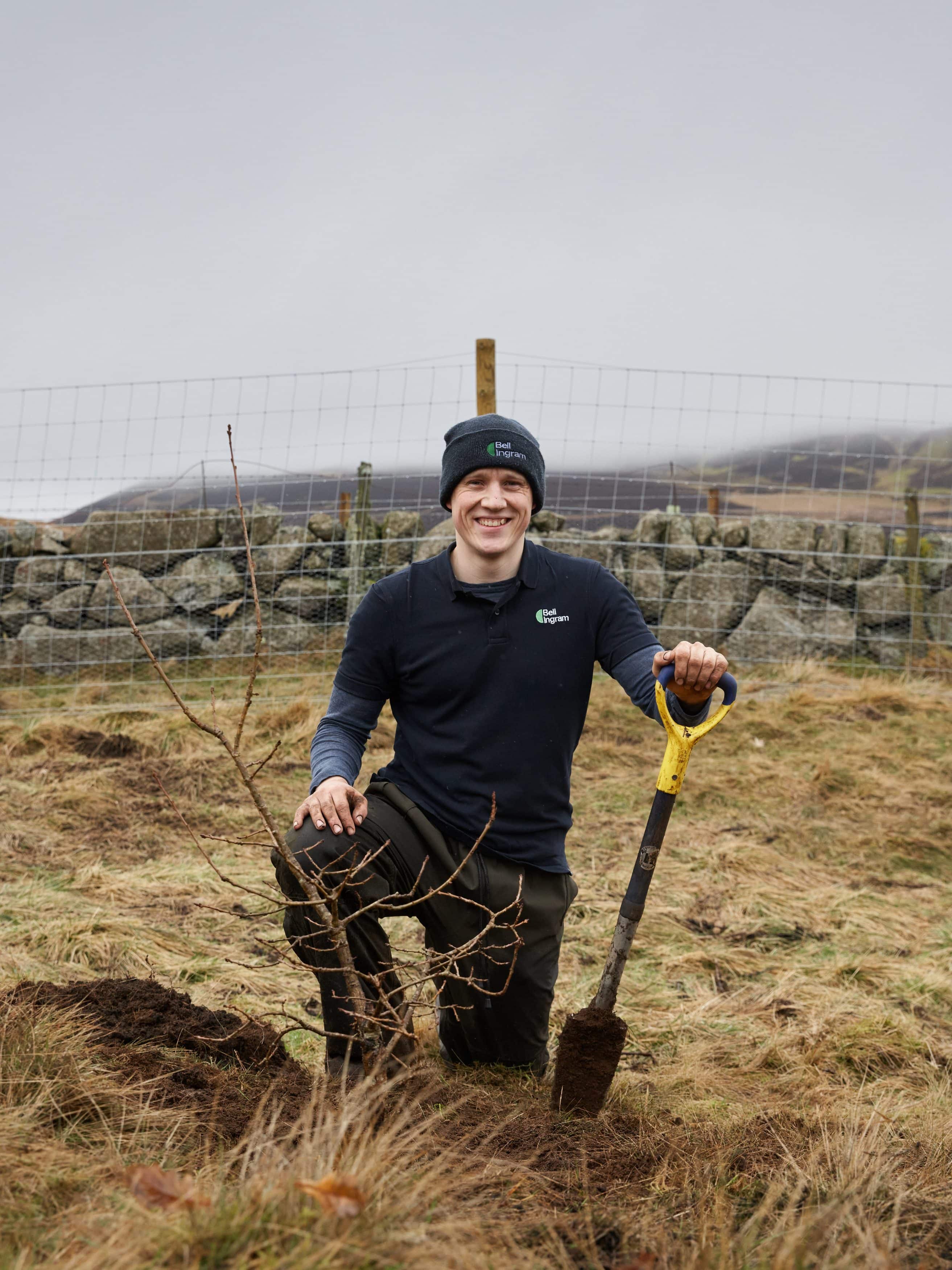
Inside the World of Forestry Management: A Journey of Growth and Sustainability

As a Forest Manager working across Scotland with various corporate and private clients, my time is primarily spent on two main activities: creating and maintaining new woodlands and managing the felling and restocking of existing ones. I enjoy a balanced mix of indoor and outdoor work. Ideally, I’d prefer to be inside during poor weather, but that doesn’t always happen! While at my computer, I focus on designing and planning woodland creation proposals, maintenance programs, and felling/restocking plans. Many of our clients seek funding from the Scottish Government to help cover the costs of woodland creation, so a significant part of my role involves ensuring that our applications meet the required criteria and scoring.

When I have the chance to work outdoors, I often scout potential areas for woodland creation on client properties. This includes identifying suitable habitats and soil types for the desired woodland goals, as well as considering any constraints that may need to be addressed during the planning phase.

How I Got Into Forestry

Eight years ago, I made a significant career change from a completely different industry. After reflecting on the kind of legacy I wanted to leave, I decided to pursue my passion for the environment, specifically woodlands. Lacking formal qualifications or training, I began volunteering on weekends with Borders Forest Trust, a charity dedicated to ecological restoration. After a year of volunteering in various roles, I was fortunate to join a local planting contractor called Treesurv, which was about to start a major planting project for Borders Forest Trust. There, I learned to plant native woodland in an ecologically sensitive manner that mimicked the natural structure and ecology of our historical ‘wildwood.’

Later, I worked with a commercial planting contractor, Telford’s Forestry, which opened my eyes to the commercial aspects of forestry and prompted me to consider a career in that sector. Eventually, I joined Forest Direct Ltd, a local forestry consultancy that emphasizes the balance between ecological benefits and production, a philosophy I still hold dear. Since then, I have taken on various roles in operational management and planning, and now I carry out all aspects of forest management for public and private sector clients at Bell Ingram LLP.

Key Projects I’m Currently Working On

A significant portion of my work—about 8%—involves providing woodland creation and forest management services for Scottish Water, which has ambitious Net Zero plans that include creating new woodlands. Most of these new woodlands are native broadleaf schemes aimed at long-term carbon storage. I also have exciting proposals for productive mixes, such as Sitka spruce combined with aspen. Key tasks for these projects include:

  • Scoping suitable ground for woodland creation

  • Assessing habitats and soil

  • Designing the new woodland to align with client objectives and site suitability

  • Preparing and submitting Forestry Grant Scheme (FGS) applications

  • Overseeing operations such as tree planting, fencing, and ground preparation

  • Managing scheme sign-off and grant funding claims

  • Maintaining the scheme, especially in the first five years, to ensure compliance with UK Forestry Standards and FGS requirements

Challenges I Face

One of the most challenging aspects of my job is the rising cost of trees, protection measures, and labor. Each year, these costs drift further from the levels supported by the Forestry Grant Scheme, putting pressure on clients’ budgets and their willingness to invest in woodland creation and management.

A Standout Project

Early in my career at Forest Direct Ltd, I managed the first phase of a planned scheme to deliver and maintain over 300 hectares of diverse productive conifers and native broadleaves over three years. This modern and forward-thinking design became the flagship scheme of the company. As a Forester at the time, I was supported in its delivery by a Forest Works Supervisor. The project came with major constraints, and I truly experienced ‘trial by fire.’ To this day, I walk through the developing woodland with immense pride, grateful for the opportunity to contribute to that scheme. Jeremy Thompson, the MD of the company, once said, “You never forget your first scheme,” and he was absolutely right.

My Professional Development

I began the Professional Development Award in Forestry Operations in 2019 but paused it to adjust from tree planter to FM Forester. Upon returning in 2022, I successfully completed the program. Rather than focusing solely on academic qualifications, I decided to emphasize work ethic, attitude, and hands-on experience in forestry. Following a structured learning program and having access to experienced tutors was rewarding, and I would recommend the course to anyone new to the forestry industry. I also enjoy reading forestry literature in my spare time, so my learning continues.

Skills from My Early Career

My three years as a planter—both in conservation and commercial roles—taught me best practices for efficiency and quality, as well as the capabilities and limitations of planting contractors. Having shared the ‘blood, sweat, and tears’ of planting has strengthened my communication with contractors and improved project planning.

What I Enjoy Most About My Job

I take great satisfaction in creating meaningful and observable changes in our landscapes. I am passionate about these changes because they benefit both the environment and the people who rely on it.

Hobbies Outside of Work

Outside of work, I enjoy bushcraft, fishing, deer stalking, hillwalking, and playing Scottish folk tunes on the Low D Whistle.

Future Career Aspirations

In the coming years, I see myself continuing to learn and grow in forestry. We foresters are all students, as there’s an endless array of related subjects to explore. I’m happiest when delivering innovative woodland creations and managing forests creatively, so I hope to have plenty of opportunities for that in the future.

Advice for Aspiring Forestry Professionals

For anyone considering a career in forestry, my advice is simple: stop considering and start doing. The industry needs more skilled individuals, and it’s a fantastic field to be a part of, filled with great people. If you’re interested in joining the sector, feel free to reach out via email at sam.guthrie@bellingram.co.uk or call 07876854226. I’m more than happy to discuss options and ideas with you.

[staff_member id=’15042′]

Broad Skillset Needed to Navigate Land, Property & Rural Development in a Changing Countryside 

At Bell Ingram’s Northwich office, we primarily act as consultant surveyors and land officers for companies like United Utilities and Scottish Power. Our main task is securing access for maintenance or new installations and negotiating damage claims or land rights through land purchases, deeds of easement, or wayleave agreements.

We also manage estates for clients such as Shell, Wain Estates, and the NDA. This involves property management, renewing tenancy and license agreements, conducting annual inspections, and offering strategic advice. Additionally, our Northwich and Kendal offices provide a range of valuation services through RICS Registered Valuers who perform Red Book Valuations.

My interest in the rural economy led me to Harper Adams University, where I earned a degree in Rural Property Management. I achieved my RICS Associate qualification in 2021 and became chartered in 2023. The RICS qualification is crucial, as it demonstrates competence and a commitment to continuous learning.

The countryside is constantly changing, and staying updated on new regulations and practices is essential. Our work spans agriculture, natural environment management, property management, and valuation, requiring a broad skill set. A major change is the mandatory Biodiversity Net Gain (BNG) requirement in planning, which affects both large and small developments. Developers must prioritise on-site solutions, though off-site options and statutory credits are also available.

Landowners are also exploring renewable energy sources like solar, wind, and battery storage (BESS). Key considerations include tax implications, managing income, land use, grid connections, and planning permissions.

One standout experience in my career so far was working as a consultant surveyor for United Utilities on a new pipeline installation. The project involved many landowners, each using their land differently. Being part of the design and construction phases gave me a sense of pride in contributing to the project’s success.

If you plan to pursue a career in land management, gaining work experience at a chartered surveying firm is invaluable. Shadowing a professional offers insight into the daily tasks and challenges of surveyors and land agents.

[staff_member id=’15040′]

From Perthshire to Shetland this Graduate Surveyor Tackles Diverse Rural Projects for Utility Clients

What does a typical day look like for you as a rural surveyor working between Aberdeen, Perth, and Angus?

There’s no such thing as a typical day! I split my time between our Perth, Aberdeen, and Forfar offices, on-site visits, and occasionally working from home. Working across different offices allows me to tap into the expertise of the wider team and get fresh perspectives on my projects. Since we handle utility projects across Scotland, one week I might be in Shetland doing site inspections, the next in Fife conducting a Record of Condition, or negotiating wayleaves in Aberdeenshire. Each day is driven by client deadlines, so it’s always varied.

How did you get into this field, and what led you to join Bell Ingram in Spring 2023?

Growing up on an estate where my parents worked – my mother as a bookkeeper and my father as a gamekeeper – sparked my interest in estate management. Dinner table conversations often revolved around what the estate’s factor advised the landowner. I enjoyed business studies in school, so I pursued a degree in Rural Business Management at SRUC, which included RICS-accredited modules. I started my career as a graduate surveyor in Dumfries and Galloway but later moved back to Aberdeenshire. During that time, I negotiated with utility companies on behalf of farmers, which made joining Bell Ingram a perfect opportunity to continue in land agency.

Can you explain what land referencing and negotiating wayleaves involve?

Land referencing involves identifying who owns a piece of land, typically for utility works like repairs, maintenance, or new installations. This is mostly desk-based, using online tools and contacting landowners to confirm boundaries. If ownership isn’t clear, we visit the site and consult with neighbouring landowners.

Negotiating wayleaves is more complex. A wayleave grants utility companies the right to work on a landowner’s property. Most landowners are cooperative once we explain everything, especially regarding compensation, but some are reluctant. In those cases, negotiation is key to finding terms that satisfy both parties.

What challenges do you face when working with clients in the utility industry?

Tight deadlines are a major challenge, especially for large projects involving multiple landowners. Since many projects are in rural areas, it’s hard to engage landowners during busy farming periods. Reaching agreements can take weeks or even months, affecting construction timelines. Balancing client needs with landowner concerns requires understanding both perspectives.

What aspects of your role do you find most rewarding?

The most rewarding part is completing a project smoothly, though problem-solving is often the real highlight. Overcoming challenges and finding solutions that work for both the client and landowner is satisfying.

How did your Rural Business Management degree from SRUC prepare you for this role?

My degree provided a strong foundation in the legal and business aspects of rural land management, particularly in working with the types of legal documents I deal with daily.

What do you enjoy most about negotiating servitudes and compensation agreements?

I love getting out on-site, especially in good weather, and meeting new people. Problem-solving is particularly rewarding, and it’s satisfying when we reach a mutual agreement that allows the project to move forward.

Any memorable experiences or projects that stand out during your time so far?

One memorable experience was a trip to Shetland. I spent four days traveling around the mainland, took my first ferry ride to Yell, and flew to Foula on an eight-seater plane. I hiked to one of our project sites, making it an unforgettable adventure.

What advice would you give to someone considering a career in rural surveying?

Get as much work experience as possible! Whether you’re at university or thinking about an RICS-accredited course, try to do internships or shadow a professional to see if it’s the right career for you.

Where do you see your career evolving in the next few years?

I plan to pass my APC next year and sit my CAAV exams. After that, I aim to continue growing my skills and expertise in rural surveying.

[staff_member id=’10079′]

Inside the Role of an Architectural Technologist: Design Collaboration, and Sustainability

A day at the Forfar office

I commute to our Forfar office twice a week, arriving at 9am. I typically start the day by catching up with my colleague Chris from the Design team before diving into my emails and prioritising tasks. My focus then shifts to my current projects, which vary in scale and complexity. Once a month, we hold a Forfar team meeting where colleagues from across departments – Design, Land Management, Agency, and Utilities – gather to discuss ongoing projects and share ideas. These meetings are invaluable for fostering collaboration and keeping up with developments across the business. We also enjoy brainstorming team-building activities, as we value socialising outside of work whenever possible. Recently, we’ve started an office badminton club, and we’re gearing up for a friendly tournament with our Perth office soon!

Path to Architectural Technology

My passion for design began with technical drawing, and I was eager to take Graphic Communication at Advanced Higher level in school. Unfortunately, my school didn’t offer that course, so I pursued Advanced Higher Art instead, where I was able to focus on landscape architecture . Determined to keep my interest in technical drawing alive, I explored university courses that aligned with my aspirations. I eventually graduated from Robert Gordon University in Aberdeen with a BSc in Architectural Technology. Since joining Bell Ingram seven years ago, I’ve taken on increased responsibilities, including managing my own projects and serving as an internal auditor.

Current Projects

My work spans everything from large-scale conservation projects, like Braemar Castle, to steading conversions, office buildings and one off residential properties. Thanks to our sizeable team, we also work on framework agreements, which add another layer of complexity and opportunity to the role. The range of experiences and the rural focus are truly unique to Bell Ingram, and it’s a big part of what I love about working here.

Adapting to Industry Changes

The industry in Scotland is undergoing significant changes, particularly in the respect to new building regulations which aim to drive energy targets to help achieve Net Zero. With a keen interest in old and traditional buildings and bringing them up to modern standards, I enjoy the challenge new regulations bring. I find it incredibly rewarding to breathe new life into rundown buildings, and it’s an area of expertise I’ve developed and look forward to continuing.

[staff_member id=’3297′]

Bell Ingram Celebrates Landmark Anniversary Serving Rural Communities in Scotland

Bell Ingram, a rural and property services firm founded in Perth, is celebrating its 125th anniversary this year by planting commemorative trees at its headquarters on Isla Road, overlooking the River Tay.

This milestone event reflects the firm’s enduring roots in Perthshire and its commitment to serving its local communities across Scotland. Bailie Chris Ahern from Perth & Kinross Council joined the Bell Ingram team for the commemorative planting ceremony, underscoring the company’s strong connection to the Fair City.

Since its founding on 13th November 1899, when Henry J. Bell opened his practice on Charlotte Street, Bell Ingram has grown from a small land management consultancy into a leader in rural and property services with over 100 specialists across Scotland and the North of England, with offices in Perth, Forfar, Aberdeen, Beauly, Oban, Ayr, Northwich, Kendal, Thirsk and Morpeth.

Today, Bell Ingram’s dedicated team provides expertise in rural land management, farm consultancy, AMC agency, estate agency, forestry, accountancy, utilities, renewables and mapping.

The company will come together on Thursday, 14th November for its 125 Anniversary Conference and Gala Dinner at Crieff Hydro where staff, and partners will gather to reflect on the firm’s legacy and discuss the future of land and property services.

Mark Mitchell, Managing Partner at Bell Ingram, reflected on the company’s anniversary, saying: “As we celebrate 125 years, we acknowledge that our people are at the core of our success. Their dedication and expertise have earned the trust of clients throughout the UK, bringing a wealth of local knowledge and commitment to every project.

“Today, we offer a full suite of land agency services, and our professionals are out there every day, shaping the rural landscape. Whether advising on pipelines or renewables, surveying property, designing buildings or managing estates, our teams understand the lay of the land like no one else.”

Mark Mitchell also noted the company’s commitment to addressing new challenges, including environmental issues and evolving land reforms.

He added: “Bell Ingram is ready to lead the way in developing sustainable, innovative solutions. Our legacy of adaptability and resilience provides a solid foundation for us to continue meeting the needs of today’s world.”

As Bell Ingram commemorates its 125th year, the business looks forward to continuing its work across rural Scotland, with a deep-rooted commitment to serving local communities and the land itself.

Bringing the Spirit of the Canadian Rockies to the Scottish Highlands – Rare Pioneer Log Home for Sale

An extraordinary four-bedroom, handcrafted Canadian log home nestled in the scenic Highlands has come to market.

Located in Daviot and only a short commute from Inverness, this remarkable property, available for offers over £950,000, brings an authentic piece of the Canadian Rockies to Scotland – a rare find for those seeking a unique blend of natural beauty and unparalleled craftsmanship.

Blackcroft Lodge was meticulously constructed by the renowned Pioneer Log Homes of British Columbia, using sustainably sourced Western Red Cedar and a traditional hand-scribing technique. Hand-scribing, a hallmark of high-quality log home construction, involves expertly fitting each log by hand to create a seamless, snug structure. This level of artistry is seldom found in the UK and makes Blackcroft Lodge a true gem in the Highlands.

Set across three floors, the home showcases breathtaking woodwork and spacious interiors, each room radiating the warmth and character of the handcrafted logs. Floor-to-ceiling windows bathe the spaces in natural light, while the intricate joinery of the pillars and beams highlights the artistry that went into each log’s unique texture and pattern. Complemented by tasteful décor, the craftsmanship is evident in every corner, creating a welcoming, yet awe-inspiring atmosphere.

Blackcroft Lodge provides expansive living areas perfect for a family home or a potential bed and breakfast. Additional space in the basement allows for further development – ideal for a home gym, cinema, or additional guest accommodations. Modern conveniences such as high-quality copper-clad double glazing and underfloor heating on two floors enhance comfort, with a central wood-burning stove providing eco-friendly warmth and the option for an additional oil or gas heating system if desired.

The home’s layout offers an inviting blend of indoor and outdoor spaces, with French doors leading to a wraparound balcony overlooking open countryside. The kitchen, with its high-gloss cream units and solid oak work surfaces, seamlessly blends practicality with elegance, while the dining area provides sweeping views of the Scottish landscape.

Perched on over an acre of elevated land, Blackcroft Lodge is surrounded by fenced, secure gardens and offers ample parking. This tranquil setting, combined with the lodge’s intricate design and rare craftsmanship, brings the essence of Canada’s wilderness to the heart of Scotland’s Highlands.

Rural property experts, Bell Ingram are managing the sale. Estate Agent Joanne Stennett comments, “This is a truly unique property. The craftsmanship is breathtaking, especially in the carefully crafted pillars and beams that showcase the natural beauty of each individual log. Blackcroft Lodge is not just a home; it’s a work of art that complements its serene rural landscape.”

For more information or to arrange a viewing, please contact Joanne Stennett at Bell Ingram on 01463 717799.

‘Serene Hideaway Island’ for sale in one of Scotland’s most stunning Sea Lochs

A private island with exceptional natural beauty and ecological richness has come to the market in the West Highlands, one of Scotland’s most picturesque regions.

The sale of Eilean Mor, a breathtaking 29.98-acre (12.14-hectare) island in Loch Sunart offers nature enthusiasts a rare opportunity to own their own serene hideaway island.

Accessible only by boat or a scenic low-tide causeway, Eilean Mor provides an immersive experience into Scotland’s unspoiled wilderness. With diverse terrain and stunning views of the Inner Hebrides, the island’s pristine environment is a sanctuary for native wildlife, including vibrant seabird populations and diverse marine life, offering visitors a glimpse into the thriving ecosystems of the Inner Hebrides.

Located in Loch Stunart, a sea loch off the Ardnamurchan peninsular, Eilean Mor presents a haven for birdwatchers and nature enthusiasts with herons and seals regular visitors to the loch shores. Rarer species such as golden and white tailed eagles are also known to frequent the shores.

The shores of Loch Sunart are also home to some of the finest temperate oakwoods in the British Isles. These are remnants of an extensive band of coastal woodland that once stretched down the Atlantic coast of Europe from Norway and Scotland as far as Spain and Portugal. The woodland at Sunart’s shores are home to some of Europe’s best collections of lichens, mosses and liverworts.

While currently uninhabited, Eilean Mor has a storied past that intertwines with the local heritage of the surrounding Highlands. The island, held by the same family for generations, now awaits new stewardship and invites fresh opportunity and exploration.

This property does not currently hold planning permissions, offering a blank canvas for prospective buyers who dream of a secluded retreat that captures Scotland’s authentic natural beauty and heritage.

Eilean Mor is brought to the market with rural property experts, Bell Ingram for offers over £325,000. Commenting on the sale, Estate Agent, Andrew Fuller says: “For interested parties, Eilean Mor represents more than just an investment; it is a unique chance to own a piece of Scotland’s wild beauty, a serene hideaway, and a historic landmark to be cherished and preserved for generations to come.”

Embrace the charm of Dervaig: Exceptional properties offering lifestyle and  business potential on the Isle of Mull

Nestled on the scenic north side of the Isle of Mull, the village of Dervaig offers an enticing blend of natural beauty, rich cultural heritage, and a slower, more fulfilling pace of life. Here, Bell Ingram presents two exceptional properties that invite buyers to embrace a lifestyle of endless possibilities: Druimard House and The Old Byre and Visitor Centre. These unique offerings are not only ideal family homes but also versatile spaces that can fulfil a range of lifestyle or business ambitions.

Druimard House and The Old Little Theatre: Victorian charm with modern comforts

(Offers Over £950,000)

Druimard House stands as a testament to the elegance of Victorian architecture. Once a country hotel, this stately residence now serves as a warm and inviting family home with four spacious en-suite bedrooms, making it ideal for a bed and breakfast or a boutique guesthouse. There’s even potential to convert the upper floor for additional family or guest accommodation, enhancing its appeal for buyers interested in a hospitality venture.

Connected to Druimard House, the charming “Potting Shed” annex has been thoughtfully reimagined as a high-quality holiday let. Its interior is a tasteful blend of modern and traditional design, creating an inviting retreat for visitors seeking to explore the magical landscapes of Mull. This annex has already captured the hearts of guests as a beloved vacation rental.

Also set within the property grounds is The Old Little Theatre, a detached cottage that pays homage to its origins as Mull’s first theatre. This quaint, self-contained building is now a beautifully furnished couple’s retreat, designed with a mix of traditional and contemporary finishes. Private seating areas outside provide a peaceful spot to enjoy views across the valley, while wildlife sightings and picturesque scenery create an unforgettable experience for guests seeking relaxation.

The Old Byre and Visitor Centre: Rustic charm meets business potential

(Offers Over £695,000)

The Old Byre and Visitor Centre present an equally captivating opportunity. This historic property, currently a vibrant visitor centre and tearoom, offers remarkable potential for creative or entrepreneurial ventures. With a spacious, character-filled stone byre and a welcoming tearoom, the property has earned a loyal following among locals and tourists alike. The ground floor hosts a cozy gift shop, while the first floor showcases Mull’s local history and wildlife – an educational treat for visitors wanting to understand the island’s cultural landscape.

For prospective buyers, The Old Byre offers boundless possibilities. Whether you envision continuing its legacy as a hospitality venue, transforming it into an artisan studio, or even converting it into a unique residence, the property provides an adaptable space that can bring any vision to life. The location, close to Dervaig’s village centre yet surrounded by nature, makes it an excellent base for eco-tourism, an artist’s studio, or even an outdoor adventure hub.

Embrace a Unique Lifestyle on Mull

These two properties present a rare opportunity to join the welcoming Dervaig community, surrounded by some of Scotland’s most breathtaking landscapes. Both Druimard House and The Old Byre are perfect for those looking to escape the fast pace of urban life and embrace a rewarding lifestyle immersed in nature, culture, and potential for creative pursuits.

To learn more or schedule a viewing, please contact Bell Ingram’s Oban office today on 01631 566 122 today and take the first step

[staff_member id=’3266′]