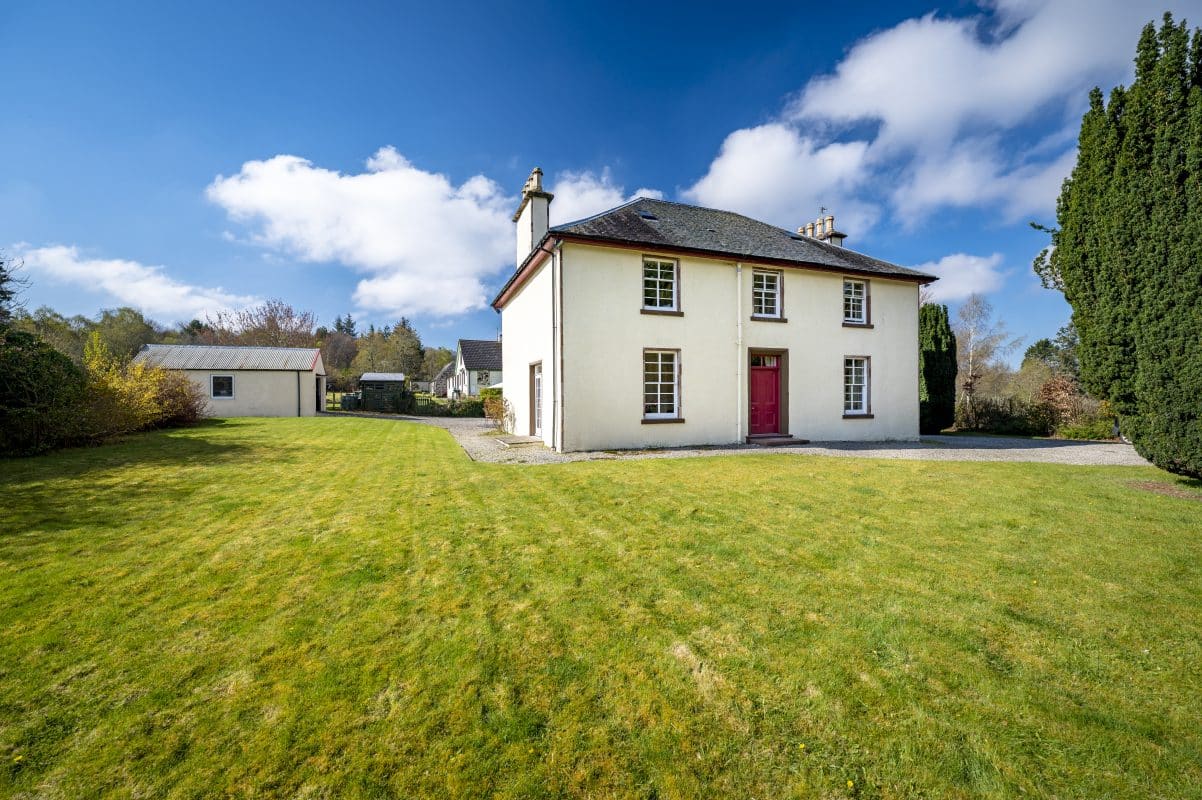
Waterside home for sale in idyllic Ross-shire village

An immaculate three-bedroom cottage with shore access and set in the idyllic, waterside location of Rockfield near Portmohomack has come to market.

Bell Ingram is delighted to bring the delightfully named Seashells to the market for Offers over £265,000.

Seashells offers a rarely available opportunity to acquire a delightful, south facing, cottage which enjoys far reaching sea views. The cottage has been sympathetically extended to the rear to offer excellent living space.

Seashells is situated in the quiet seaboard hamlet of Rockfield, close to Portmohomack in Ross-shire. Rockfield is a peaceful location which has no through road and so traffic is limited. The hamlet is on the side of the Cromarty Firth and has a small harbour. The village of Portmohomack is only 1.5 miles away and has shops, a primary school, a hotel and two restaurants.

The land to the front property is laid to lawn and runs down to the seashore. 

A path runs down the side of the property to the rear garden which is accessed by steps to a tiered lawn area with a path which meanders through areas planted with mature trees, bushes and fruit trees. There is also a small patio, and the rear garden is bounded by stock and wooden fencing.

There is one public room and three bedrooms, one which is on the ground floor. The kitchen has a good range of base and wall units and there are a number of integrated appliances which are included in the sale. Windows on the side and the back offer plenty of natural light and there is a large picture window with views over the garden.

Seashells has mains water and electricity, oil fired central heating and drainage is to a septic tank.

Commenting on the property, Estate Agent, Joanne Stennett says: “This immaculate cottage is in a beautiful setting and its direct access to the shoreline makes it a very attractive property either as a family home or an idyllic holiday retreat”.

For more information, or to arrange a viewing contact Joanne Stennett on 01463 717799 or email joanne.stennett@bellingram.co.uk 

[staff_member id=’3364′]

Exploring the current trends in the Scotland’s rural property market

The Scottish property market is known for its unique blend of historic charm and natural beauty, making it a sought-after destination for both local residents and international investors. Within this picturesque landscape, several regions stand out as hotspots for real estate activity. In this article, we will delve into the current trends shaping the property markets of Perth & Kinross, Highlands & Islands, and Argyll & Bute. From scenic landscapes to cultural heritage, these areas offer a wealth of opportunities for those looking to buy or invest in Scottish real estate.

  1. Perthshire: Bridging the Gap Between Urban and Rural

Perthshire’s property is witnessing a rising trend of buyers seeking a balance between urban conveniences and rural tranquillity. Properties that offer proximity to city amenities while being surrounded by the region’s stunning landscapes are in high demand. The market also shows an inclination towards eco-friendly and sustainable homes, as buyers prioritize energy efficiency and green living.

  1. Kinross-shire: The Appeal of Community Living

Kinross-shire’s real estate scene is seeing a surge in demand for properties that promote community living. With a focus on shared spaces, recreational facilities, and social activities, developments that foster a sense of belonging are gaining popularity. Additionally, the region’s connectivity to nearby cities adds to its attractiveness for both commuters and families seeking a suburban lifestyle.

  1. Highland & Islands: Remote Work and Lifestyle Shifts

The Highland and Islands region is experiencing a significant shift due to the rise of remote work. As more professionals embrace flexible work arrangements, there is a growing interest in properties that offer a high quality of life in a remote setting. Waterfront homes, cottages with sea views, and properties nestled in nature are becoming coveted choices for those seeking a quieter and more serene lifestyle.

  1. Argyll & Bute: Second Homes and Holiday Retreats

Argyll’s real estate market is witnessing a surge in the demand for second homes and holiday retreats. Buyers are looking for properties that offer an escape from urban life, with a focus on outdoor activities such as hiking, fishing, and water sports. The region’s rich history and cultural attractions further enhance its appeal, making it a popular choice for both domestic and international buyers.

There is an increasing interest in reviving old properties while preserving their original charm. This trend aligns with a growing appreciation for sustainable and eco-conscious living, as restoration often involves repurposing existing materials.

Carl Warden, who heads up Bell Ingram’s Estate Agency Service, concludes: “The rural markets are each driven by unique trends that cater to diverse buyer preferences. Whether it’s the blend of urban and rural living, the focus on community, the allure of remote lifestyles, the appeal of second homes, or the fascination with heritage properties, these regions offer a range of options for those interested in Scottish real estate. As these trends continue to evolve, they will undoubtedly shape the future landscape of the Scottish property market, attracting a wide array of investors and homeowners alike.

“Remember that property trends can shift quickly, so it’s crucial to stay updated with the latest developments if you’re considering entering the market in any of these captivating Scottish regions.”

[staff_member id=’3397′]

Examining the pros and cons of overhaul of EPC system in Scotland

In the quest for a greener and more sustainable future, the Scottish Government’s ongoing consultation on Domestic Energy Performance Certificates (EPC) reform is a welcome step.

At present, one fifth of Scotland’s greenhouse gas emissions comes from our buildings so improving the efficiency of these buildings is vital if we are to achieve net zero by 2045.

Retrofitting our homes to be more efficient not only lowers emissions but also makes them more comfortable and affordable to heat. However, there is a significant monetary cost required to do this and any retrofit must be thought out and assessed to future proof the building.

As our clients and their tenants closely follow these developments, let’s examine why reform is needed and the pros and cons for both parties.

Why is reform needed?

The current RdSAP methodology that determines an EPC score is undoubtedly flawed. Presently, the EPC score is modelled on running costs meaning a property heated via oil fired central heating scores higher than a property heated via efficient electric heaters. If EPCs are to be used to benchmark efficiency to help reach net zero, they must first improve accuracy and make relevant and suitable recommendations. RdSAP 10 will be released in early 2024 and will be introducing changes to the methodology to improve accuracy.

What do the Scottish Government propose?

The Scottish Government proposes to revise the information on domestic EPCs and expand the current metrics. This would separate the certificate into a Fabric Rating, Cost Rating and Heating System Type along with a separate section consisting of the Emissions Rating and Energy Indicator. This would allow for more accuracy while presenting clearer information. Another important aspect to note is that the proposals include reducing the validity of an EPC from 10 years to 5 years.

Pros for Landlords

Increased Property Value: Stricter EPC standards and an accurate methodology would allow properties to be more energy efficient and cheaper to run. Properties being heated correctly could limit maintenance requirements in regard to condensation issues such as mould and damp.

Compliance with Regulations: In the next few years, there will be a minimum EPC requirement to let residential properties. Though dates have not yet been confirmed having a proactive stance could mitigate any potential penalties in the future.

Cons for Landlords

Upfront Costs: Undertaking energy-efficient improvements requires a financial investment. Landlords might face challenges in covering the initial expenses of retrofitting properties with more efficient technologies.

Tenant Resistance: Installing insulation and new heating systems can be disruptive and may require properties to be vacant while improvements are being carried out. Tenants may be hesitant due to potential disruption during renovation periods.

Pros for Tenants

Reduced Energy Bills: Stricter EPC standards would lead to more energy efficient properties, leading to lower utility bills.

Enhanced Comfort: Being able to heat properties correctly and affordably would reduce the risk of mould and condensation issues in the winter months. This reform could contribute to healthier, cosier home for tenants.

Cons for Tenants

Rent Increases: Due to the significant costs required to retrofit properties, it is likely that rents would need to be increased to help cover the upfront costs.

Limited Choices: Not all landlords will be able to or desire to improve the efficiency of their properties which could see a decline in available properties on the rental market. Rural, stone-built properties may never be able to achieve a high scoring EPC which could lead to an even scarcer supply of rural homes available to rent.

Conclusion

Reforming EPCs could be a significant stride towards creating a more energy efficient future. While the pros and cons are clear for both landlords and tenants, it is crucial to recognise that that retrofitting properties is essential for combating climate change and advancing sustainable living. Though we have focused on residential properties, the consultation also covers commercial buildings.

Home Energy Scotland can provide financial support in some cases for both landlords and tenants. Scotland’s Domestic EPC reform consultation closes on 10th October 2023. If you would like to discuss any of the proposals, please contact Bell Ingram and we will be happy to assist you.

[staff_member id=’15041′]

Bell Ingram Design plays key role in £1.6m restoration project

After 18 months under lock and key, Braemar Castle opened its doors in late summer to reveal a startling transformation.

The structure has been restored to its former glory with its turrets, towers and curtain wall rendered in a traditional oatmeal shade, while the castle’s treasured collection has been returned to a now wind and watertight interior.

This soft opening marks a key moment for Braemar Community Ltd., whose volunteers have carefully unpacked the Castle’s treasured items, from the smallest pieces of cutlery to giant four-poster beds.

Bell Ingram Design has been at the heart of the £1.6 million project to restore the A-Listed landmark to its former glory, with conservation architect Susan Burness heading up the team alongside main contractor Harper & Allen Masonry.

Susan Burness said: “The restoration work is a key milestone in the wider plans to transform Braemar Castle and its Estate into a cultural destination and top-class visitor attraction that compliments the amazing landscape and helps promote Braemar as a learning and engagement hub.

“It is an extraordinary building with a fascinating history, and it’s been an honour to work with Braemar Community Ltd. to deliver such an important community project.

“I believe that the work we have done will future proof the building and allow the Trust to preserve the furnishings and artworks which call Braemar Castle home.”

Most of the work was focussed on the external fabric of the building, which included structural repair, and the re-harling and lime-washing of exterior masonry and the curtain wall in an oatmeal colour which was based on a small sample of historic lime wash which was uncovered when the cement harl was removed.

Susan continued: “The restored building reflects the original colour, enhancing the aesthetic appeal of the Castle. Essential interior works, including electrical upgrade, window repairs and drainage upgrade, now provide a more appropriate environment for the collections stopping any further detrimental effects and providing a more pleasant environment for visitors.”

Fog House

Earlier this year, Bell Ingram volunteers spent three days picking heather on the Deeside hillside at Invercauld Estate.

Their job was to collect 80-bales of heather for professional thatcher Brian Wilson to use as material to re-roof a small decorative garden feature – known as the Fog House – in the grounds of Braemar Castle.

The volunteering days were the brainchild of Iain Cram, Director of Bell Ingram Design, who is part of the team restoring the Castle.

Iain said: “The restoration of the Fog House marks an important milestone in the ongoing transformation of Braemar Castle and its grounds to ensure its long-term protection for the enjoyment of visitors from all over the world.

“We are proud to do our part to ensure the survival of this important building for future generations and our partnership with Braemar Community Ltd. has also given our employees a great opportunity to volunteer and make a positive difference to the community.

“Volunteering days like this are a fantastic boost to our conservation and outdoor learning efforts as well as promoting a sense of wellbeing and connection between our staff and the places where they work.”

About Braemar Castle

Braemar Castle, located at the Haughs of Dee, has been an army barracks, family home and visitor attraction since it was built in 1628 by John Erskine, the 6th Earl of Mar as his Highland hunting lodge.

It was a target in the first Jacobite uprising in 1689 and torched by John Farquharson of Inverey. Following the Battle of Culloden, the castle was used as a garrison for Hanoverian soldiers to suppress any lingering Jacobite support.

The castle was gifted to Braemar Community Trust Ltd. on a 50-year lease by owner Captain Alywne Farquharson, 16th Laird of Invercauld and Chief of Clan Farquharson, in 2007. Since then, it has been managed by the Braemar Community Ltd., its interior kept just as it looked when the laird was in residence.

The community group, supported by the help of an anonymous benefactor, helped secure the contents of the castle and the volunteers raised half a million pounds, locally and from generous private donors, which bolstered major funding from the National Lottery Heritage Fund and Historic Environment Scotland to make the Castle wind and watertight and safeguard its future.

Raising The Standard Project

The £1.6m restoration is part of the castle’s Raising the Standard Project, which has been supported by The Prince’s Foundation, who acted as advisors to Braemar Community Ltd throughout the project.

As well as conserving the fabric, developing the landscaping and work to make the castle more accessible, the project aims to innovatively re-interpret the castle’s story and introduce new opportunities for learning and engagement, and to elevate the castle’s visitor experience creating to a top-class attraction.

Initiatives include a new website, online booking and presence on the Bloomberg Connects app alongside more than 200 places of interest around the world, placing Braemar Castle on the international radar. Together with this sits a full programme of activities including outreach within the wider area and events to be held at the castle which engage the community with the heritage on its doorstep.

The castle’s rebirth has also received royal backing: The Prince’s Foundation has had an advisory role throughout the project development, while a young student linked to its Building Craft Programme has been hands-on removing the old cement harling and applying traditional lime replacement.

Find out more at www.raisingthestandard.org.uk

[staff_member id=’3247′]

Oban Estate Agent answers the Coastguard call

Bell Ingram is proud to support the local communities where we live and work, and our colleagues take this commitment extremely seriously.

None more so than Senior Associate Estate Agent Andrew Fuller from our Oban office, who has joined HM Coastguard as a volunteer coastguard after completing weeks of intensive training.

He is now part of the team on Mull which helps people who run into difficulty along the coastline as well as assisting with other land-based emergencies.

Andrew, who lives on Mull, says: “Ironically my first call-out didn’t involve a sea rescue. My team attended an incident at Ben More after reports of torches seen on the summit around midnight. It turned out to be a group of lads who decided to climb up to get a view of the aurora borealis. No injuries and they got down safe and sound without our help!”

[staff_member id=’3266′]

B-Listed Former Highland Manse Comes to Market

A beautifully presented B-listed former manse dating from 1846 situated close to the popular Highland village of Kiltarlity has come to market.

The property is being marketed by rural Estate Agents, Bell Ingram for offers over £450,000.

The Old Manse is a charming five-bedroom family home, which has been modernised to a high standard. Its spacious rooms with high ceilings and original features add to its charm.

It has been tastefully decorated throughout. The sash and case windows have working shutters and there is oil-fired central heating.

There are three public rooms and a bedroom on the ground floor. The large kitchen, to the rear, has an electric four-oven Aga and plenty of space for a dining table and chairs. With windows on three sides and a vaulted ceiling, this room is flooded with natural light. An external door opens out to a circular paved patio. The upper floor has a further four spacious bedrooms (two sharing an en suite shower room) and a family bathroom. The detached single garage has a large store at the rear and there is parking for several vehicles.

The Old Manse sits in peaceful grounds bounded by mature trees and shrubs.

Located 12 miles from Inverness, near the town of Beauly the manse offers rural Highland living with close proximity to all amenities in the city.

Commenting on the property, Estate Agent, Joanne Stennett says: “This is beautiful family home.  It retains the typical features expected of a house of this period yet is perfect for modern day living”.

For more information, or to arrange a viewing contact Joanne Stennett on 01463 717799 or email joanne.stennett@bellingram.co.uk 


[staff_member id=’3364′]

Meet the Land Agent: Catherine Lawson

Life as a Bell Ingram Land Agent offers variety and progression says Senior Associate, Catherine Lawson.

What is your background?

I am from a farming background and grew up on a farm in North Yorkshire.

Once I left school I went to the Scottish Agricultural College at Auchincruive in Ayrshire to study Rural Tourism. After I graduated I worked at a grain lab in Bedfordshire, having spent all my summers before and during my Degree doing the same. I quickly realised I needed office experience if I wanted to move away from seasonal grain lab work and I got a job as a receptionist and typist at a holiday park company.

While working for that company I quickly realised I wanted to work in the rural/agricultural sectors and in particular the rural surveying sector.

What qualifications did you need to become a Land Agent?

I needed to have a RICS accredited qualification to be able to work towards my RICS Assessment of Professional Competence (APC).

Having obtained a non RICS accredited University of Glasgow First Class Rural Tourism honours degree at the Scottish Agricultural College (now SRUC), I went on to complete a Post Graduate Diploma in Surveying through the College of Estate Management which gave me the necessary accredited qualification. This was completed part time via distance learning, while I also worked full time.

What’s been your career path?

I was given a great opportunity working as a Farm Secretary in Leicestershire for a national firm of Surveyors while I completed my Post Graduate Diploma. This gave me a lot of experience in all the administration involved in farm and estate management, as well as a greater knowledge of the rural property sector. It also made me realise that I had chosen the right career path and I knew that I wanted to go on and qualify as a Chartered Surveyor.

Once I completed my Post Graduate Diploma I planned my move back to Scotland and accepted a job at Bell Ingram as an Assistant Land Agent, based in the Perth office. I passed my APC and CAAV exams two years later in November 2016 and then moved to the Forfar office in June 2019 where I am now a Senior Associate.

What’s the biggest misconception of the job?

I think alot of people assume that we are always out of the office visiting clients and properties. While we are fortunate to do this a lot, we actually spend the majority of our time in the office, writing reports and providing advice. Now, with the use of Microsoft teams/zoom we find ourselves out of the office even less as online meetings become easier and more time efficient for everyone involved.

What do you enjoy about the job?

The variety of the workload is one of the best parts of the job. You never know what your day will bring and where in the country it might take you. There are often times when you are driving to a property or walking around some fields, that you have to remind yourself that you’re actually being paid to be there.

It is also a great feeling when you know the advice you have given or the report you have written has helped someone achieve their goals too.

At Bell Ingram I think we are very fortunate to have a great network of colleagues who are all happy to help and share their knowledge and experiences, which can be really useful when dealing with tricky or unusual situations. There is also a really positive workplace culture which makes turning up to the office, even on a sunny Monday morning, enjoyable.

What’s your advice to those thinking of entering the profession?

Do it! If you have a love for the countryside and are looking for great career progression opportunities and variety in your work then it’s definitely a profession you should consider. The enjoyment you get from it can’t be matched.

For more information about becoming a Land Agent and Life  at Bell Ingram contact careers@bellingram.co.uk


[staff_member id=’3293′]

Bell Ingram’s commitment to quality recognised by Achilles

Bell Ingram is proud to have maintained its 100% score on each of its Achilles Audit categories.

Achilles is the preferred compliance body for the oil, gas, transport and construction industries, helping it to create and maintain ethical, sustainable and transparent supply chains.

Bell Ingram scored 100% in the following standards through audit for Safety, Health, Environmental, Corporate Social Responsibility and Quality practices and procedures as a registered Silver Plus UVDB Verify supplier.

Commenting on the success of the Achilles Audit, Bell Ingram’s Compliance Manager, Samantha McDonald says: “Bell Ingram is delighted to have maintained its 100% rating through Achilles. It demonstrates our continued commitment to maintaining the highest possible standards of health & safety and quality assurance. The results also reflect our commitment to sustainability and community welfare through our environmental and corporate social responsibility policies.

“The results are a credit to our teams who consistently uphold these high standards throughout all the work we do.”

Read more about Achilles and the work they do here: achilles.com

[staff_member id=’3319′]

Beautiful converted steading comes to market near Kinross

A substantial converted country steading with stunning feature roundel room has come to market near Kinross.

Bell Ingram is delighted to bring Horsemill House, Dalqueich, Kinross to the market at offers over £675,000.

With an internal floor area of 286 m2 and in mature grounds of about 0.67 acres, Horsemill House is a substantial detached property in a peaceful yet accessible location close to Kinross.

Dating originally from the mid-1700s, it was beautifully converted in 1991. Horsemill House, as its name suggests, includes the original hexagonal horse mill roundel room which is the outstanding feature of the property. Of stone construction with slates on the main part of the house and tiles on the roundel, there are a number of typical retained features including a number of original window openings.

The accommodation is spread over two floors with options to use some of the ground floor rooms as either an accessible bedroom or a home office. There are a further three public rooms. The kitchen is well fitted with base and wall units and also features an LPG fired Aga with two ovens and two hotplates. The upper floor has four bedrooms, one of which is en suite.

The fixtures and fittings are to a very high standard with many of the ground floor rooms having solid oak floors. 

Externally there is a double garage and workshop and the gravel courtyard can easily accommodate several vehicles. The garden areas are well-tended and there are a number of seating patios and decking to take advantage of the surroundings.

Commenting on the property, Estate Agent, Carl Warden says: “It is not often a property like Horsemill House comes to the market. It has the history of bygone times yet the modern fixtures and fittings make this a comfortable and welcoming home – perfect for entertaining”.

For more information, or to arrange a viewing contact Carl Warden on 01738 621121 or email carl.warden@bellingram.co.uk 


[staff_member id=’3397′]